
Digital TV has rapidly transformed how we experience television, offering clearer visuals, superior sound quality, and a wide range of interactive features that were once unimaginable with analog systems.
However, while its benefits are impressive, the transition to Digital TV also presents some significant challenges that can’t be overlooked. Understanding both the powerful advantages and critical disadvantages of Digital TV is essential for viewers who want to make the most of this advanced broadcasting technology.
In this article, we’ll delve into the three most significant advantages and disadvantages of Digital TV, helping you make an informed decision about embracing this modern entertainment platform.
The Advantages and Disadvantages of Digital TV
Like other electronic devices, digital TVs have several advantages that can be utilized and disadvantages that need to be considered. The advantages include good picture and sound quality, interactive features, and frequency efficiency.
On the other hand, the disadvantages of a digital TV include the need for additional equipment, signal issues, and longer channel switching times. The following are the advantages and disadvantages:
The Advantages
Here are the advantages of the digital TV:
Good picture and sound quality

One of the advantages of digital TV is that it provides good picture and sound quality. The TV has sharper images and clearer, cleaner sound than analog TV. This is because TVs use digital signals that produce images with minimal interference. That way, you won’t get blurry images like on analog TV.
Interactive features
Digital TV not only provides better picture and sound quality, but also offers a variety of interactive features that enrich the viewing experience. Here are some of the interactive features available on standard digital TVs.
- Electronic Program Guide (EPG): An interactive program schedule that displays detailed information about programs, times, and descriptions in real time.
- Parental lock: A security feature that allows parents to set and restrict children’s access to certain programs based on age restrictions.
- Early Warning System (EWS): Displays pop-up messages to alert TV users to natural disasters.
- Interactive text service: Displays additional information, such as news or weather, through a text-based service that users can access by entering a specific number on their remote control.
More stable signal
Another advantage of using digital signals is that they are more stable. Digital TV broadcasts are more stable and less prone to interference, such as spots, noise, or ghosting. This means you can enjoy TV broadcasts without any significant interference.
More channels
Digital TV provides more channels. This is, of course, due to the use of digital signals. One frequency channel on digital TV can carry multiple programs simultaneously, offering more entertainment options.
Frequency efficiency
Another advantage of digital TV is its efficiency in frequency usage. With digital signal technology, more channels can be broadcast on the same frequency compared to analog broadcasting, which requires a separate frequency for each channel.
This allows service providers to offer viewers more viewing options without incurring additional expenses. Additionally, this efficiency enables more optimal frequency use and better spectrum allocation, which in turn supports the development of other communication technologies.
The Disadvantages
Here are the disadvantages of the digital TV:
Higher initial cost
To receive digital broadcasts, you need to purchase a digital TV or, at the very least, a set-top box (STB). This certainly requires a higher initial cost compared to buying an analog TV. However, this is not necessarily a disadvantage, as it is a consequence of choosing to receive digital signals.
Requires additional equipment
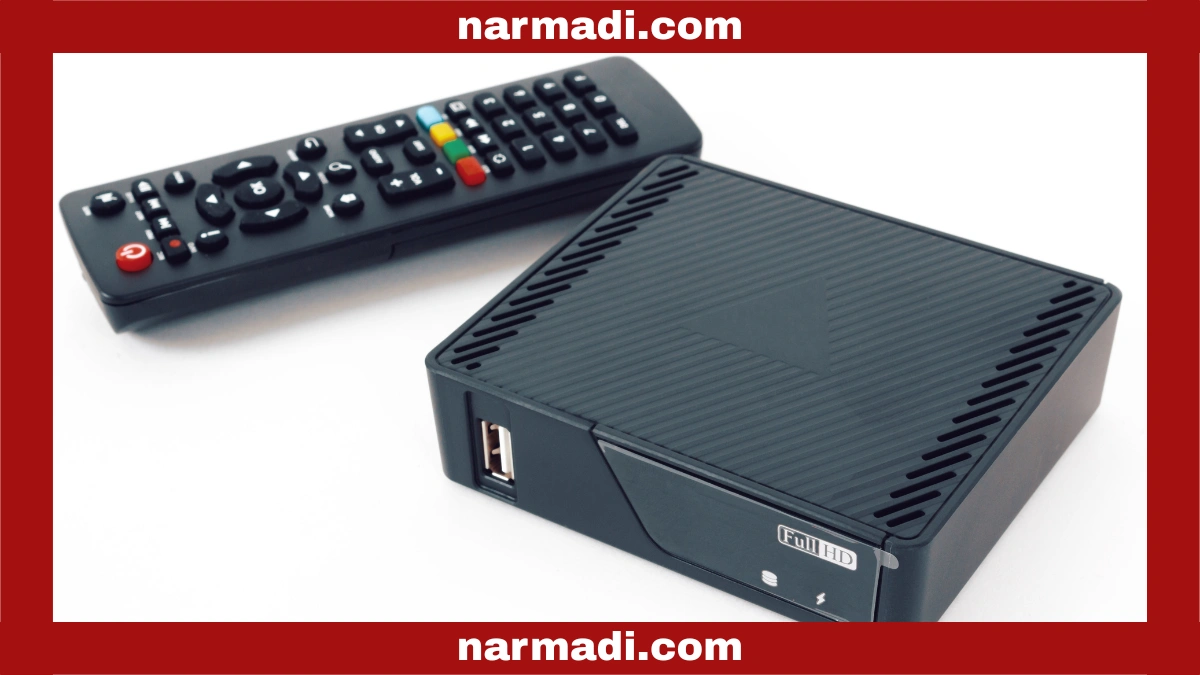
Analog TVs that want to receive digital broadcasts require additional equipment. This equipment is in the form of a Set-Top Box (STB) that functions to capture digital signals and convert them so they can be displayed on analog TVs.
Purchasing an STB certainly requires additional costs, which may be considered burdensome by some people. In addition, installing and setting up an STB also requires a certain level of technical understanding, which can be difficult for people who are not tech-savvy.
Signal problems
Although the quality of digital TV broadcasts is generally better, signal issues remain a challenge in several areas. Digital signals are “all or nothing,” meaning that if the signal received is too weak or blocked by buildings or geographical conditions, the picture and sound will not appear at all or will be intermittent.
This is different from analog TV, which can still display images even if the quality is poor. To overcome this problem, users often need to use a specialized antenna or one with improved signal strength. For those who live in remote areas or in challenging geographical conditions, this problem can be particularly daunting.
Longer channel switching time
Switching from one channel to another on digital TV usually takes longer than on analog TV. This is due to the more complex process of decoding digital signals.
Devices such as Set-Top Boxes (STBs) or TVs with built-in digital tuners need to identify, decrypt, and convert signals into images and sounds that can be displayed. Additionally, the device must synchronize the audio and video streams each time the channel is changed.
This delay can be exacerbated by weak or unstable signals, as well as by devices with low specifications, which require a longer processing time for signals.
Those are the advantages and disadvantages of digital TV that need to be considered before deciding to use it. Despite their limitations, digital TV offers good picture and sound quality, interactive features, and frequency efficiency. [UN]