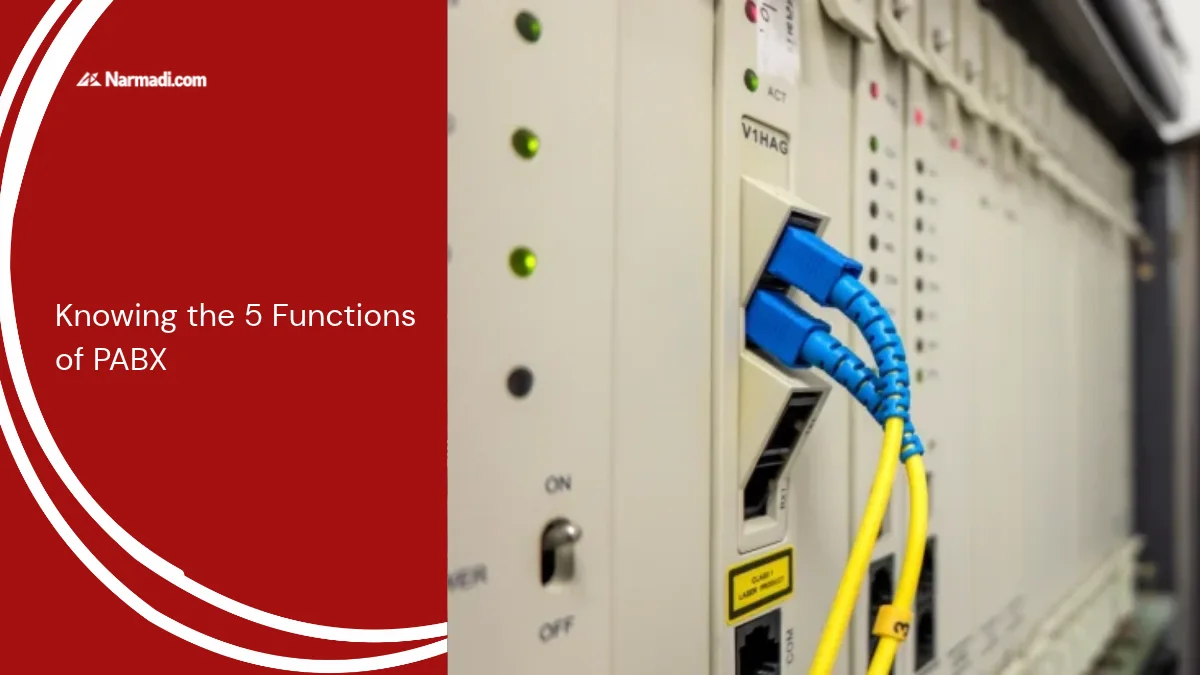

Private Automatic Branch Exchange (PABX) plays an important role in business communication, both internal and external. PABX functions can help improve your business communication.
Several functions of PABX support business communication, including managing incoming and outgoing calls, reducing operational costs, and supporting flexibility and scalability.
This article will inform you about the functions of PABX that can improve your business communication.
The Functions of PABX
Here are some of the functions of a PABX that support the improvement of your business communication:
1. Manage incoming and outgoing calls
Incoming calls from customers and business partners can be easily managed by a Private Automatic Branch Exchange (PABX). The system can also automatically connect calls to the department associated with the extension number. With features such as an auto attendant or an automated receptionist, calls can also be automatically connected to the destination.
For outgoing calls, the PABX can also perform recording. Because the outgoing phone lines are on one line, the use of the phone by employees can also be controlled.
2. Managing internal communication
Another function of a PABX is that it can manage internal communication well. This system allows calls between employees in one company only by pressing the extension number, without having to connect outside. That way, internal communication can save time and money.
3. Reduce operational costs
PABX can function as a reduction in operational costs because PABX allows internal users to share external lines so that telephone subscription costs can be reduced. In addition, internal calls through PABX are not subject to additional fees, so they can be profitable for the company.
4. Support monitoring and documentation
Support monitoring and documentation is another function of PABX. With call recording features, call logs, and usage statistics, management can easily evaluate, conduct training, and document conversations to improve customer service.
5. Supports flexibility and scalability
Another advantage of PABX is its ability to support flexibility and scalability. PABX systems can be developed following technological advances without having to change the entire infrastructure.
Maximizing Business Efficiency and Collaboration
A Private Automatic Branch Exchange (PABX)system is more than just basic call routing. It serves a much greater purpose as the central nervous system for an organization’s productivity.
This system enables centralized internal and external voice communication, reduces administrative barriers, and provides valuable call analytics. Companies can thus empower their teams to provide faster and more responsive customer service.
Proper implementation and optimization of PABX features enable companies to foster smoother collaboration across departments. In this way, an active communications infrastructure can drive overall business growth.
Key Business Sectors That Rely on PABX
PABX systems can be adapted to a variety of work environments. However, some industries require advanced routing and internal communication capabilities. Here are examples of system capabilities across various sectors:
- Hospitality and Lodging: Seamlessly manage calls from guest rooms, external calls, and internal staff coordination.
- Customer Service Centers: Handling thousands of incoming calls at any given time using automatic call distribution, queue management, and call recording.
- Healthcare Facilities: Ensuring instant and uninterrupted communication between medical departments, emergency rooms, and administrative staff.
- Corporate Offices & Companies: Connecting various departments across different floors or buildings while maintaining external communication.