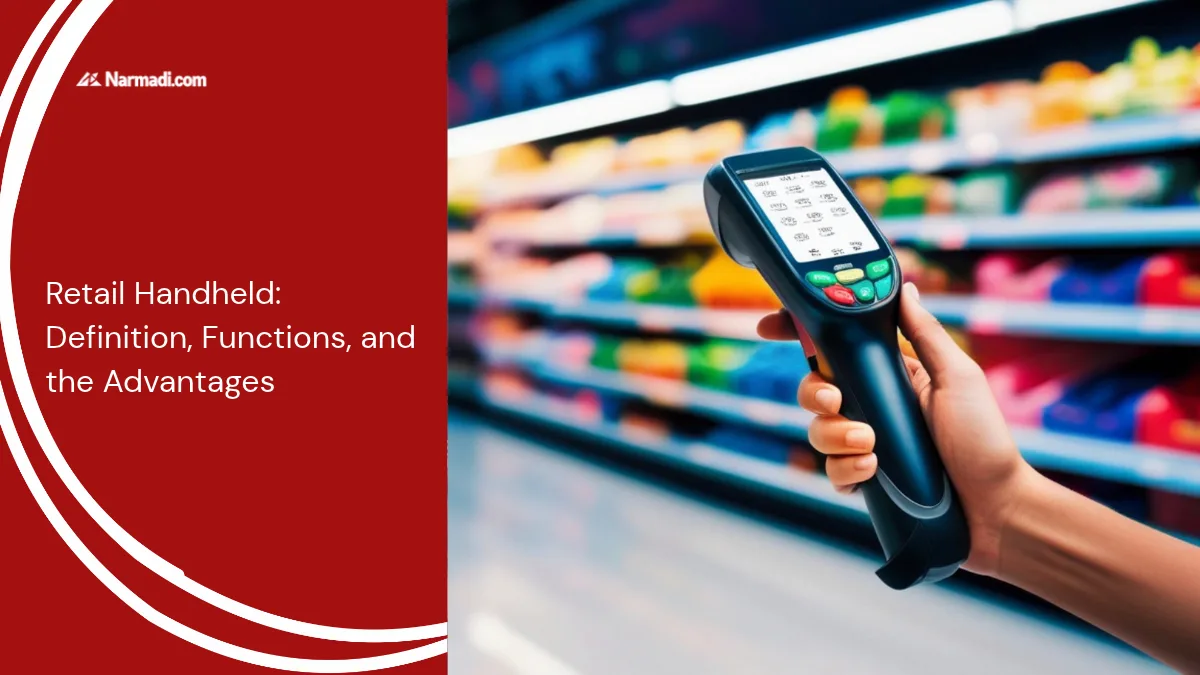

The presence of handheld computers helps industrial operations with data entry, tracking, and operations for field workers, logistics, retail, and other industries that require reliable devices. One type of handheld computer is a retail handheld, which has some functions and advantages.
The functions of a retail handheld include barcode scanning and report recording. Moreover, the advantages include productivity, increased efficiency, to improving customer experience.
This article will give you information on retail handhelds, including the definition, functions, advantages they have, and their distinctive features.
What is a Retail Handheld?
As the name suggests, retail handhelds are used in retail stores such as shopping centers or industrial warehouses. The main function of this computer is to facilitate employees in inputting data in the transaction process or inventory of goods.
With this type of computer, it can help store employees in the speed and accuracy of data input when serving customers. Not only that, but staff can also manage stock items more efficiently.
The Functions
The retail handheld has several functions, from barcode scanning to report recording. Here are some of its functions:
- Barcode scanning: Read product barcodes for sales data input, stock checking, and inventory tracking.
- Stock data input: Track product stock in stores and warehouses in real-time.
- Report recording: Record various field reports, including sales data, goods receipt, and other activities.
The Advantages
The retail handheld has several advantages, from increasing productivity and efficiency to improving customer experience. Here are some of its main advantages in detail:
1. Increasing productivity
One of the advantages of handheld retail is increased productivity. Handheld computers that are often used in the retail industry have an impact on more efficient sales and better decision-making.
In-store sales can be more efficient due to the faster transaction process. In addition, good decision-making can also be generated from sales and inventory data that can be checked in real time with this device.
2. Increasing efficiency
With handheld retail, of course, work efficiency can increase because the transaction process is faster, can be integrated with other systems, and allows better inventory management.
With this device, the efficiency of the cashier staff’s work can increase because the transaction process is carried out quickly.
Handheld computers used in retail stores also allow connection with other systems, so that they can provide real-time and fast information when checking the available store stock inventory.
3. Portability and flexibility
Store staff can use handheld retail computers freely and be able to serve customers anywhere because of their portability and flexibility. The handheld computer allows cashier staff to move around to serve customers in various locations such as the display area. This is very helpful in avoiding long queues at the store cashier.
4. Improving customer experience
Another advantage of handheld retail is improving customer experience by avoiding long queues, providing more personalized service, and transaction accuracy.
The increased efficiency provided by these devices allows for shorter customer waiting times during transactions. With their portability and flexibility, customers can also feel more personally served, as payments are not focused on one place.
The Distinctive Features of Retail Handhelds
Here are some distinctive features of retail handhelds:
- Barcode scanning: Scan barcodes quickly and accurately.
- Performs payment transactions: Some models are capable of making payment transactions, either cash or non-cash.
- Ergonomic design: The design provides comfort when held for a long time.
- Internet connection: Capable of being connected to WiFi for real-time data synchronization.
Transforming Modern Retail Operations
For businesses looking to modernize store operations and improve service quality, implementing retail handheld technology is a key strategy. These devices combine fast barcode scanning, mobility on the sales floor, and real-time inventory visibility.
This bridges the gap between digital management and front-line execution. However, selecting the right mobile technology must be tailored to retail workflows. This approach helps reduce payment friction, optimize inventory control, and ensure customer satisfaction.
Each location may require a different type of handheld computer. Standard retail handhelds are needed, tailored to retail workflows. Meanwhile, environments that demand higher physical durability will require rugged handheld devices.