


Telecommunications and wireless products are not immediately available on the market. They must go through a process called telecom compliance. This process cannot be bypassed to ensure that the products used by consumers are safe and have no technical deficiencies.
The commonly known telecom compliance process involves submitting a certification in each country where the product is distributed. This process typically involves testing samples to ensure the device is safe for use and does not interfere with existing networks.
It is important to note that the telecom compliance process is actually cyclical, starting from product design to market launch. This article will attempt to provide information on how the end-to-end life cycle process works. This way, manufacturers can be better prepared and avoid common mistakes that often occur.
Table of Contents
What is the Telecom Compliance Lifecycle?
The telecom compliance lifecycle is a structured framework that telecommunications companies must follow. Its purpose is to manage and comply with all applicable laws, regulations, and industry standards.
This cycle requires every manufacturer to comply with regulations from the initial planning stage. There are several phases that companies must go through to implement this cycle. The following are part of the telecom compliance lifecycle.
Risk assessment and planning
This is the initial phase that needs to be carried out. Companies need to identify applicable regulations, such as security, frequency spectrum, and consumer protection. These regulations refer to international standards such as the International Electrotechnical Commission (IEC) and the Federal Communications Commission (FCC).
At the local level, there are usually authorities that regulate these matters. This means that some countries may have slightly different standards that need to be adjusted. In this phase, it is also necessary to assess the potential risks of non-compliance that may occur.
Control implementation
Once planning is complete, the process will begin in accordance with applicable regulations. This is where controls are needed. In this phase, policies, procedures, and technical controls will be implemented.
The goal, of course, is to meet regulatory requirements. The role of controls in the telecom compliance lifecycle is quite important in ensuring that the entire process runs according to the company’s wishes. In practice, each company may implement them according to its preferences.
Monitoring and reporting
Controls that have been implemented are, of course, inseparable from monitoring, which must be reported as the process progresses. Monitoring operational processes will ensure that compliance with regulations is maintained.
Furthermore, monitoring in accordance with regulations must be reported regularly to internal and external regulators. The aim is, of course, to provide data and evidence that the process has been carried out properly.
Audit and enforcement
To ensure that all processes run according to procedure, audits and enforcement are necessary. Periodic internal and external audits will validate the effectiveness of controls.
When a process is running, and non-compliance is found, action can be taken easily. That way, it can be corrected quickly without the need to continue the process further.
Review and updates
This telecom compliance lifecycle needs to be reviewed thoroughly regularly. This is necessary to anticipate changes in applicable regulations. That way, updates can be made to comply with changing regulations.
Common Mistakes Often Made by Manufacturers
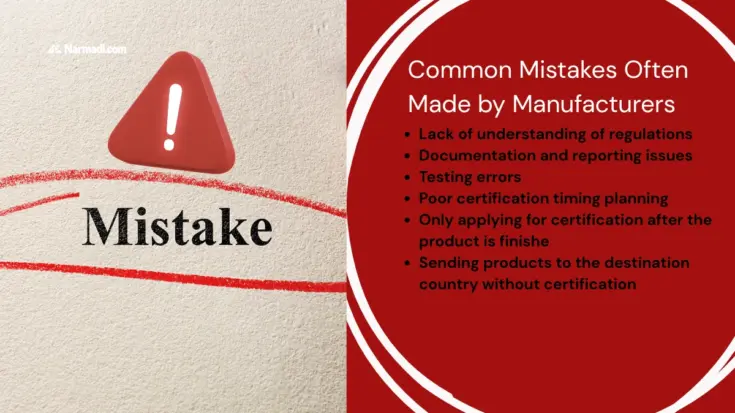
Keeping the cycle running smoothly from product design to market launch is not easy. Manufacturers often make mistakes along the way. Here are some common mistakes that are often made:
- Lack of understanding of regulations: Regulations for the use of telecom and wireless devices are diverse and subject to frequent changes.
- Documentation and reporting issues: Documents are often incomplete or incorrect. There are frequent failures in risk documentation, controls, and adequate operating procedures.
- Testing errors: Internal testing is often inaccurate, and poor test samples affect the test results.
- Poor certification timing planning: Inadequate planning for the time-consuming certification process often causes product marketing delays.
- Only applying for certification after the product is finished: If the product fails testing, it will cause marketing delays and even require re-production.
- Sending products to the destination country without certification: This causes goods to be stuck at customs and unable to be marketed.
Avoiding common mistakes will ensure that the telecom type approval process runs smoothly and without obstacles. This will prevent testing failures and delays in bringing products to market.
Benefits of Implementing Compliance Lifecycle Management
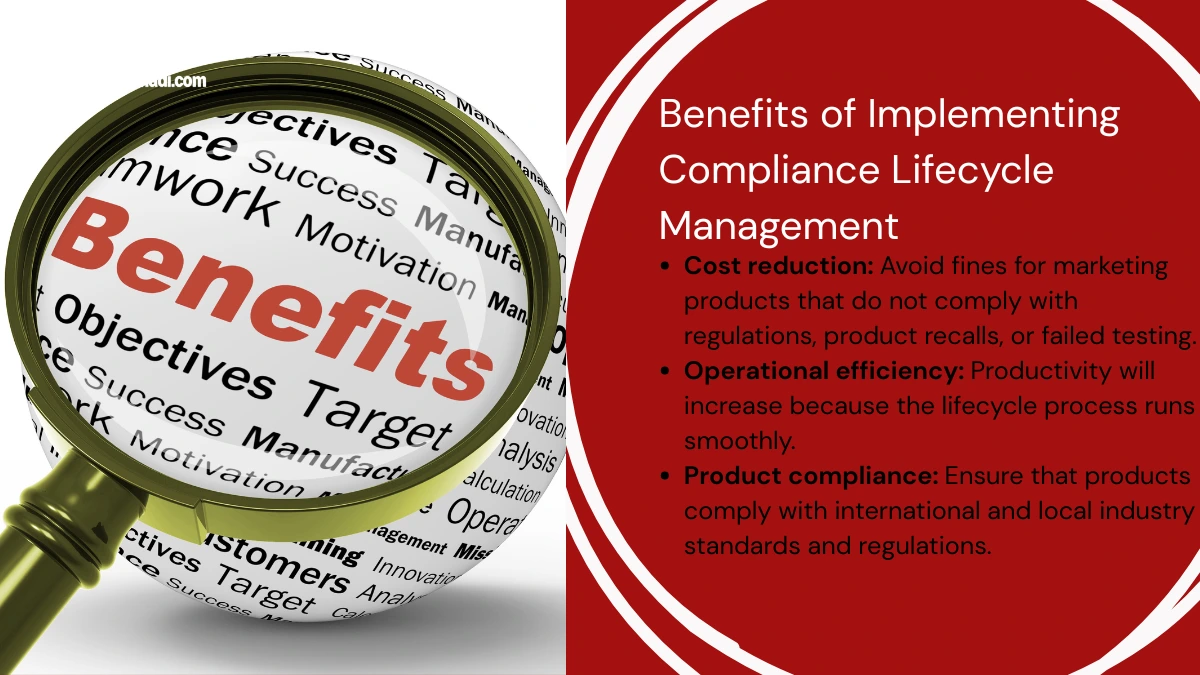
Implementing telecom compliance lifecycle management will provide many benefits for companies. By optimizing processes, there will be high cost and operational efficiency gains.
- Cost reduction: Avoid fines for marketing products that do not comply with regulations, product recalls, or failed testing.
- Operational efficiency: Productivity will increase because the lifecycle process runs smoothly.
- Product compliance: Ensure that products comply with international and local industry standards and regulations.
When Should Pre-Compliance Testing be Conducted?
Before conducting telecom compliance testing, there is something called pre-compliance testing. This is something that needs to be done before conducting the actual testing. The goal is, of course, to avoid failure during testing.
Pre-compliance testing should be conducted well before the product is ready for compliance testing. This process can be conducted during the product development and design stages. The three ideal times to conduct a pre-compliance test are at the beginning of the design cycle, before mass production, and whenever there are significant design changes.
- Beginning of the design cycle: Enables early identification of potential problems.
- Before mass production: It prevents product recalls when testing fails.
- Whenever there are design changes: It ensures that changes do not cause new compliance issues.
Critical Path Approval for Multi-Country Certification
A fundamental process in the context of multi-country certification is critical path approval. This is a long series of tasks that must be completed on time. It is necessary to identify and manage the series so that the entire global certification project is successful on schedule.
Any delays in this critical path will also cause delays in the overall completion. The following steps can be taken in the critical path approval process:
- Identify all activities: Create a comprehensive list of tasks required to obtain certification in each country, from application submission and testing to certificate issuance.
- Look for commonalities: Identify whether test results in one country can also be used in other countries.
- Estimate task duration: Measure the time required for the application process until certification is issued to adjust to the distribution.
- Calculate the critical path: Make calculations to determine the start and end dates, from the earliest to the latest estimates for each activity.
Understanding multi-country regulations
Global market regulations are a process that manufacturers must go through to meet technical, safety, and radio frequency compatibility standards. These regulations apply at the international and local levels. For the global market, they are based on international standards, such as IEC and FCC.
In the ASEAN region, regulations vary at the national level in each country. However, efforts are being made to harmonize standards through Mutual Recognition Agreements (MRAs). The goal, of course, is to accelerate the circulation of products in regional markets.
Some types of type certification regulations in Asia:
- Indonesia: DJID Certification
- Malaysia: SIRIM Certification
- Thailand: NBTC Certification
- Singapore: IMDA Certification
- Philippines: NTC Certification
- Vietnam: MoST Certification
- Cambodia: TRC Certification
- India: WPC ETA and TEC MTCTE Certification
The Role of Partners in Reducing the Risk of Delays
In the telecom compliance lifecycle, partners are needed for the telecom type approval process during the market launch stage. One of the objectives is, of course, to navigate the different regulations in each country.
Local partners will facilitate companies in carrying out this certification process. This will reduce the risk of failed testing and certification application processes, which can lead to product marketing delays. Here are some of the things that local partners do:
- Identify applicable standards
- Monitor regulatory changes
- Review technical documents
- Prepare application documents
- Manage communication with regulators
- Recommend design changes if necessary.
- Assistance with model/variant changes
- Arranging EMC, RF, SAR, and Safety testing in nationally and internationally accredited laboratories.
- Providing or acting as a local representative (if required by the destination country)
- Assistance for importers/distributors
- Certificate renewal/extension
Those are some things that need to be understood regarding the telecom compliance lifecycle. This understanding will help manufacturers in identifying and mapping existing regulations, both locally and internationally.
Companies that avoid common mistakes will see a significant impact on costs and operational efficiency. This is certainly inseparable from the role of corporate control that maintains the cycle and local partners who help the entire certification process run smoothly without obstacles. [UN]