
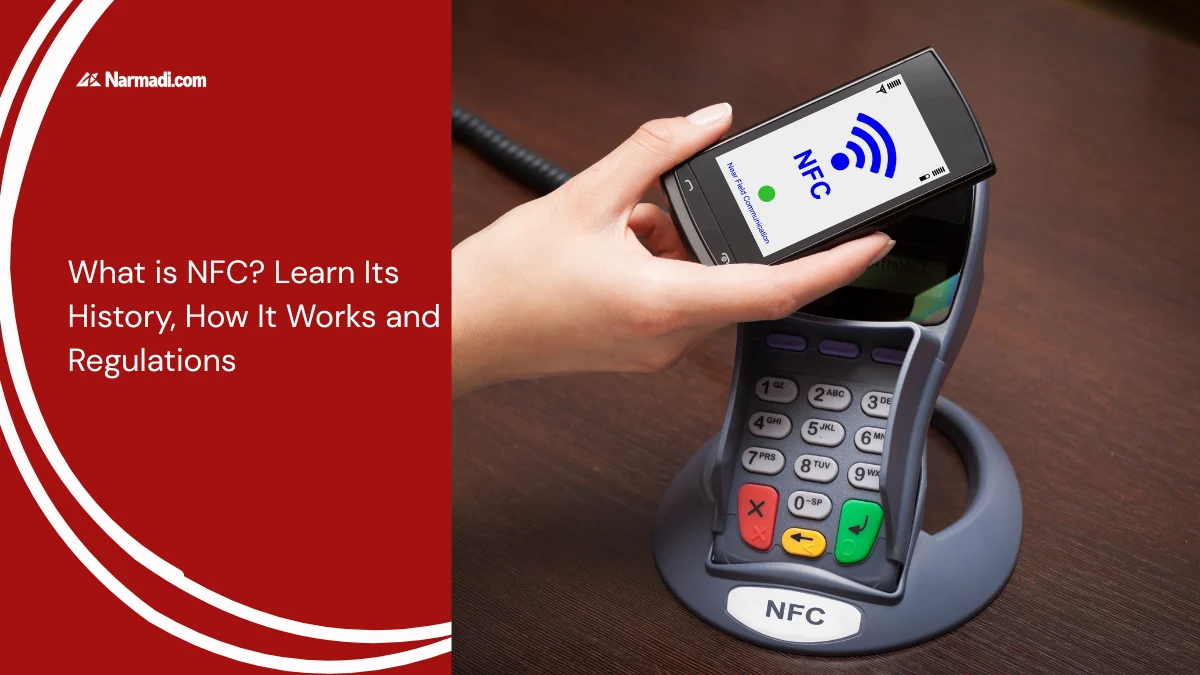

Near Field Communication (NFC) is a technology that enables short-range wireless communication between two devices.
Almost all modern smartphones now use NFC technology. This technology is also increasingly popular and widely used in various activities, from digital payments to data transfers.
This article will explain the history of NFC, how it works, and the regulations for its use.
History of NFC
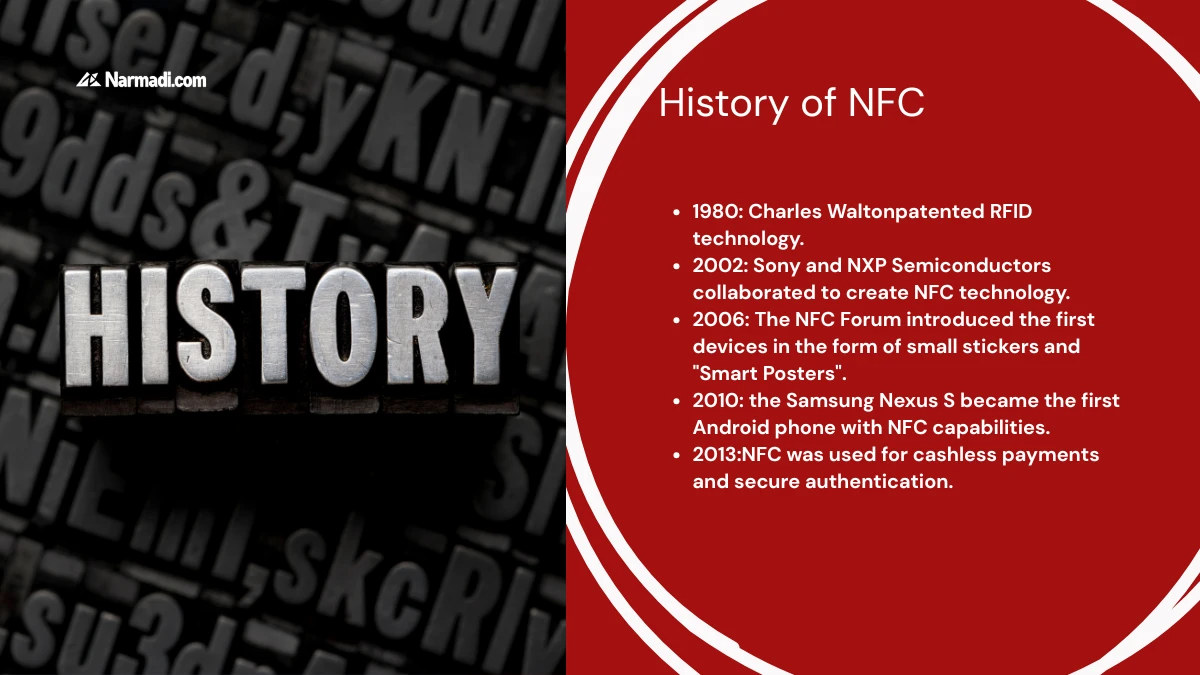
The history of Near Field Communication is inseparable from that of Radio Frequency Identification (RFID), which was invented in 1948. Initially, this technology was used to capture aircraft signals during World War II.
After the war, this technology continued to evolve. Until 1980, Charles Walton, a former soldier in the Army Signal Corps with experience working at IBM Research Laboratories, patented RFID technology.
After that, this technology was widely adopted industrially. Many technology companies operating in the telecommunications sector became interested in this technology.
In 2002, Sony, as one of the first companies to recognize the importance of user data security for their devices, collaborated with NXP Semiconductors. They successfully created NFC technology.
The principle behind NFC is the same as that of RFID. Essentially, the technology is a subset of RFID, which uses radio frequencies to transfer data.
However, RFID still poses a security risk due to potential interference during transmission. This is where solutions emerge to reduce the radio frequency bandwidth for data transmission.
Data can still be transmitted without the need for the two devices to be in proximity. This technology later became known as NFC.
The NFC Forum introduced the first devices in the form of small stickers and “Smart Posters” in 2006. Four years later, in 2010, the Samsung Nexus S became the first Android phone with NFC capabilities.
In 2013, NFC was used for cashless payments and secure authentication. From 2015 to the present, the technology has been integrated into many devices, such as smartwatches and fitness trackers. This communication technology also plays a vital role in the Internet of Things (IoT).
How Does it Work?
Near Field Communication works using the principle of electromagnetic induction, which utilizes changes in magnetic fields to generate an electric current.
NFC uses two coils, one as a transmitter and one as a receiver. When two devices approach each other, the transmitter coil generates a magnetic field that is captured by the receiver coil, generating an electric current.
NFC enables two-way communication, meaning both devices can send and receive data simultaneously, making the transfer process fast and efficient.
Another advantage is the security. Despite its limited range, this technology is highly secure for cashless payments.
However, NFC can still be equipped with additional security measures to maintain communication security, as the RF signals that transfer data can be detected within a certain range.
Application of Technology in Various Sectors

Due to its ease of use, Near Field Communication technology is gaining popularity. This technology is widely used in various sectors. Here are some examples of its applications:
1. Contactless payments
One of the most well-known applications of NFC is its ability to make contactless payments. Many smart devices, such as smartphones and smartwatches, are equipped with NFC features.
These devices allow transactions to be made simply by holding the device close to the payment terminal. This method makes payments more secure and efficient.
2. Use in public transportation
NFC for contactless payments is also utilized in public transportation systems, such as trains and buses. Users can pay for tickets with their mobile phones or cards at the turnstiles before boarding.
This reduces the need for direct contact. Queues for public transportation are also shortened due to the efficient ticket payment process.
3. Access control in office buildings
NFC is not only used for transactional needs, but also as an authentication and access control method. This technology is widely used in several office buildings.
Companies use this technology to regulate specific access only for employees with registered devices.
4. Health tracking and medical data
Currently, NFC is also used in several healthcare devices. Its function is typically to store patient medical data.
This is especially useful in emergencies. Medical personnel can directly access patient data through compatible devices, thus speeding up treatment without physically accessing documents.
5. Integration with IoT and smart homes
The increasingly widespread Internet of Things (IoT) and smart homes also utilize NFC technology. This integration allows users to easily control devices with just a single touch.
For example, simply by tapping a smartphone against a smart device, credentials or Wi-Fi settings can be configured, simplifying the setup process.
Emerging Trends and Future Predictions
A discussion of the history of Near Field Communication would be incomplete without discussing its evolving trends and future predictions. This would certainly be an interesting historical prediction to discuss.
Currently, the use of wearable devices, IoT, and contactless payments continues to increase and will continue to grow. NFC will be one of the technologies driving this progress.
NFC is also predicted to play a larger role in the future. Increasingly sophisticated security technology will make NFC the primary choice for secure wireless communications and transactions. This communication technology allows for multiple actions to be performed simultaneously.
Usage Regulations
Near Field Communication technology operates within a specific frequency spectrum. In each country, all NFC-based wireless devices must be Radio Frequency (RF) Certified.
Wireless regulations require all radio frequency-based devices to meet specific technical standards before they can be sold in that country. This certification ensures that the product meets safety standards and does not interfere with other communication devices.
The certification process involves technical testing, including frequency adjustment, safety checks, and environmental compatibility verification. This ultimately results in a Test Report confirming that the product meets technical standards and is safe for use.
For companies wishing to sell NFC products, Dimulti, as a Product Compliance Service, is available to assist with this process. Our services include preparing technical and legal documents, conducting necessary testing, ensuring compliance with country regulations, and helping companies streamline the certification process. [UN]