5 Structure of Camera that you Have to Know

Contents
What are the structure of camera? Let's find out here!
Structure of Camera
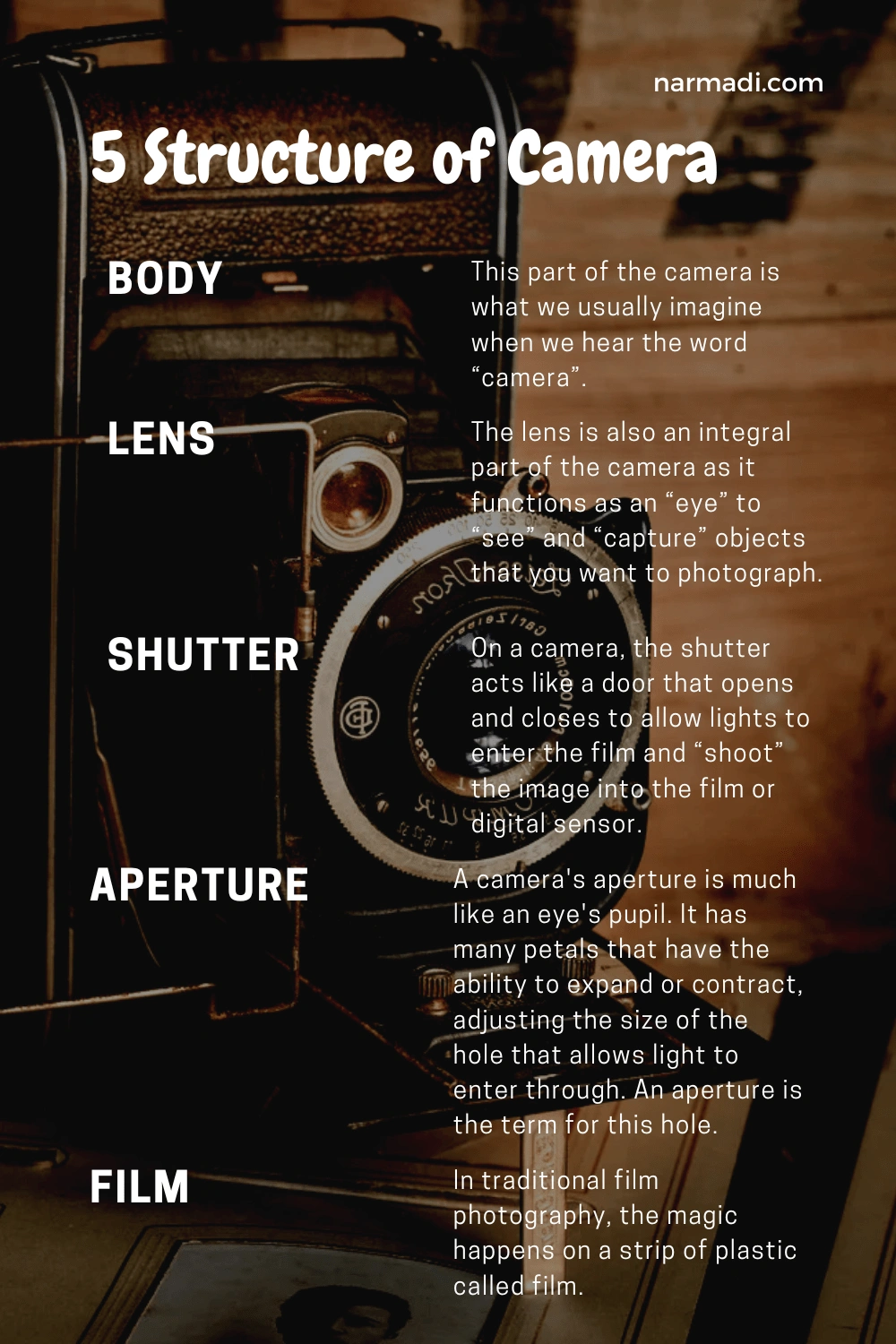
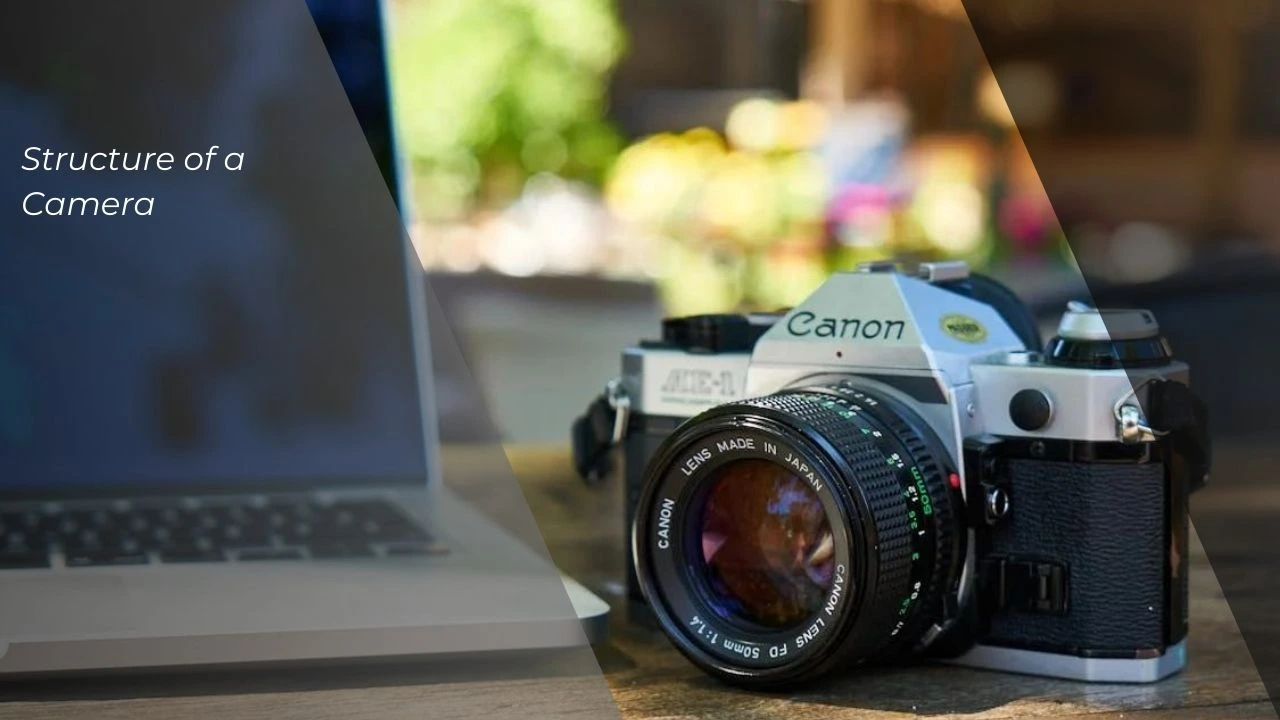
Using a typical SLR camera as an example, we will discuss the construction of a camera. To avoid confusing you, we won't get too far into depth here, but we will go over the key parts of a camera.
1. Body
The first one is the body, this part of the camera is what we usually imagine when we hear the word “camera”.
The function of the body in a camera is to hold all parts of the camera together, and to protect internal parts from getting exposure to the moisture from the outside. It also serves as a protector of the film to ensure it is in the best quality.
The body of a camera consists of a lot of parts and components including the shutter, rewind mechanism, and others.
2. Lens
The second structure of camera is the lens. The lens is also an integral part of the camera as it functions as an “eye” to “see” and “capture” objects that you want to photograph.
It consists of several lenses that work like a magnifying glass that helps to focus the light so a clear image is formed on the film or digital sensor.
Also, there are a lot of types of lenses with a lot of purposes, some are to help you to take a picture of objects that are far away, and the others are better for capturing a wide landscape or large group of people.
3. Shutter
The next structure of camera is the shutter. On a camera, the shutter acts like a door that opens and closes to allow lights to enter the film and “shoot” the image into the film or digital sensor.
And the “shutter speed” or “exposure” is the term in which a controlled amount of time light is exposed to the film or digital sensor.
The longer shutter speed is, making the shutter open for a longer time and allows a lot of light to hit the film, that’s why a longer shutter speed is better for shooting in the dark.
On the other hand, keeping it open for a very short time will help you capture an object that moves very fast without blurring.
4. Aperture
A camera's aperture is much like an eye's pupil. It has many petals that have the ability to expand or contract, adjusting the size of the hole that allows light to enter through. An aperture is the term for this hole.
The aperture of the camera is used to control the amount of light that strikes the film inside. A big aperture, often known as a wide open aperture, allows a lot of light to enter the camera, making it useful for photography in low light.
And on the other hand, if less light enters a hole with a narrow aperture, it will be appropriate for extremely bright lighting.
5. Film
In traditional film photography, the magic happens on a strip of plastic called film. This film is coated with a special layer that's sensitive to light. When light travels through the lens and aperture, it strikes this layer, triggering a chemical reaction.
This reaction creates an invisible image, called a latent image. This hidden image is then brought to life through a development process using special chemicals, revealing the captured photo.
How the Parts Work Together
Each part has its own job. But the magic happens when they work together. Here's a simple way to picture it.
- The body holds everything together and keeps moisture out.
- The lens gathers light and focuses it.
- The aperture decides how wide the opening is.
- The shutter decides how long the light comes in.
- The film or sensor records the image.
Simply put, the aperture controls how much light comes in at once, and the shutter controls for how long. Together, they decide how bright your photo will be.
Simple Settings for Common Situations
Shooting in Low Light
Use a wide aperture and a longer shutter speed to let in more light. Keep the camera steady to avoid blur.
Shooting Fast Movement
Use a short shutter speed to freeze the action, such as a running child or a moving car.
Shooting in Bright Sunlight
Use a narrow aperture so the photo doesn't become too bright.
Tips for Taking Care of Your Camera
- Keep the lens clean with a soft cloth.
- Store the camera in a dry place.
- Use a lens cap when the camera is not in use.
- Avoid sudden temperature changes that can cause moisture.
Frequently Asked Questions
What happens to the film after a photo is taken?
An invisible image, called a latent image, is created on the film, which becomes visible after the development process.
Why are there different types of lenses?
Some are better for objects far away, while others are better for wide landscapes or large groups of people.
Now you know the parts, so enjoy taking photos!
So there you go a structure of camera!