


Dedicated Short-Range Communication (DSRC) technology, which supports digital transportation, requires two components to function properly: the On Board Unit (OBU) and the Road Side Unit (RSU).
The On Board Unit is a small component installed in a vehicle that enables communication with other vehicles or with infrastructure that supports DSRC.
Are you familiar with the On Board Unit? Read this article to the end to learn about the device that is an important part of the advancement of digital transportation.
What is an On Board Unit?
An On Board Unit (OBU) is an electronic device that is a component of Dedicated Short-Range Communication (DSRC) technology in support of digital transportation.
With an OBU, vehicles can communicate bidirectionally with other vehicles (Vehicle-to-Vehicle / V2V) to send information about the vehicle’s condition (such as sudden braking, speed, or position).
Additionally, the OBU can receive information from road infrastructure (Vehicle-to-Infrastructure / V2I), such as traffic lights, electronic message signs, and as part of an automatic toll road payment system.
All such communications, whether V2V or V2I, occur within milliseconds using 5.9 GHz radio frequency technology.
Components of On Board Unit
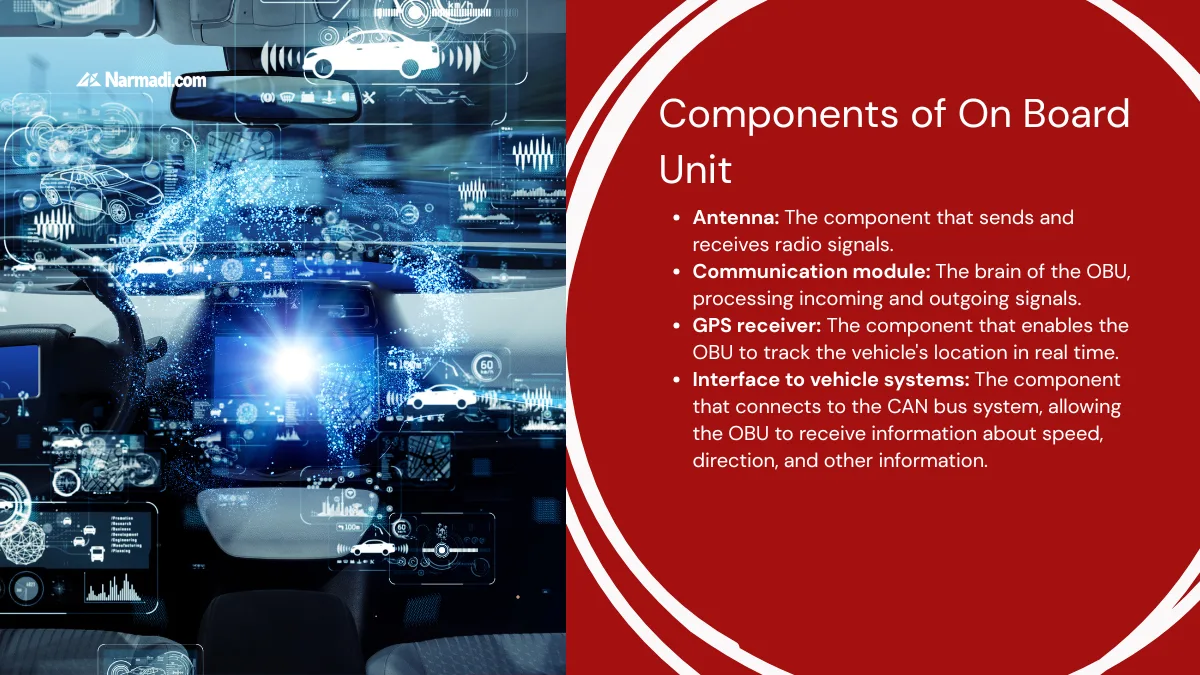
An On-Board Unit (OBU) can function fully with the support of various components. These components include:
- Antenna: The component that sends and receives radio signals.
- Communication module: The brain of the OBU, processing incoming and outgoing signals.
- GPS receiver: The component that enables the OBU to track the vehicle’s location in real time.
- Interface to vehicle systems: The component that connects to the CAN bus system, allowing the OBU to receive information about speed, direction, and other information.
Technologies used
On Board Units (OBUs) are designed to meet various needs, utilizing different radio frequency technologies. This technology enables cars to communicate short-range with infrastructure or other vehicles.
The technologies commonly used by OBUs include GPS, Bluetooth Low Energy (BLE), and Near Field Communication (NFC). GPS is used for location tracking. BLE is used for synchronization with smartphones, while NFC is used for digital transactions and payments.
Features
The main feature of an On Board Unit is its ability to communicate with existing infrastructure. Here are some of the features:
- Electronic Toll Collection (ETC): Enables cashless payments.
- V2X Communication: The ability to communicate with infrastructure and other vehicles for traffic safety.
- Audio/Visual Warnings: The OBU will issue warnings when approaching hazardous areas such as payment zones, school zones, and heavy traffic areas.
- Fleet Management Tools: Assists in vehicle and logistics tracking by sending necessary data (movement, speed, and location).
The Function of On Board Unit
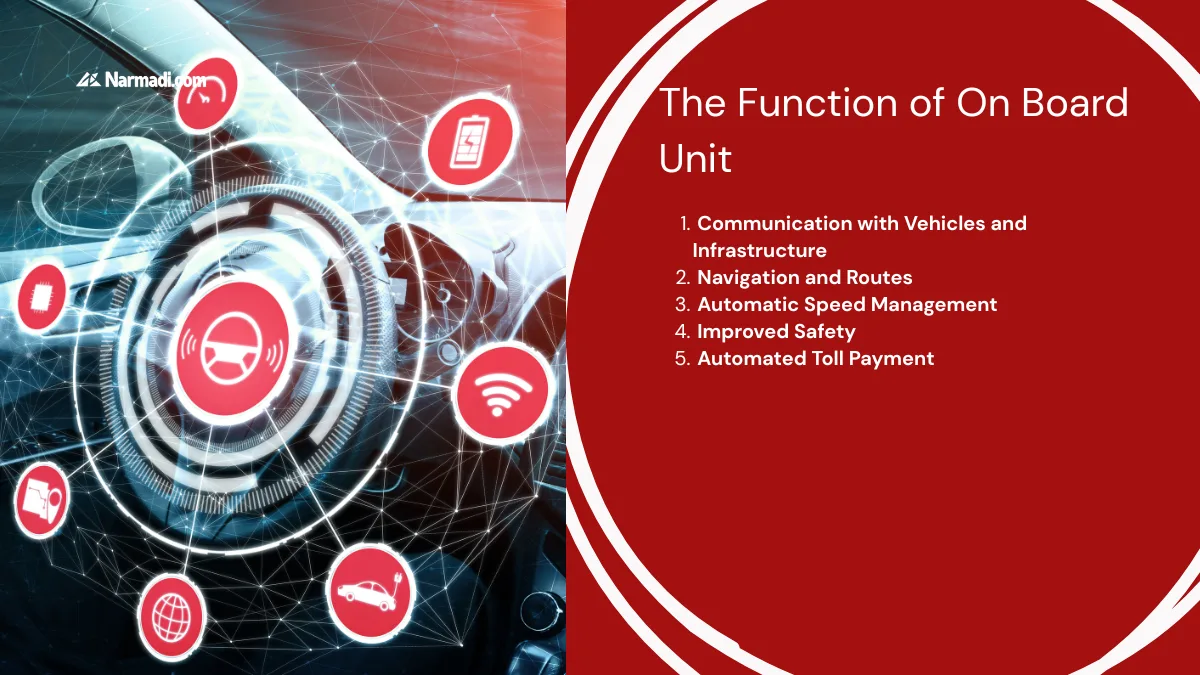
The main function of the On Board Unit (OBU) is to communicate with other vehicles and road infrastructure (Road Side Unit / RSU). The following are its functions and applications:
1. Communication with vehicles and infrastructure
The OBU uses 5.9 GHz radio frequency technology to quickly communicate with other vehicles (V2V) and infrastructure (V2I). This allows it to receive information related to traffic management and surrounding hazards. This, of course, will make traffic flow more efficient.
2. Navigation and route
The OBU sends vehicle location and speed data to the RSU for traffic management, which then provides the best navigation and routing. The OBU receives information about traffic congestion to maintain traffic flow, reduce congestion, and improve overall transportation efficiency.
3. Automatic speed management
The OBU is integrated with the vehicle’s systems, allowing it to automatically adjust speed based on the information it receives. For example, when a vehicle suddenly stops tens of meters ahead, when approaching a school zone, or when a red light is about to turn green.
4. Improving safety
With its ability to communicate quickly and in real time via V2V and V2I, drivers can receive information about surrounding hazards. The OBU can receive information related to collision warnings, emergency braking, sudden vehicle stops, and lane changes. This allows drivers to anticipate potential hazards.
5. Automatic toll payment
To support fully automated digital transportation, the OBU enables automated toll payment. This device stores identity data and other information, allowing vehicles to pass through toll gates automatically without stopping or queuing.
Usage Regulations
The On Board Unit (OBU) technology operates within a specific frequency spectrum. In each country, all Wireless Short Range Devices (SRD)-based wireless devices must have a Type Approval Certificate.
Wireless regulations require all radio frequency-based devices to meet specific technical standards before they can be sold in that country. This certification ensures that the product meets safety standards and does not interfere with other communication devices.
The certification process involves technical testing, including frequency tuning, safety checks, and verification of environmental compatibility. Ultimately, this results in a Test Report confirming that the product meets technical standards and is safe for use.
For companies wishing to sell On Board Unit products, Dimulti, as a Type Approval Service, can assist with this process. Our services include preparing technical and legal documents, conducting necessary testing, ensuring compliance with national regulations, and helping companies streamline the certification process.