

On March 9, 2026, the Philippines implemented flexible work arrangements for all government agencies. This was confirmed through Memorandum Circular (MC) No. 114, Series of 2026.
Flexible work arrangements for all government agencies were established to further reduce building energy consumption and transportation fuel use. This was also due to the ongoing crisis in the Middle East and its impact on fuel costs.
The regulations regarding flexible work arrangements for all government agencies in the Philippines provide several provisions. These will also undoubtedly impact the Philippines’ type approval certification process.
Background to the Regulation
Several urgent matters of concern to the Philippine government prompted the establishment of flexible work arrangements for all government agencies. The following are some of the factors that prompted the issuance of Regulation MC No. 114, Series of 2026:
- Energy efficiency and conservation program: Efforts to maintain energy supplies, mitigate the impact of high imported fuel prices, and protect the environment for economic and social development.
- Geopolitical tensions: Causing significant volatility in the global energy market, resulting in rising fuel costs and impacting the national economy.
- Urgent need for energy conservation: To reduce the energy footprint of government operations and optimize the use of public resources.
Regulation Provisions
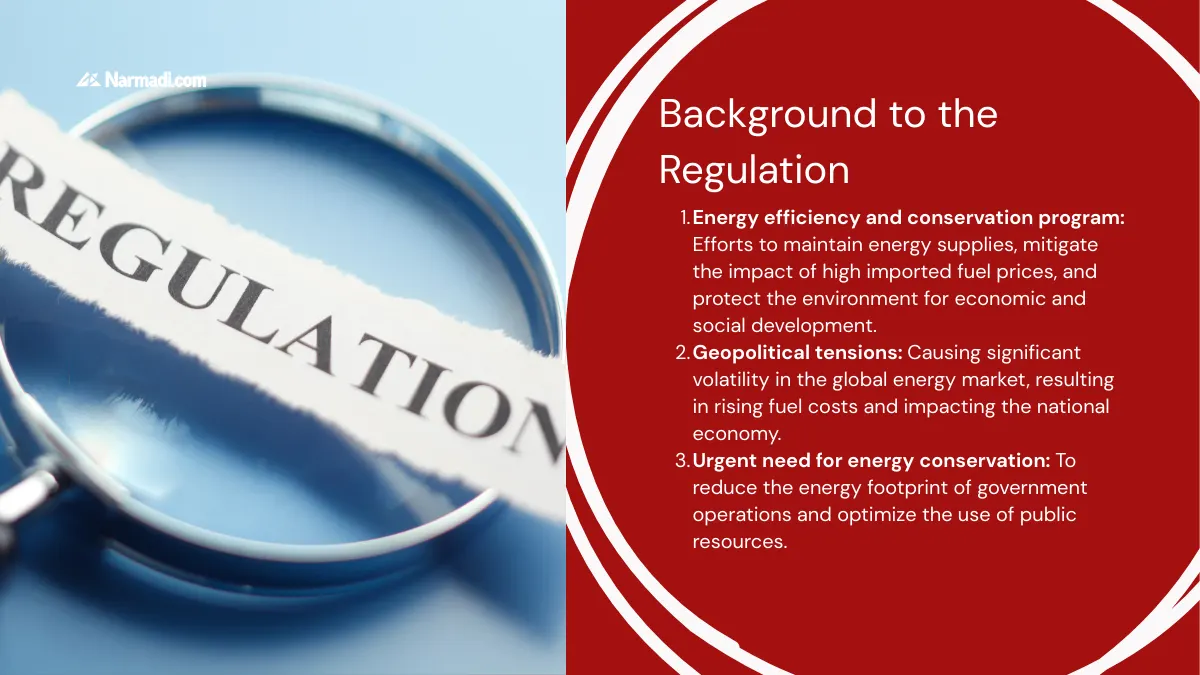
MC No. 114, Series of 2026, does not merely establish flexible work arrangements for all government agencies. That is just one of several provisions within the regulation.
Three provisions were created to reduce energy and fuel consumption due to rising costs caused by geopolitical tensions. The other two are the implementation of energy conservation protocols and government transportation efficiency.
1. Flexible work arrangements
Flexible work arrangements for all government agencies are another highlighted provision, as they are considered to have a significant impact on reducing building energy consumption and transportation fuel.
Government agencies implement a four-day on-site work week. This system is implemented either through a compressed workweek or by designating a common work-from-home day.
Therefore, each agency must develop internal guidelines to monitor attendance, performance, and the implementation of flexible work arrangements in accordance with Civil Service Commission (CSC) regulations.
2. Implementation of energy conservation protocols
Another effort by the Philippine government to implement energy conservation protocols is to accelerate the implementation of the Government Energy Management Program (GEMP) in accordance with AO No. 15, RA No. 11285.
This implementation involves maximizing all energy use in offices. This includes setting a temperature standard for air-conditioned rooms at 24°C, putting office equipment in sleep mode, and turning off all lights and electronic devices when not essential.
Furthermore, the government has implemented virtual meetings for all activities and limited official travel.
3. Government transportation efficiency
Government agencies are also strengthening fleet efficiency measures to reduce fuel consumption. This is done by combining multiple tasks into one trip, optimizing routes, and minimizing engine running while idling.
Furthermore, a full-tank method is being implemented to monitor fuel consumption and ensure regular vehicle maintenance. Agencies are also encouraged to reduce elevator use and encourage the use of stairs for moving up or down one floor.
Impact for Philippines Type Approval
The Philippine government’s efforts to reduce energy and fuel use through MC No. 114, Series of 2026, will undoubtedly impact Philippine type approval, particularly regarding the provisions regarding flexible work arrangements for all government agencies.
The four-day work week and flexible work locations may result in potential delays in certificate processing and issuance.
Given this, applicants for the Philippines type approval certification are expected to understand. We hope this will not significantly impact the certification completion time.