

The telecommunications industry is a highly dynamic sector. Innovation continues to occur in support of global digitalization. Changes in this sector are not only related to technology, but also affect frequent regulatory updates.
Regulatory updates in the telecom sector are inevitable. Therefore, it is important for manufacturers, importers, and distributors to always monitor these changes. The goal, of course, is to ensure that devices remain compliant with existing regulations.
This article will provide comprehensive information on key regulatory updates in the telecom sector. This will give manufacturers, importers, and distributors an understanding of how important it is to stay up to date on regulatory changes.
Understanding International Regulations
Global market regulations are a process that manufacturers must undergo to meet technical, safety, and radio frequency compatibility standards. The goal is to facilitate the use, trade, and import of devices into a country.
The International Electrotechnical Commission (IEC) and the Federal Communications Commission (FCC) are the international regulatory standards that must be complied with. However, regulations at the national level may vary from country to country. Here are some examples of compliance authorities around the world that regulate in their respective countries:
- Brazil: Agência Nacional de Telecomunicações (ANATEL)
- Cambodia: Telecommunication Regulator of Cambodia (TRC)
- Indonesia: Direktorat Jenderal Infrastruktur Digital (DJID)
- India: Wireless Planning & Coordination (WPC) Equipment Type Approval (ETA) and Telecommunication Engineering Centre (TEC) Mandatory Testing and Certification of Telecom Equipment (MTCTE)
- Malaysia: Standard and Industrial Research Institute of Malaysia (SIRIM)
- Mexico: Norma Oficial Mexicana (NOM)
- Philippines: National Telecommunication Commission (NTC)
- Singapore: Infocomm Media Development Authority (IMDA)
- Thailand: National Broadcasting and Telecommunications Commission (NBTC)
- Vietnam: Ministry of Science and Technology (MoST)
The Importance of Knowing Regulatory Updates
Regulatory updates are inevitable in the telecom sector. In addition to requirements such as Radio Frequency (RF) test reports, Electromagnetic Compatibility (EMC), and Electrical Safety, staying up to date with regulations is also equally important.
Therefore, manufacturers, importers, and distributors need to conduct regulatory research. The goal is, of course, to stay informed about regulatory updates.
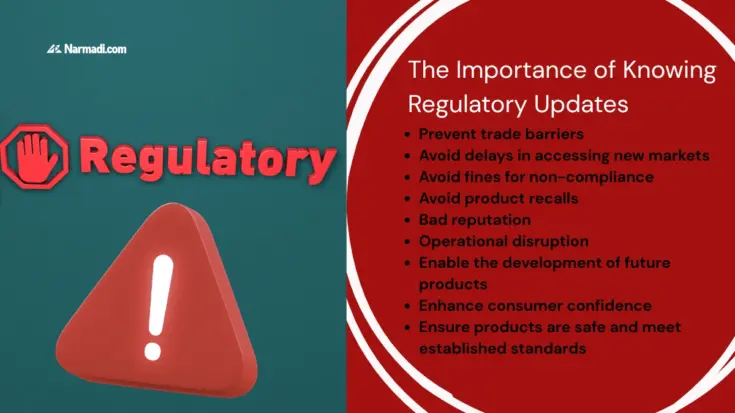
Why is it important to stay updated on regulations? To ensure that products are not hindered in international distribution. Products that do not meet the latest regulatory standards will encounter several obstacles. Here are some reasons why it is important to be aware of regulatory updates:
- Prevent trade barriers
- Avoid delays in accessing new markets
- Avoid fines for non-compliance
- Avoid product recalls
- Bad reputation
- Operational disruption
- Enable the development of future products
- Enhance consumer confidence
- Ensure products are safe and meet established standards
Things That Often Cause Regulatory Changes
With the rapid development of digitalization, telecommunications tools continue to innovate. The dynamism of this sector is not only evident in device innovation, but also often occurs with changing regulations.
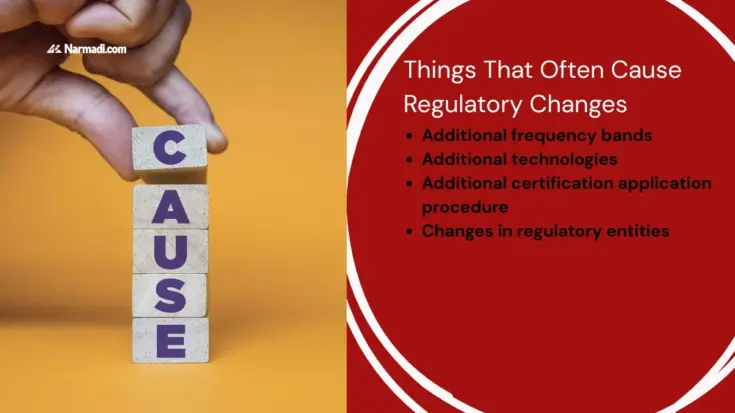
This is especially true for local authorities that set regulatory policies in their respective countries. Regulatory updates often occur for several reasons. The following are some of the most common causes:
- Additional frequency bands: The absence of frequency bands in previous regulations necessitates additional regulations or updates to previous regulations.
- Additional technologies: Innovations in the telecommunications sector often give rise to additional technologies that require regulations to govern them.
- Additional certification application procedures: Countries adjust their certification application procedures in accordance with the policies of their respective authorities.
- Changes in regulatory entities: This rarely happens, but the establishment of a new regulatory entity in a country to replace the previous one may lead to changes in existing regulations.
The Role of Regulatory Compliance
Regulation plays an important role in global compliance access. By complying with regulatory updates, you are demonstrating your commitment to ensuring that your business follows applicable laws, standards, and regulations.
Compliance with regulations means that trade distribution is not hampered, access to new markets is faster, products will not be withdrawn by authorities, and you will avoid fines for non-compliance. In fact, compliance will increase consumer confidence and ensure that products meet established standards.
What Manufacturers Should Do Next?
Given the importance of staying informed about regulatory updates, companies must take steps to obtain this information effectively. Therefore, there are several things that need to be done. Here are some things you can do:
- Create a compliance roadmap for each country: By creating a roadmap, you can map the authorities in each country to find out if there are any regulatory updates from those authorities.
- Conduct a compliance pre-assessment: This can minimize errors if the device has a frequency that differs from the regulations specified in the destination country.
- Build relationships with accredited labs: They usually receive information early on if there are regulatory changes for testing. With good relationships, you can find out about regulatory updates from them.
- Use regulatory consultants for regular updates: Partners in several countries who focus on regulatory research can help you stay up to date with the latest regulations.
- More disciplined internal documentation: This is necessary whenever there are hardware/software changes.
The Role of Regulatory Research
To stay informed about regulatory updates, you often need the right partner. A local partner with close ties to authorities can help you meet your regulatory research needs for global markets.
This allows you to analyze regulations by country, stay abreast of regulatory changes, and develop regulatory compliance strategies. In fact, your partner will help you build relationships in each country and support your access to governments and regulatory authorities.
Local partners can also assist you in obtaining type approval certification from start to finish. In some countries where it is required, local partners can even act as local representatives who will assist you with compliance matters in the target country.
They can also identify applicable standards, monitor regulatory changes, and review technical documents. They will also assist you in managing communication with regulators. That way, you no longer need to worry about licensing telecommunications devices so they can be distributed and used in a particular country.