
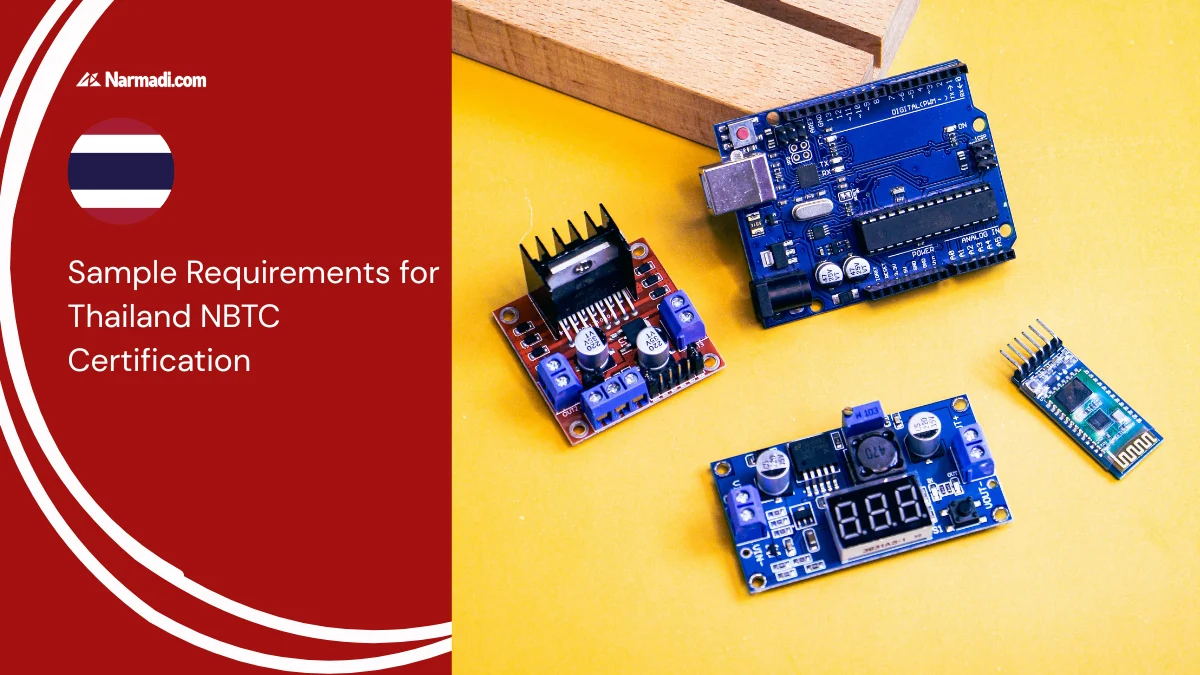

To market Information and Communication Technology (ICT) products in Thailand, one must go through the National Broadcasting and Telecommunications Commission (NBTC) certification process. A frequently asked question about this process is the sample requirements for Thailand NBTC certification.
As an importer, exporter, or manufacturer who wants to market their products, you must know about the sample requirements for Thailand NBTC certification.
This article will give you information about the sample requirements for Thailand NBTC certification.
What is a Test Sample?
A test sample is a device that will be used for laboratory testing in the type approval certification process. Test samples are required when local testing is needed in the country.
During testing, samples will be measured to ensure their compliance with applicable technical standards. The number and type of samples required will depend on the testing requirements.
Is Local Testing for Thailand Type Approval Mandatory?
Before learning the sample requirements for NBTC certification, you need to understand the local testing requirements. For Thailand type approval, local testing is not mandatory.
This is because the NBTC accepts test results from overseas laboratories that meet applicable international standards. The absence of local testing requirements makes the certification process shorter. This certainly simplifies the process for applicants.
Sample Requirements for Thailand NBTC Certification
The Thailand NBTC certification does not require local testing for product approval. As a result, certification can be obtained through a document-based process.
Documents are a commonly used method for NBTC certification. Although local testing methods for Thai type approval are available, this route is not recommended. This is due to the high cost of testing and longer waiting times.
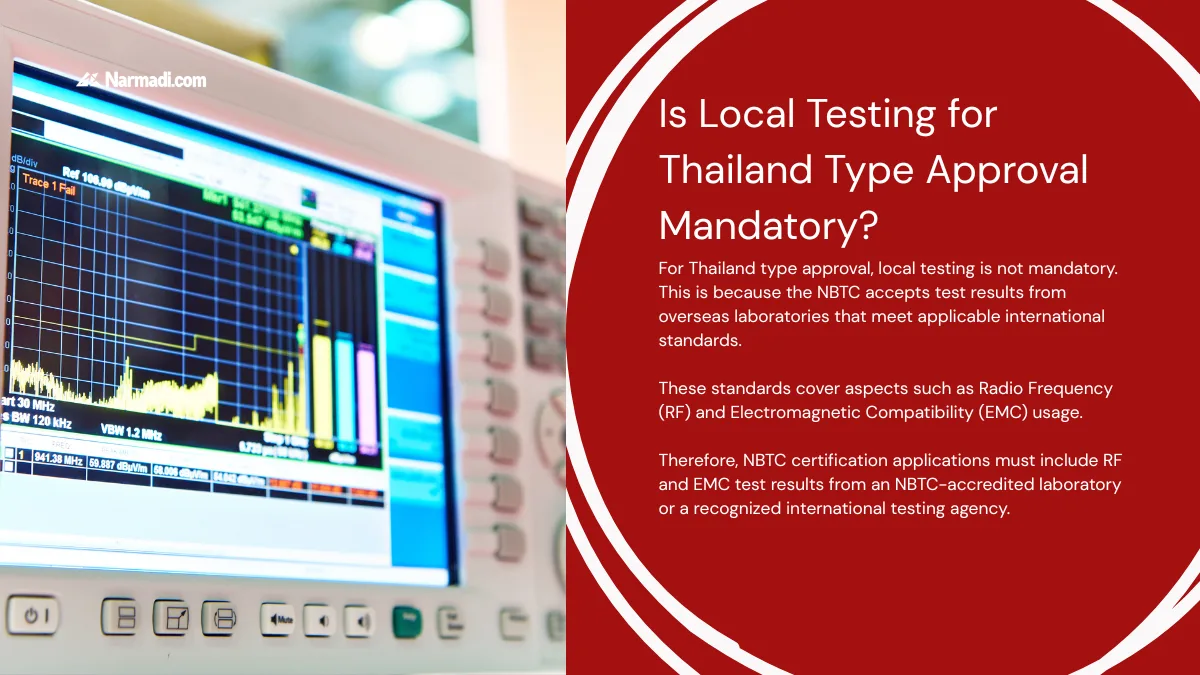
Even when using the document method, NBTC certification applications in Thailand must still meet all Technical Standards and Specifications set by the NBTC. These standards cover aspects such as Radio Frequency (RF) and Electromagnetic Compatibility (EMC) usage.
Therefore, NBTC certification applications must include RF and EMC test results from an NBTC-accredited laboratory or a recognized international testing agency.
The NBTC allows the recognition of internationally recognized guidelines, such as CE or FCC test reports from ISO 17025-accredited laboratories, to meet important approval requirements. This simple guideline provides flexibility for companies wishing to enter the Thailand market without additional local testing requirements.
What If You Don’t Have Test Results from an Overseas Laboratory?
For those of you who don’t have overseas test results, the lack of local testing will certainly be an obstacle. However, you don’t need to worry; by working with Dimulti, we are ready to help you obtain these test results.
We will recommend testing at an overseas laboratory that meets Thai qualifications and standards. This way, you will have the test results ready and be ready to complete the necessary documentation to apply for NBTC certification.
To conduct testing, samples will, of course, be required. The number and type of samples will depend on the device being tested and the laboratory’s needs.
Conclusion
The answers to the questions about sample requirements for Thailand NBTC certification are not required, as Type Approval applications in Thailand typically use paperwork by attaching a complete CE or FCC test report from an ISO 17025 accredited Lab.
To simplify the process of obtaining NBTC certification for distributors, importers, or brand representatives who want to sell ICT products in Thailand, you can contact Dimulti as the Product Compliance Specialists for ICT Products. We are ready to be your solution. [UN]