
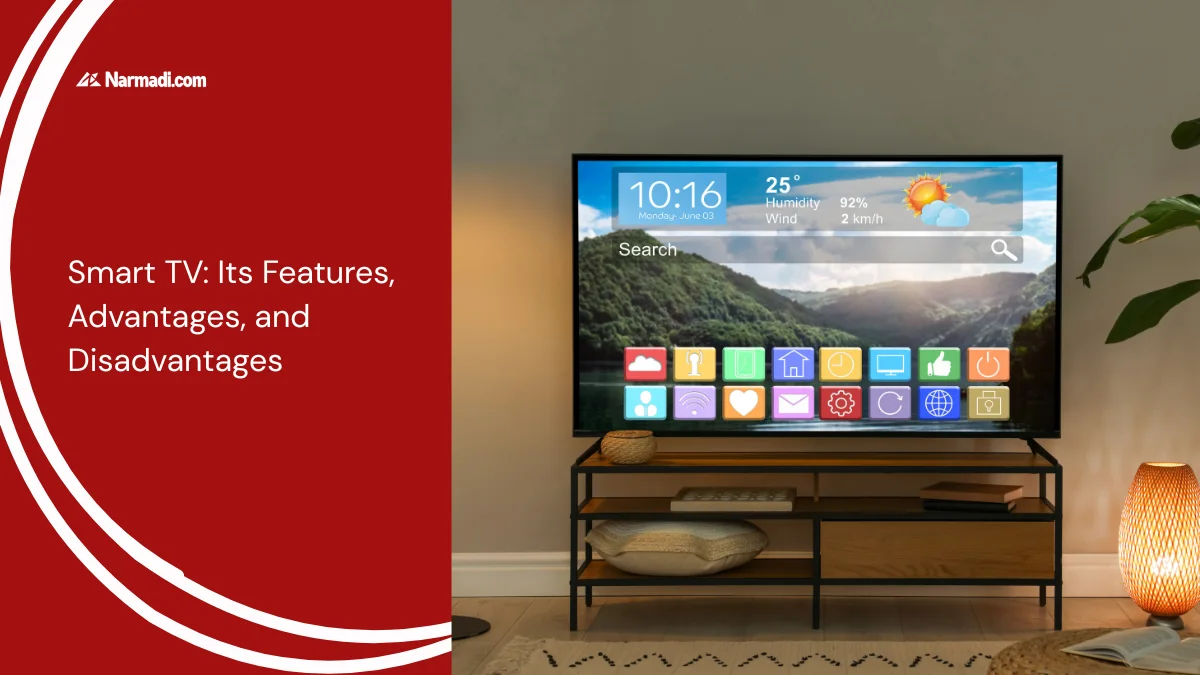

Smart TVs are a television innovation that has evolved to meet the rapid development of digital technology over the past decade.
Smart TVs offer features that previous tube TVs lacked. They can connect to your home WiFi to access digital streaming services directly.
Smart TVs also offer many advantages, so they are currently in great demand as entertainment devices in many people’s homes.
This article will review Smart TVs in terms of their features, advantages, and disadvantages before you consider replacing your old TV with a Smart TV.
What is a Smart TV?
A smart TV is a type of television that can connect to the internet and run various applications commonly available on smartphones or tablets.
Through these devices, users can enjoy streaming content from popular services like Netflix, Disney+, YouTube, and Spotify without the need for additional devices. This is the main difference between a smart TV and a conventional TV, which only displays live TV.
Furthermore, these devices are equipped with advanced features such as a web browser, voice control, and the ability to integrate with other smart home devices like smart speakers or security cameras.
The Features
What makes smart TVs so popular is their features. These include high image quality, voice control, and screen mirroring. Here’s a more detailed explanation of these features.
1. High image quality
Most smart TVs today are equipped with high-resolution technology like 4K Ultra HD, and some of the latest models even support 8K resolution. This high resolution allows smart TVs to produce sharp, clear images with richer colors, more accurate contrast, and incredible detail.
Additionally, features like HDR (High Dynamic Range) and Dolby Vision further enhance picture quality by enhancing color depth and brightness. This technology ensures that every scene appears more vivid and realistic, resulting in a more satisfying viewing experience.
2. Integration with smart home devices
These devices can also be integrated with a variety of other smart home devices, making them part of your home’s Internet of Things (IoT) ecosystem. This capability allows you to control other devices like smart lights, thermostats, security cameras, or even audio systems from your TV’s interface.
Some smart TVs have dedicated dashboards that allow users to manage all connected devices in one place. Furthermore, this capability allows you to automate various household tasks and set room moods with just a few simple commands.
3. Voice control
The voice control feature on smart TVs allows users to operate the device without the need for a remote. Simply by speaking to a voice assistant like Google Assistant, Amazon Alexa, or the TV manufacturer’s built-in assistant, you can change channels, search for specific content, adjust the volume, or even control other connected smart home devices.
This feature is especially useful for those who want greater ease of TV operation or have physical limitations that make it difficult to use a remote. Users can also ask questions or get information about the weather, news, and more through voice commands.
4. Access streaming apps
With a smart TV, you can enjoy a variety of streaming services without the need for additional devices like a set-top box or console. Simply download streaming apps like HBO GO, Amazon Prime Video, Netflix, Disney+, and YouTube and watch thousands of shows, movies, series, and exclusive content from around the world.
The viewing experience becomes more flexible, as users can choose the content they want at any time, without relying on conventional television broadcast schedules. Some products even offer personalized content recommendations based on your viewing habits, making it easier to find shows you enjoy.
5. Screen mirroring
Smart TVs also support screen mirroring, which allows you to display content from other devices, such as smartphones, tablets, or laptops, directly on the TV screen. This feature allows you to easily display videos, photos, presentations, or specific apps.
The process is simple, usually just connecting the device to the TV via Wi-Fi or Bluetooth. This feature is especially useful when you want to share content with family or friends on a larger screen, or even for presentations in a work environment.
The Advantages and Disadvantages
Every device has its positives and negatives, including smart TVs. Here are some of them:
Advantages
- Can access various apps and streaming services directly without the need for additional devices.
- Provides superior picture and sound quality for a better viewing experience.
- Comes with advanced features such as voice control and screen mirroring that enhance the convenience of use.
Disadvantages
- The price is usually higher compared to conventional televisions.
- Requires a stable internet connection for all features to function optimally.
- May require regular software updates to maintain performance and security.
Tips for Choosing the Best
To ensure you get the best smart TV, there are several things you need to consider. Here are some tips you can apply.
- Optimize screen size: You can choose a size that suits the room where you watch TV. The more optimal the screen size, the better the viewing experience.
- Choose the most familiar operating system: Smart TVs have several application options, such as Android, Google, Tizen (Samsung), and WebOS (LG). You can choose the one you are most familiar with for ease of use.
- Set up a stable internet connection: This TV requires an internet connection to connect. Therefore, make sure your home WiFi network is fast and stable to get high-quality streaming content.
- Choose a high screen resolution: Generally, 4K smart TVs already provide sharp image quality. You can choose an 8K TV as an option, even though 8K content is still limited.
Usage Regulations
Smart TV technology operates within a specific frequency spectrum. In each country, all WiFi or Bluetooth-based wireless devices must be Radio Frequency (RF) Certified.
Wireless regulations require all radio frequency-based devices to meet specific technical standards before they can be sold in that country. This certification ensures that the product meets safety standards and does not interfere with other communication devices.
The certification process involves technical testing, including frequency adjustment, safety checks, and environmental compatibility verification. This ultimately results in a Test Report confirming that the product meets technical standards and is safe for use.
For companies wishing to sell smart TV products, Dimulti, as a Type Approval Service, is available to assist with this process. Our services include preparing technical and legal documents, conducting necessary testing, ensuring compliance with country-specific regulations, and assisting companies in streamlining the certification process. [UN]