
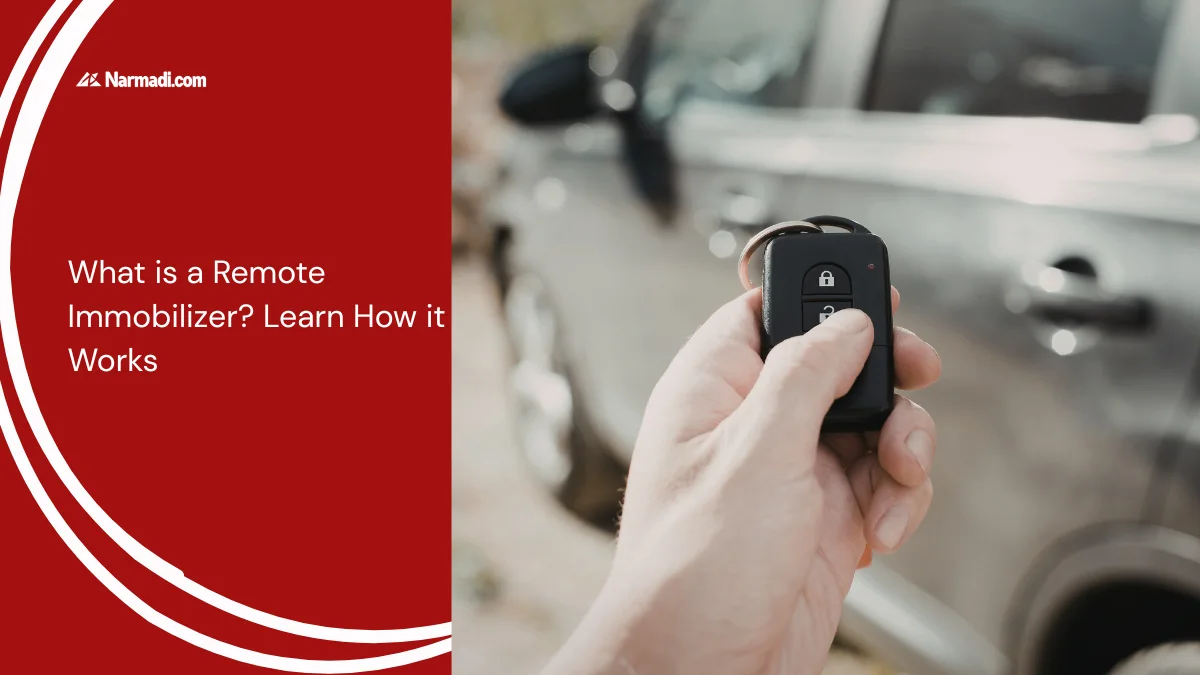

Security is a top priority when owning a vehicle, and this need has led to the innovation of remote immobilizers, which are increasingly used in the modern automotive world.
Remote immobilizers are designed to prevent vehicle theft by ensuring that only the original key can start the engine.
Although remote immobilizers are commonly found in modern cars, many people may still be unfamiliar with what they are.
In this article, we will discuss remote immobilizers, including their definition, operation, components, and regulations governing their use.
What is a Remote Immobilizer?
The remote immobilizer is an anti-theft system integrated into the car key. By using radio waves for identification in the car, the car engine can only be started with a key that has a unique code.
This technology works with a transponder chip embedded in the car key. When the key is inserted into the ignition or used in a keyless entry system, this chip will send a unique signal to the car’s ECU (Engine Control Unit).
If the code in the key matches the one stored in the immobilizer system, then the engine can start. If not, then the car cannot be started even if the ignition is turned on or the start button is pressed.
How does it work?
The process of starting a car by inserting the key into the ignition or pressing the start button on a modern car may seem simple. However, behind that, there is a remote immobilizer system that works in the following way:
1. Sending unique code signals
The earliest process in how the immobilizer system works is transmitting an RFID code to the EC on the car. This key can be detected by the car’s immobilizer sensor (receiving antenna) within a distance of 1-2 meters.
2. Unique code signal matching
The car’s ECU receives the code from the key and then performs a match to identify whether the remote holder is the correct car owner.
3. The car starts if the code matches
Once the two codes match, the ECU will send a signal that the car is ready to start. Next, you can press the push button to start the machine. However, if there is no code match, the ECU fails to activate the fuel system, and the engine will not start.
The Components

To produce a maximum security system, the remote immobilizer in the car consists of three components that work together. Here are the 3 components of an immobilizer:
1. Transmitters
The transmitter in the immobilizer functions to send radio waves with a certain frequency to the control module, which will capture the signal.
2. Transponders
After the control module receives radio waves at a certain frequency, they are sent to the transponder for identification.
3. Theft prevention system components
The function of the theft prevention system components in the immobilizer is to regulate radio waves that have been received and identified by the transponder to be activated or deactivated in the ignition system circuit and fuel pump relay.
When you reach this stage, it means that the ignition key has been connected and recognized by the car’s ECU. The driver can also turn the ignition key to the engine start position to start the engine.
The Features

What makes the remote immobilizer so popular is its features. These include a smart key fob and remote security. Here’s a more detailed explanation of these features.
- Engine disarm: The ECU will prevent fuel supply and ignition without the proper signal.
- Smart key fob: Allows the doors to be unlocked and the engine to start only when the fob is within range.
- Remote security: Some systems allow remote security to control theft and manage vehicle recovery.
- Warning systems: Many systems provide audible or visual feedback when the immobilizer is activated or deactivated.
How Secure Is It?
By using a remote immobilizer, many users assume they are 100% safe from theft. In reality, this isn’t the case. Increasingly sophisticated security systems mean increasingly sophisticated theft methods.
Thieves can still steal using certain techniques. Common methods include key cloning, relay attacks, and ECU swapping.
Therefore, it’s important to add protection with various tools or user behaviors. This way, this sophisticated device will be more resilient against thieves.
First, you can use an RFID protective case to prevent thieves from capturing the signal from the relay attack method.
Second, for extra security, you can add security features such as a steering lock, pedal lock, or GPS tracker.
Third, to prevent thieves from capturing the signal, avoid placing the key near doors or windows.
So, don’t be complacent with the sophistication of the remote immobilizer. We must remain vigilant against the possibility of theft, which can still occur.
Usage Regulations
Remote immobilizer technology operates within a specific frequency spectrum. In each country, all radio frequency-based wireless devices must have a Type Approval Certificate.
Wireless regulations require all radio frequency-based devices to meet specific technical standards before they can be sold in that country. This certification ensures that the product meets safety standards and does not interfere with other communication devices.
The certification process involves technical testing, including frequency tuning, safety checks, and environmental compatibility verification. Ultimately, this results in a Test Report confirming that the product meets technical standards and is safe for use.
For companies wishing to sell remote immobilizer products, Dimulti, as a Type Approval Service, can assist with this process. Our services include preparing technical and legal documents, conducting necessary testing, ensuring compliance with national regulations, and helping companies streamline the certification process. [UN]