

The presence of WiFi 6E and WiFi 7 technology will enter Indonesia. This was conveyed by Meutya Hafid, Minister of Communication and Digital, when with the Indonesia Technology Alliance (ITA) on Friday, February 7, 2025.
To support the development of WiFi 6E and WiFi 7 by allocating the 6 GHz lower frequency band for WiFi networks. This 6 GHz spectrum not only significantly increases WiFi broadband capacity.
WiFi 6E and WiFi 7 offer higher speeds and lower latency, with speeds claimed to reach up to 46 Gbps.
What are WiFi 6E and WiFi 7?
WiFi 6E
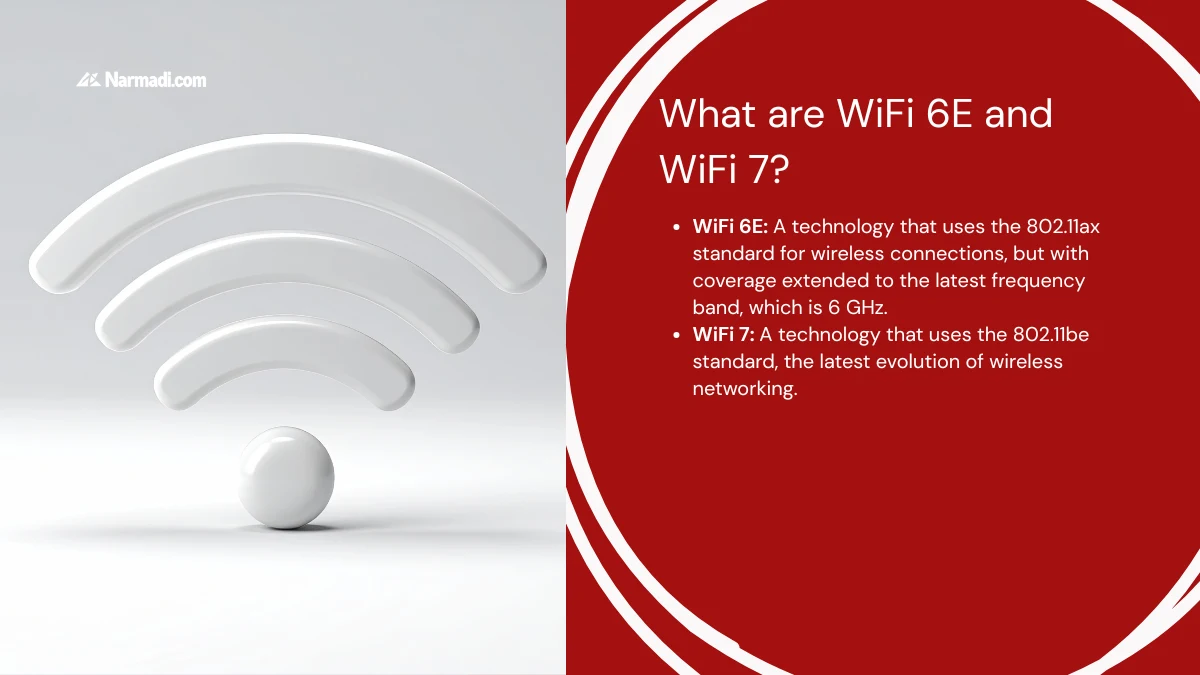
WiFi 6E is a technology that uses the 802.11ax standard for wireless connections, with coverage extended to the 6 GHz band. Meanwhile, the letter “E” in this technology stands for “Extension”.
WiFi 6E offers up to 14 additional channels at 80 MHz or 7 at 160 MHz.
It is designed to increase network speed, capacity, and efficiency, especially in environments with many devices connected simultaneously.
WiFi 7
WiFi 7 is a technology that uses the 802.11be standard, the latest evolution of wireless networking.
With much higher speeds, low latency, and large capacity, WiFi 7 is poised to become a key foundation for future digital devices and services.
WiFi 7 comes with various feature enhancements designed to improve the speed, efficiency, and overall experience of wireless connections.
This technology is designed to support modern connectivity needs, such as 8K streaming, gaming, virtual reality (VR), and the integration of IoT devices in smart homes.
The Advantages
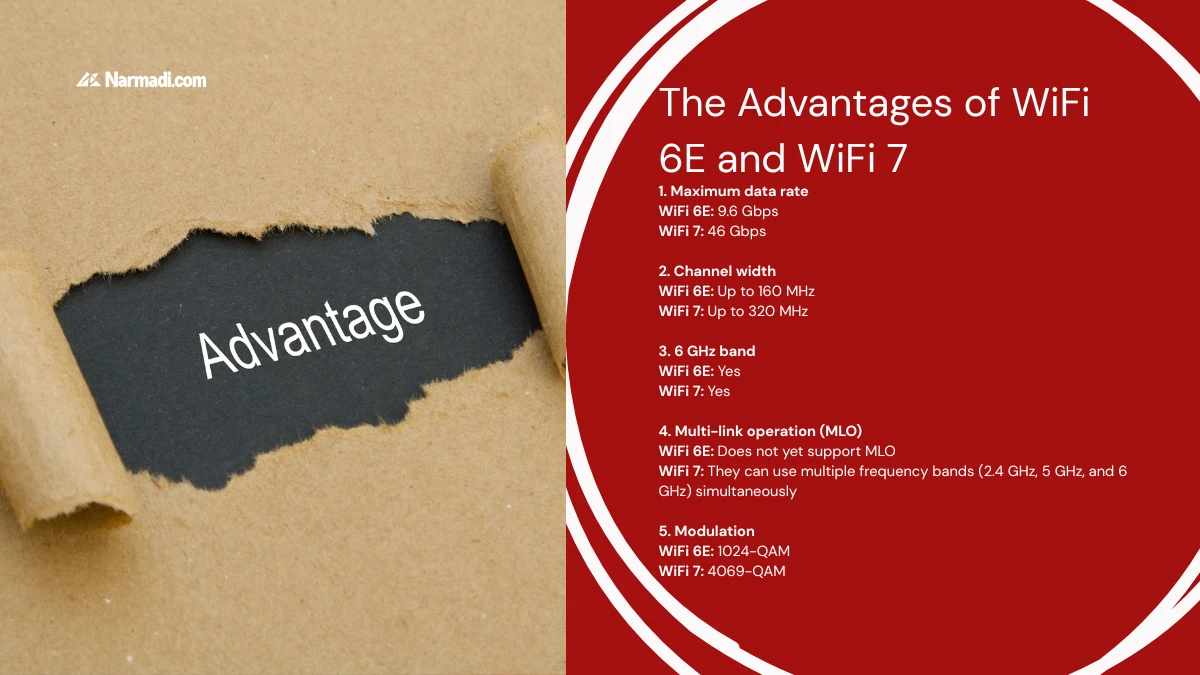
WiFi 6E and WiFi 7 each have their own distinct advantages. Here are their main advantages.
1. Maximum data rate
The maximum data rate is the most important factor to consider when using WiFi. WiFi 6E and WiFi 7 each have different speeds.
WiFi 6E has a maximum data rate of up to 9.6 Gbps, while WiFi 7 has a maximum data rate of up to 46 Gbps.
2. Channel width
Channel width is essential for transmitting large amounts of data in a single transmission. WiFi 6E relies on a channel bandwidth of up to 160 MHz.
WiFi 7 allows more data to be transmitted simultaneously because it has a channel width of up to 320 MHz. This also allows it to manage interference more efficiently.
3. 6 GHz band
Both types of WiFi use the 6 GHz band, which provides better reliability. This results in significantly less congestion compared to the 2.4 GHz and 5 GHz bands.
4. Multi-link operation (MLO)
Although both use the 6 GHz band, they differ in terms of multi-link operation (MLO). WiFi 6E does not yet support MLO.
WiFi 7, on the other hand, enables MLO by using multiple frequency bands (2.4 GHz, 5 GHz, and 6 GHz) simultaneously. This results in better speed and stability.
5. Modulation
Modulation in WiFi improves the efficiency and speed of data transfer. Modulation allows information to be packed more densely into radio waves.
WiFi 6E uses 1024-QAM Quadrature Amplitude Modulation (QAM). This combination with the 6 GHz frequency band makes transmission more stable.
WiFi 7, on the other hand, uses 4069-QAM modulation, which results in 20% higher speeds. This allows for the transmission of more data in a single pass. It is suitable for 4K/8K streaming and VR.
Comparison Table
| Feature | WiFi 6E | WiFi 7 |
| Max Data Rate | 9.6 Gbps | 46 Gbps |
| Channel Width | Up to 160 MHz | Up to 320 MHz |
| 6 GHz Band | Yes | Yes |
| Multi-Link Operation | No | Yes (Simultaneous band usage) |
| Modulation | 1024-QAM | 4096-QAM (4K QAM) |
| Ideal Use Case | Modern Homes/Offices | AR/VR, 8K, High-Density |
Benefits of WiFi 6E and WiFi 7 for Users in Indonesia
The presence of these two WiFi technologies in Indonesia brings various benefits to users, both individuals and businesses. The high speeds offered enable a smoother internet experience, including for activities such as video conferencing, large downloads, and the operation of IoT (Internet of Things) devices.
Furthermore, increased network capacity can help alleviate network congestion in areas with high data traffic, such as offices and shopping centers.
Internet service providers in Indonesia are beginning to adopt these technologies to provide a better internet experience for customers.
Several operators have even announced their readiness to provide WiFi 6E and WiFi 7 routers and access devices in various regions.
The presence of WiFi 6E and WiFi 7 has the potential to strengthen Indonesia’s competitiveness in the digital technology sector in Southeast Asia. Furthermore, WiFi 6E and WiFi 7 also enter an era of globally adopted technology.
Wi-Fi 6E and Wi-Fi 7 products intended for marketing in Indonesia must undergo standard testing and obtain certification from the Directorate General of Digital Infrastructure (DJID). If you need information regarding the DJID certification process, you can contact us.