
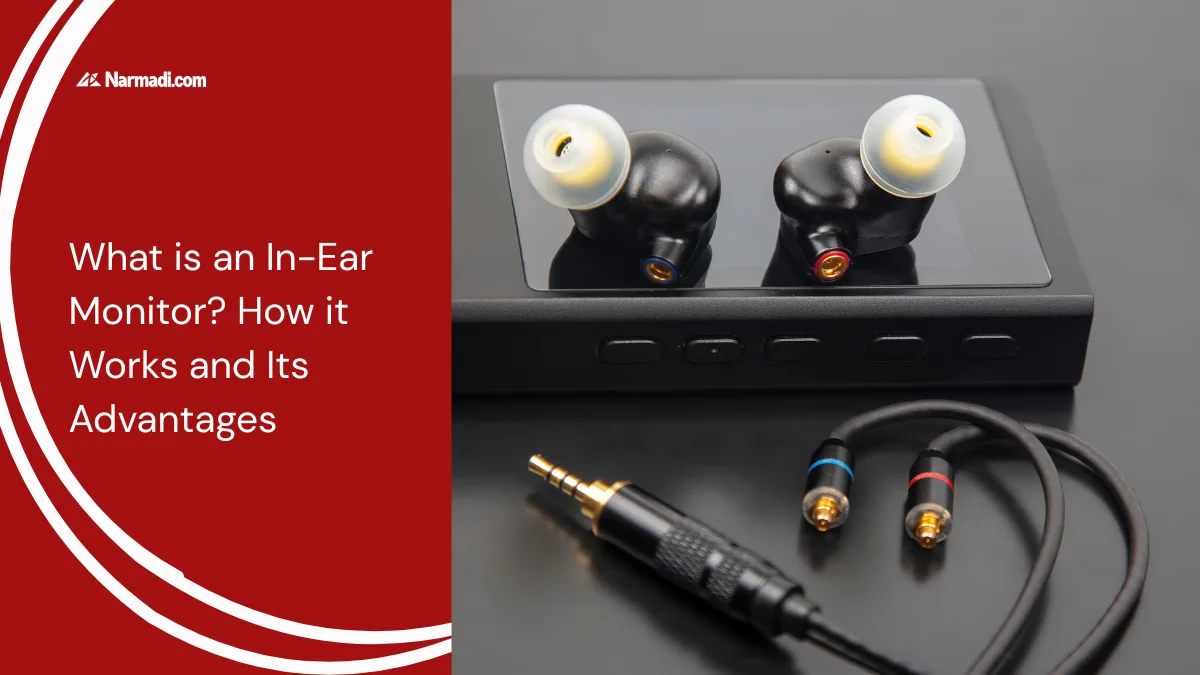

In-ear monitors (IEMs) are the highest class of headphone systems in terms of sound quality. It’s often used for professionals who work with audio-listening devices.
Are you familiar with the term in-ear monitor? Maybe you’re more familiar with earbuds or True Wireless Stereo (TWS), which are often used by people in general.
Let’s take a closer look at in-ear monitors from the definition, how they work, and their advantages, to how they are used by most professionals.
What is an In-Ear Monitor?
An In-Ear Monitor (IEM) is an audio device designed to fit inside the user’s ear. Unlike typical earphones, IEMs offer superior sound quality and are often used by musicians, audio engineers, and audiophiles for a maximum listening experience.
Musicians, audio engineers, and television presenters use IEMs to listen to music or a mix of vocals and instruments. IEMs are also often used in live performances, allowing artists to hear their voices even when surrounded by stage noise.
How does it work?
The in-ear monitor process begins when the mixer sends an audio signal to a transmitter. This transmitter then wirelessly transmits the signal to a receiver. The receiver’s job is to convert the radio signal back into audio, ensuring it retains the quality and clarity intended.
Finally, the IEMs are plugged into the receiver, allowing the user to listen to the audio directly through the earphones. This setup ensures that performers, audio engineers, or anyone using IEMs can receive high-quality sound in real time, even in noisy environments like live concerts or recording sessions.
The components
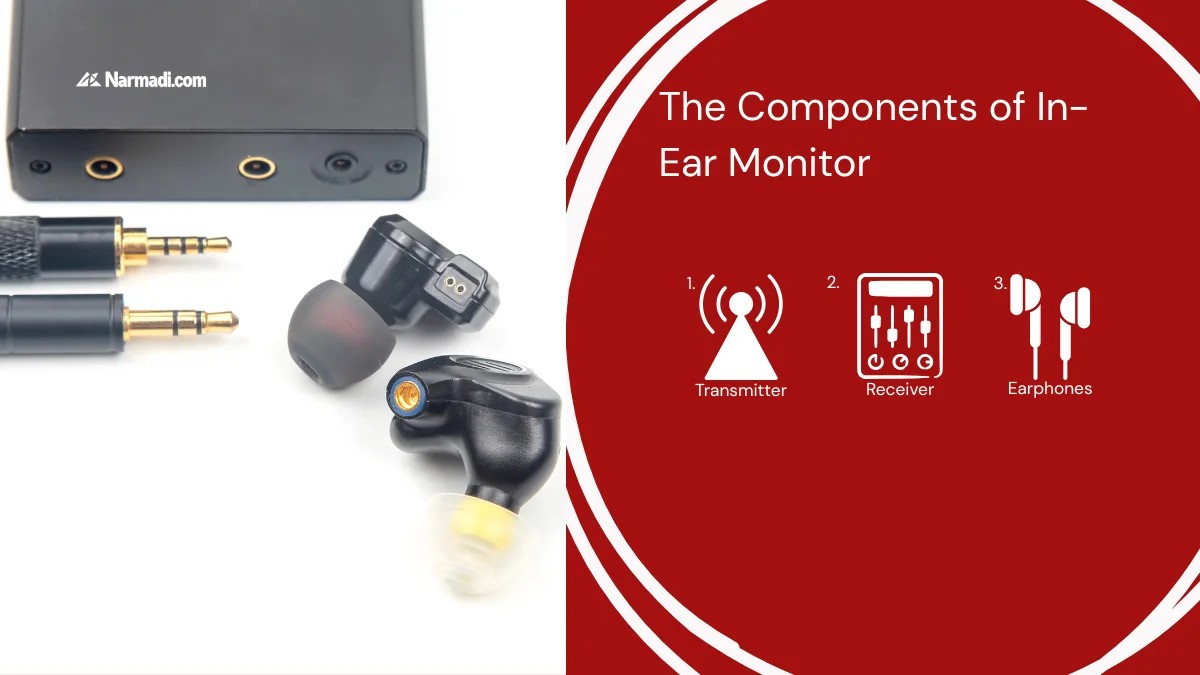
IEMs (In-Ear Monitors) consist of several key components that work together to deliver a high-quality audio experience.
- Transmitter: The transmitter is a stationary device that plays a vital role in sending the audio signal. Typically positioned near the soundboard or mixing console, the transmitter takes the audio signal from the mixer or sound system and wirelessly broadcasts it
- Receiver: The receiver is a small, portable device, usually worn by the performer or audio engineer in the form of a belt pack. It receives the wireless audio signal transmitted by the transmitter and converts it into an audio output.
- Earphones: The earphones are the final component of the IEM system. These earphones plug into the receiver and are worn inside the user’s ears. They are specially designed to deliver clear, detailed sound directly into the ear canal while blocking out external noise.
The Function
The main function of an in-ear monitor is to provide professional performance on stage to monitor the sound quality and other instruments in real-time. Here are some of the other functions:
- Mobility: Allows performers to move freely.
- Noise isolation: Reduces loud background noise on stage.
- Hearing protection: Prevents long-term ear damage from exposure to high volumes.
- Communication & cues: Allows performers to receive instructions from the production team.
The Advantages

1. Superior sound quality
IEMs are designed to produce higher sound quality with sharp detail. This differentiates them from True Wireless Systems (TWS), which only produce lower quality.
Using IEMs allows users to hear every instrument and vocal with great clarity. This significantly enhances performance.
2. Sound isolation
Sound isolation is both a function and a key advantage of IEMs. They reduce noise from the surrounding environment, allowing users to focus more on what they’re hearing through the earphones.
This device is ideal for performers. It greatly enhances performances in noisy venues, such as live concerts or live recording studios.
3. Comfort and portability
Compared to over-ear headphones, IEMs are much lighter and easier to carry. Their ergonomic design ensures comfort, even during extended use.
Comfort and portability significantly impact performance. The more comfortable and portable the headphones, the better the performance will be.
4. Personalization
Many IEMs offer custom-fit options, where a custom mold is created to fit the user’s ear. Furthermore, the resulting equalizer preferences can also be adjusted to suit the user’s preferences.
Many professional performers also benefit greatly from this personalization. This ensures a perfect fit and maximum comfort.
Tips for Comfortable Performance on Stage
In-ear monitors are designed to support comfortable performance on stage. Here are some tips you can use to increase comfort.
- Choose the right eartips: Use eartips that fit your ears and use memory foam for extended comfort.
- Use both sides: Using one side and turning up the volume can be harmful to your hearing. Therefore, it’s best to use both sides at an adequate volume.
- Use personalized IEMs: Custom-molded IEMs molded to your ear will provide the best comfort and maximum isolation.
- Maintenance: Clean the eartips and housing regularly and always store them in their hard case after use. This will keep the IEMs hygienic and long-lasting.
Usage Regulations
In-ear monitor technology operates within a specific frequency spectrum. In each country, all radio frequency-based wireless devices must have a Type Approval Certificate.
Wireless regulations require all radio frequency-based devices to meet specific technical standards before they can be sold in that country. This certification ensures that the product meets safety standards and does not interfere with other communication devices.
The certification process involves technical testing, including frequency tuning, safety checks, and environmental compatibility verification. Ultimately, this results in a Test Report confirming that the product meets technical standards and is safe for use.
For companies wishing to sell in-ear monitor products, Dimulti, as a Type Approval Service, can assist with this process. Our services include preparing technical and legal documents, conducting necessary testing, ensuring compliance with national regulations, and helping companies streamline the certification process. [UN]