
Since 2008. We born to serve you for obtaining type approval certification of Radio (RF) / wireless and telecom products in Japan.
The Japanese telecommunications market is a strong global market. It is highly mature, competitive, and has high mobile penetration. This is due to strong growth driven by the adoption of 5G, IoT, digital transformation, and demand for high-speed internet.
To access the Japanese market, especially for Information and Communication Technology (ICT) products, companies must comply with a type of compliance instrument called “MIC certification.” MIC stands for the Ministry for Internal Affairs and Communication. Since 2024, MIC has been a new entity that replaces the role of the Ministry of Public Management, Home Affairs, Post, and Telecommunication (MPHPT).
MPHPT is a merger of the “Ministry of Post and Telecommunications,” the “Ministry of Home Affairs,” and the “Management and Coordination Agency.” One of MIC’s focuses is on the telecommunications sector. Its role is to establish certification rules, collaborate with the Registered Certification Body (RCB), conduct Mutual Recognition Agreements (MRA), and supervise Japan type approval certificates.
Obtaining MIC type approval certification can be challenging. Dimulti Indonesia is ready to help you navigate the complexities of the certification process, remove obstacles, and ensure you receive your certificate by your desired target date. This is possible thanks to our extensive experience, expertise, and global connections in the field of certification.
Japan MIC Type Approval and Certification Process
Japan MIC certification requires local testing. This means that every telecommunications and wireless product that is to be marketed and used in this country must be tested in a local Japanese laboratory.
In conducting local testing, test samples are required. The number of samples depends on the type of testing required. However, Japanese type approval certification usually requires one normal sample with the appropriate accessories. In some cases, additional samples with special settings may be required.
MIC does not conduct local testing itself. They work with RCBs to conduct Japanese type approval certification testing.
MIC classifies the mandatory products into five classifications. These classifications are Specified Radio Equipment (SRE), Special Specified Radio Equipment (SSRE), Telecom Terminals, High-Frequency Devices (HFD), and Extremely Low-Power (ELP).
Document Requirements
To obtain MIC certification, several document requirements must be met, including:
- Test report
- User manual (Japanese version)
- Antenna specifications
- Component layout diagram
- Parts list and circuit diagram (RF section)
- Block diagram
- External and internal photographs
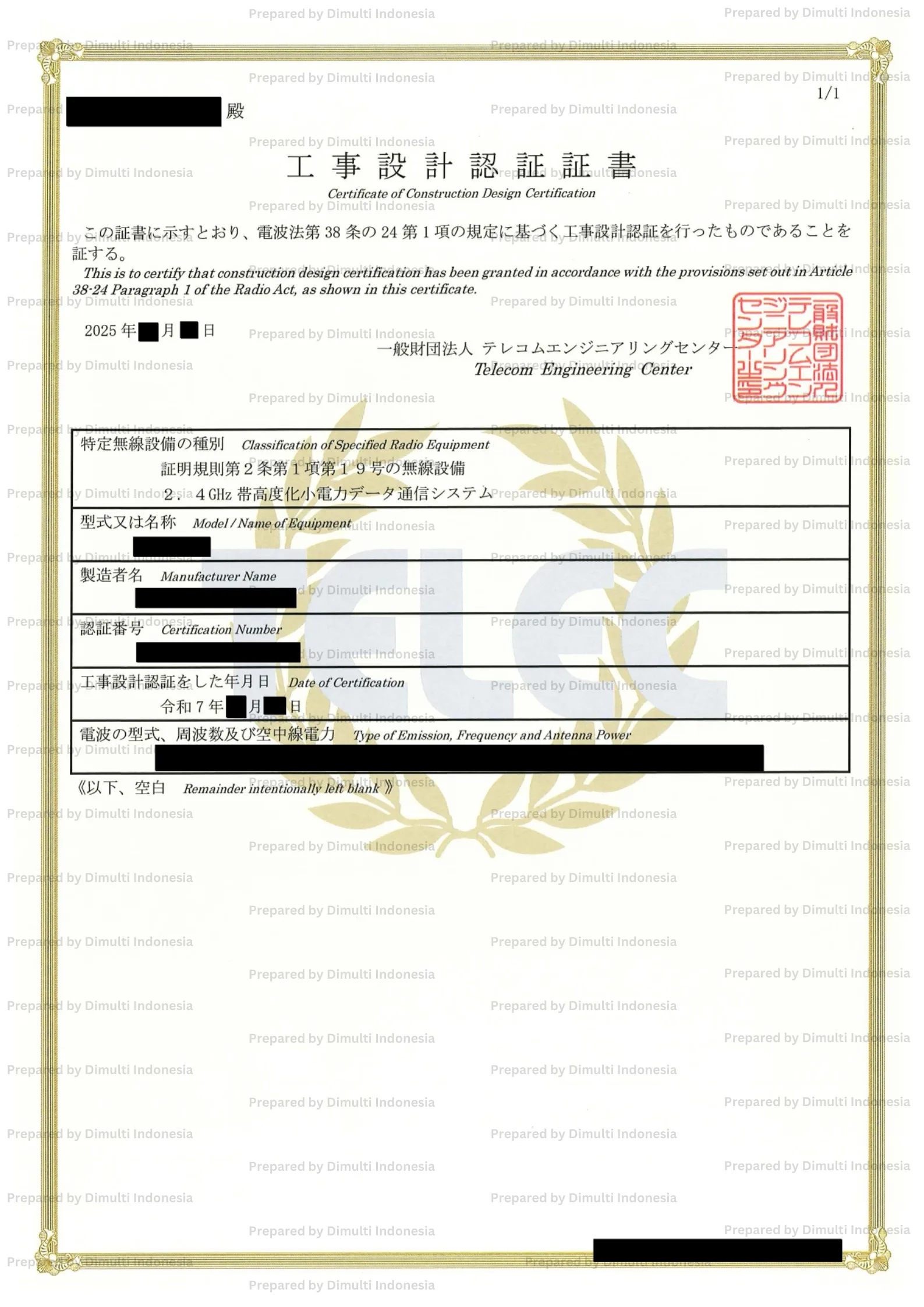
MIC Certificate Example
MIC does not issue its own certifications. They work with RCB to issue Japanese type approval certificates.
Here is the MIC Certificate Example from TELEC (Telecom Engineering Center):
MIC Label Requirement
ICT products that have been certified by MIC must affix labels to the products and their packaging. Labeling requirements will differ for each product classification. As is well known, there are five product categories for MIC certification.
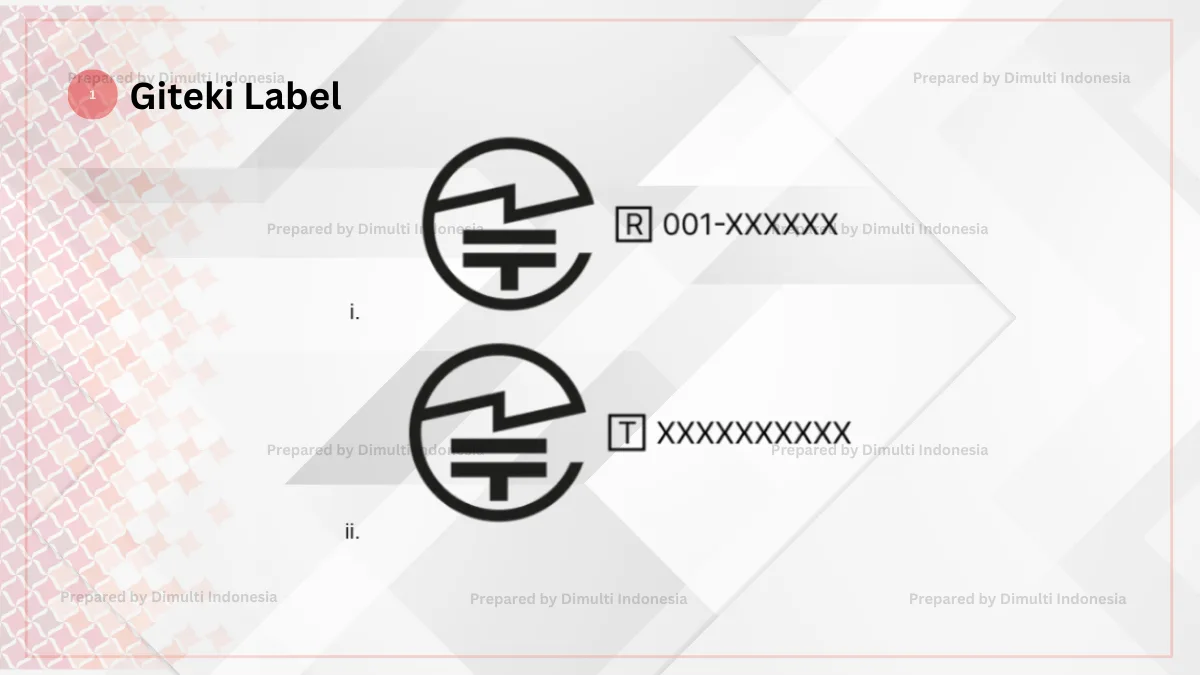
Giteki Label
The Giteki label is intended for three categories, namely Specific Radio Equipment (SRE), Special Specific Radio Equipment (SSRE), and Telecommunications Terminals. There are two types of Giteki labels, namely “R” and “T”.
R Symbol: Applied to SRE and SSRE products, or products that intentionally emit RF signals. Examples include communication devices such as WiFi routers, Bluetooth devices, short-range devices, RFID, etc.
T Symbol: Applied to devices that connect directly to public telecommunications networks. Examples include telephones and LTE gateways.
The following is an example of the format:
HFD Label
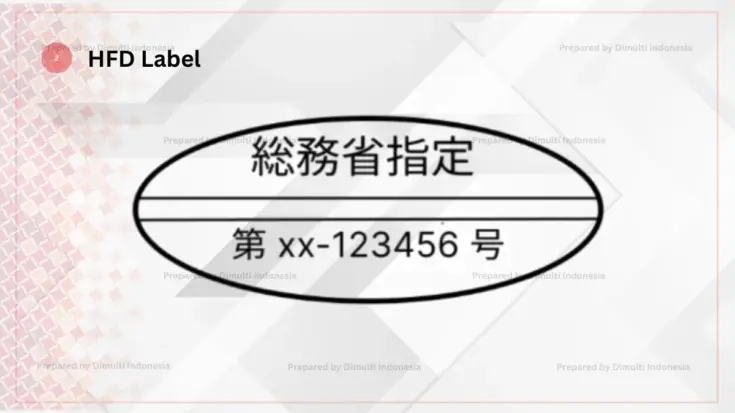
The HFD label is intended for non-communication devices that emit RF energy for scientific, industrial, or medical use. Examples include RF welding machines, induction cookers, microwave ovens, industrial heating systems, etc.
Here is an example of the format:
ELP Label
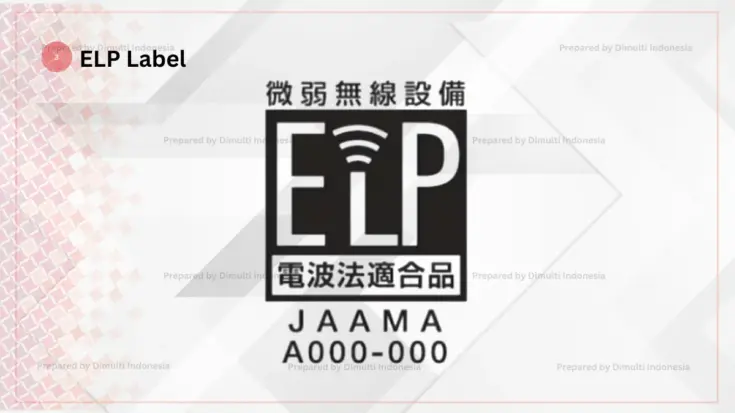
The ELP label is intended for devices that emit RF signals that can be categorized below the field strength threshold specified by the Radio Law. Examples include key fobs, RFID tags, toys, etc.
Here is an example of the format:
Labels must be permanently affixed to the product in a clear manner so that they are easily found by buyers. If the device is too small, the label may be affixed to the user manual or as an electronic label.
MIC Product Scope
MIC certification is not limited to telecommunication products only. However, this certification is also mandatory for all products that have telecommunication features or radio frequency.
Some examples of products that are mandatory to apply for MIC certification are:
| Home Appliances: Smart Dishwasher Smart Oven Smart Washing Machine Smart Refrigerator Smart Air Conditioner Smart Wine Chiller Smart Coffee maker Smart Fan Electronic Water Meter Sensor Smart Lighting system Smart water closet Robot vacuum cleaner Smart locker Etc. | Automotive: Tire Pressure Monitoring Sensor Head Unit/Car Audio Telematic Unit Body Control Module Immobilizer Keyless Wireless Charging Unit Vehicle Radar Dashboard Camera Seat-belt Sensor Door-Lock Sensor Vehicle Dashcam Etc. |
| Audio-Video Devices: Wireless Speaker Smart Television or Digital Television Monitor Wireless Microphone Microphone Receiver In-ear monitoring device Headset/headphone True Wireless Earbuds Projector Speakerphone Etc. | Telecommunication Products: Smartphone Line/wired telephone Tablet PC Handy Talkie/Walkie Talkie Switch Router Access Point Video Conference Cordless telephone IP Phone Etc. |
| Medical and Healthcare products: Blood Glucose Monitoring Systems Blood pressure monitoring system MRI system Smart Operating Table Digital Radiography Smart syringe pump Body Height measurement Body weight measurement Bluetooth Oximeter Etc. | Wearable: Smartwatch Smart Ring Smart tag Running shoes tracker Smart eyeglasses Etc. |
| Environmental Monitoring Product: Wildfire Sensor Whether Sensor Etc. | Mining: Smart detonator system Tunnel light signal Etc. |
MIC Type Approval Services
To access the Japanese market for ICT products, manufacturers must comply with compliance instruments. Dimulti, as a product compliance specialist, is ready to provide consulting and certification management services for telecommunications equipment to obtain MIC certification. Not only in Japan, but we also offer certification services in global markets.
In addition to providing certification services, we also conduct research on evolving regulations in response to rapid technological advances. This ensures that delays will not prevent manufacturers from adopting the necessary regulatory frameworks. As a result, manufacturers obtain the latest information on regulations relevant to their target markets.
Our elegant Type Approval and Certification Management Services are key to accelerating the entry of RF (Wireless, Bluetooth, RFID, etc.) products into the international market. We not only ensure legal compliance and avoid customs detention, but also offer an efficient management system to manage each certificate transparently and in a controlled manner.
Contact Us!
MIC News and Updates
Regulatory Updates


Load More >> Japan Regulatory News and Updates
FAQ – Japan Type Approval
What are the document requirements to obtain MIC Type Approval?
- Test report
- User manual (Japanese version)
- Antenna specifications
- Component layout diagram
- Parts list and circuit diagram (RF section)
- Block diagram
- External and internal photographs
Who should be Applicant on Japan MIC Approval Certification, manufacturer or Importer?
Applicants for type approval certification in Japan must be Japanese companies that are legally registered entities. They may be importers or distributors of products that will be imported and distributed in Japan.
Is testing on MIC Certification Mandatory?
For certification, RF testing is mandatory with the MIC Japan standard.
What are the sample requirements?
Japan type approval certification generally requires one normal sample with the appropriate accessories. However, in some cases, additional samples with special settings may be required.
How to get Type Approval certificate with Paperwork?
There is no way to apply type approval with paperwork.
How long is the lead time of Japan MIC Type Approval and Certification?
The entire approval process can be completed in three to four weeks.
How long is the validity of Japan MIC Certificate?
The certificate is valid indefinitely without the need for renewal.
What are the requirements of MIC Certification label?
ICT products that have been certified by MIC must affix labels to the products and their packaging. Labeling requirements will differ for each product classification. Labels are divided into three types: giteki labels, HFD labels, and ELP labels.
Why choose us!
Here are some strong reasons why you should choose us as your business partner.