Motorola DynaTAC - The First Cell Phone
Contents
The First Cell Phone - Meet Motorola DynaTAC, the cell phone that is also the grandpa of your favorite cell phone!
Have you ever seen the giant cellphone in those 80s movies? The ones that appeared as though a walkie-talkie had been duct-taped to a briefcase?
And no, my friend, that wasn't simply a Hollywood props, that was the dawn of the handheld cell phone, the first, the legendary Motorola DynaTAC!
Well, even though it’s not a sleek and slim mobile phone that we all know, but as they all said, something has to start somewhere, right?
Let's take a deeper look at Motorola DynaTAC, the first cell phone to have ever existed!
Motorola DynaTAC 8000x The First Cell Phone Ever
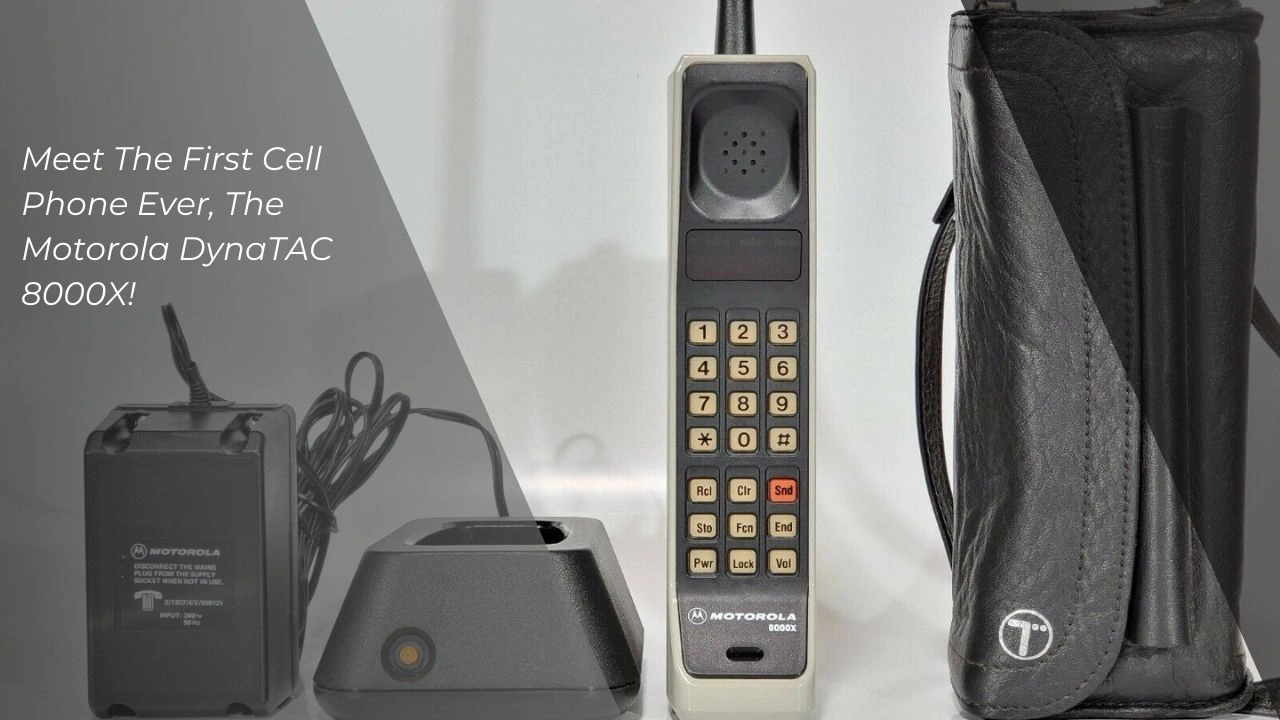
The DynaTAC wasn't some overnight invention that popped out of nowhere, some brainy dudes at Motorola, the company behind this invention, have spent over decades studying and developing the DynaTAC.
Martin Cooper the brilliant man that also the architect of this device had an idea for a portable phone, the result? DynaTAC which stands for "Dynamic Adaptive Total Area Coverage" (catchy, right? Let's just stick with DynaTAC).
So how did this brick work you say? Well, to put it simply the DynaTAC relied on a clever system of cell towers that divided the coverage area into smaller sections.
As you made a call, the cell phone would connect to the nearest cell tower, and it’s handing off the signal as you moved from one cell to another.
It was a complex system, and the early days of cellular technology were plagued with dropped calls and spotty coverage. But hey, it was a start!
Hey, as you can see this cell phone uses a signal, to be exact, a radio signal, which in most countries it uses is strictly regulated, including in Indonesia! So, if you’re interested in such a topic, go check this link and learn about DJID certification!
Specification of DynaTAC 8000x
Size and Weight:
- Height: 25cm
- Weight: 1.1kg
Network and Technology:
- Technology: AMPS (Advanced Mobile Phone System)
- Frequency Range: 824.000-849.000 MHz
Cell Towers: Relied on a network of cell towers for dividing coverage into smaller areas and handing off signals as you moved.
Battery Life:
- Talk Time: 30 Minutes
- Standby Time: Several Hours
Charging Time: 10 Hours
Other Specs:
Display: LCD Screen
Keypad: 12-key telephone keypad with additional function keys like recall, clear, send and volume
Antenna
Well, despite its unusual size and specifications (for today’s standard) and a whopping $3,995 which translate to a staggering $11,700 today, the DynaTAC 8000x became the luxury standard for the high rollers.
As the time goes by this first ever cell phone has transformed and developed into the cell phone that we all know today!
Why the DynaTAC Still Matters Today
Funny, right? A phone the size of a brick, with a battery that lasted only 30 minutes of talk time, and a charging time of 10 hours. Today, we would call that a nightmare. Back then, it was a dream come true.
But here's the thing. Without the DynaTAC, the phone in your pocket might look very different today. Let's see what this old brick taught us.
1. Phones Became Truly Portable
Before the DynaTAC, making a call meant staying near a telephone. The DynaTAC changed that idea. You could carry your phone with you and make a call while moving around. That idea is still the heart of every mobile phone today.
2. The Cell Tower System
Remember how the DynaTAC worked? It connected to the nearest cell tower and handed off the signal as you moved from one cell to another. Simply put, this is still the basic idea behind mobile networks.
3. The Battery Problem
Short talk time and long charging time. Sounds familiar? Even today, battery life is still one of the first things we check when buying a new phone. The DynaTAC showed early on how important this is.
4. Smaller Is Better
At 25 cm tall and 1.1 kg, the DynaTAC was not exactly pocket-friendly. Since then, phone makers have kept working to make phones smaller and lighter. Ironically, many modern phones have now become bigger again, but in a much slimmer way!
Fun Facts About the DynaTAC
- Its name stands for Dynamic Adaptive Total Area Coverage.
- It used AMPS (Advanced Mobile Phone System) technology.
- It operated in the 824.000-849.000 MHz frequency range.
- Its keypad had 12 telephone keys plus function keys like recall, clear, send, and volume.
- It was a luxury item, priced at $3,995.
So, the next time your phone battery runs low, just remember the DynaTAC. Thirty minutes of talking, ten hours of charging. Suddenly, your phone doesn't look so bad, right?
Frequently Asked Questions
Who is behind the idea of the DynaTAC?
Martin Cooper, the architect of the device, at Motorola.
Why are radio signals for phones regulated?
As mentioned above, phones use radio signals, which are strictly regulated in most countries, including in Indonesia.