Learn History of AI from The Beginning

Contents
The history of AI might be the most interesting piece of technological history that happened in the course of human’s existence!
You might think that AI is a recent development in technology, after all it’s only used in the last several years, right?
NO!! The foundation of AI began as early as the 1900's, but the birth of AI that we know until now is not happening until 1950.
So, without further ado let’s jump into the world of AI history!
What is AI?
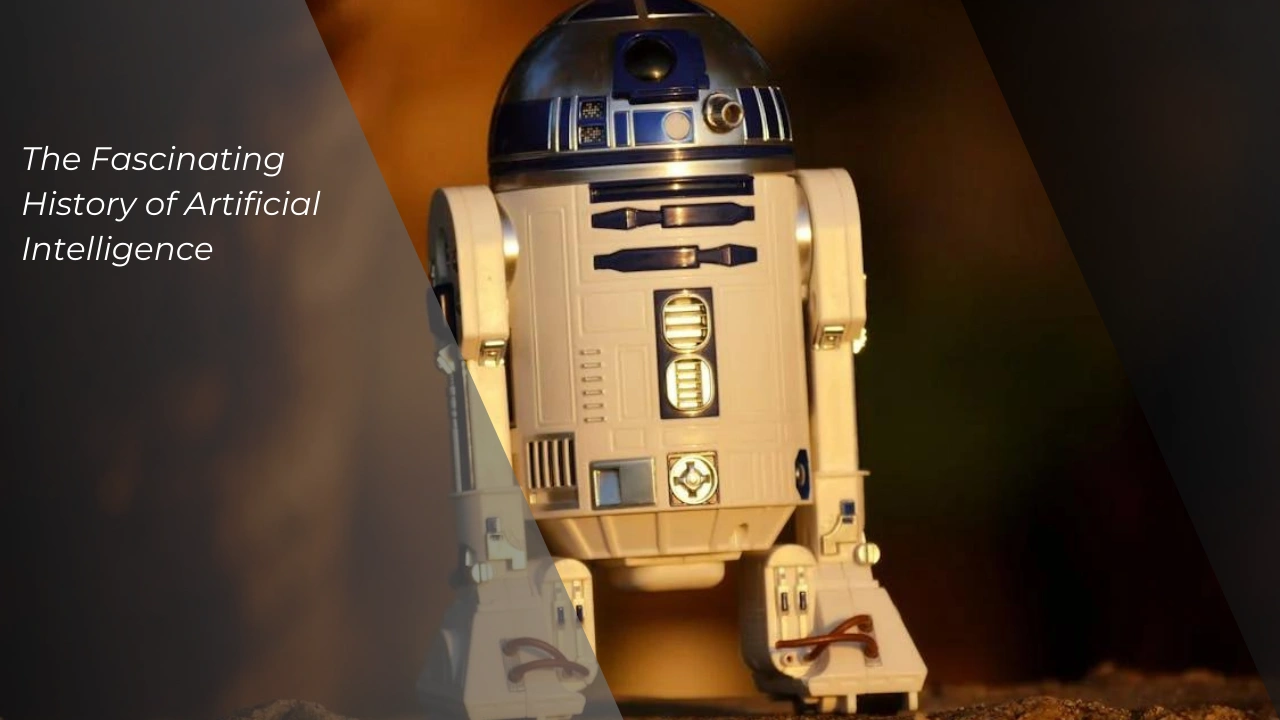
AI or artificial intelligence as its name suggests is a specialty within computer science that is the ability of machines to mimic some human’s problem-solving ability.
How AI works is one of the fascinating things in computer-science, as it's based on data, algorithms.
And as AI processes more data, it gets better at recognizing patterns and making predictions.
History of AI

Even though the concept of modern AI has already been around since the 50's, the seeds of AI were planted way back thousands of years ago.
With ‘automatons’ a mechanical thingy which moves independently of human invention. The word “automaton” itself comes from ancient Greek, which means “acting of one’s own will.”
And in 400 BCE the first automaton, a mechanical pigeon, was created by a friend of the philosopher Plato. And in 1495 Leonardo da Vinci created the most famous automatons.
Fast forward to the 1950, the modern AI technology was created with the work of Alan Turing titled “Computing Machinery and Intelligence”.
The 50’s was a magical decade for AI development as Arthur Samuel in 1952 developed a program that can play checkers independently and John McCarthy held a workshop at Dartmouth on “artificial intelligence” which is the first use of the word, and how it came into popular usage.
The 60’s and 70’s were marked as the AI maturation era and also an era where robots and AI ideas became mainstream quickly.
Other than that, a lot of inventions were invented in this era, like the first anthropomorphic (humanly) robot being built in Japan and a self-driven vehicle being built by an engineering grad student.
But, the development of AI is not always smooth and without struggles as the late 80’s to early 90’s were the time of AI winter.
In this era, AI hit a bit of a snoozefest for a while. People weren't as excited about it, so funding dried up, and not much groundbreaking stuff happened. Basically, AI took a nap.
As for today, AI faces a huge development, from the recommendations you get on your favorite streaming service to the way your phone corrects your typos, it’s all thanks to AI.
Even AI is also implemented to a more creative-industry, as AI-powered art and music is also a thing by now.
The future of AI is so hard to predict even to this day a lot of improvements and developments are on the go regarding AI.
The History of AI in a Quick Timeline
That was a long journey! Let's sum it up in a simple timeline, so it's easier to remember.
- Ancient times: the idea of automatons, mechanical things that move on their own.
- 400 BCE: a mechanical pigeon, created by a friend of the philosopher Plato.
- 1495: Leonardo da Vinci created the most famous automatons.
- 1950: Alan Turing's work marked the start of modern AI.
- 1952: Arthur Samuel developed a program that could play checkers.
- The 1950s: John McCarthy's workshop at Dartmouth brought the term “artificial intelligence” into use.
- The 60s and 70s: the AI maturation era.
- Late 80s to early 90s: the AI winter.
- Today: AI is everywhere, from streaming recommendations to typo correction.
Where You Meet AI Every Day
Here's the thing. You probably use AI many times a day without even noticing it. As mentioned above, it suggests what to watch next on your favorite streaming service. It fixes your typos when you type a message. It even shows up in art and music.
Simply put, AI has moved from science fiction to your pocket.
Lessons From the History of AI
One interesting lesson is that progress is not always smooth. There were exciting decades, and there was the AI winter, when funding dried up and things slowed down. But the ideas never really disappeared. They waited, and then came back stronger.
Another lesson? Big ideas often start very small. A mechanical pigeon, a checkers program, a workshop. Step by step, they led to the AI we know today.
Frequently Asked Questions
What does the word automaton mean?
It comes from ancient Greek and means “acting of one's own will.”
How does AI get better?
As AI processes more data, it gets better at recognizing patterns and making predictions.
What was the AI winter?
A period from the late 80s to the early 90s when interest dropped, funding dried up, and progress slowed down.
So, what do you think about the history of AI and what it holds for the future? Will our world be dominated by AI and robots? Well, the only thing to find out is to wait.