The Main Point of Bluetooth Low Energy
Bluetooth Low Energy will be perfect to support a device with some functions such as monitoring the hearth rate and blood pressure, apps for public…
Contents
Bluetooth Low Energy will be perfect to support a device with some functions such as monitoring the heart rate and blood pressure, apps for public transportations, monitoring sensors for industrial energy, etc.
Energy efficiency is the big issue these days. That is why in the technological world the invention of low energy devices means a lot, not only for the customer, but also the company and the environmental issue as well.
As a result, we can find so many devices that consume less energy but produce the same or even bigger power in the market. One of them is Bluetooth Low energy, or what people usually call Bluetooth Smart.
Was introduced to the market in 2011 by Bluetooth Special Interest Group, this kind of device support some popular operating system such as Android, iOs, BlackBerry, Windows Phone, Linux, and Windows X. So, if you want to know more about it, here is some short explanation about this newly innovative product.
The Main Point of Bluetooth Low Energy
The main point of Bluetooth Low Energy is how this device produces low functionality of energy. Unlike other kinds of Bluetooth devices, this product is aimed to lower the cost, power consumption, and creating similar service of communication range at the same time.
With this kind of energy functionality, it can be applied in some devices that need to be operated in such a long period of time. Therefore, by using it, energy-harvesting device and small power source such as coin battery is not a problem anymore.
Then, the talking comes to the different between BLE with regular Bluetooth device. Here is the explanation about it. Generally speaking, common Bluetooth devices work within ISM 2.4 Ghz of band frequency and in the range of 2400-2483.5 MHz. The data that will be transferred will be split to packets, and then exchanged through one particular channel of 79 Bluetooth channels which have 1 MHz bandwidth each.
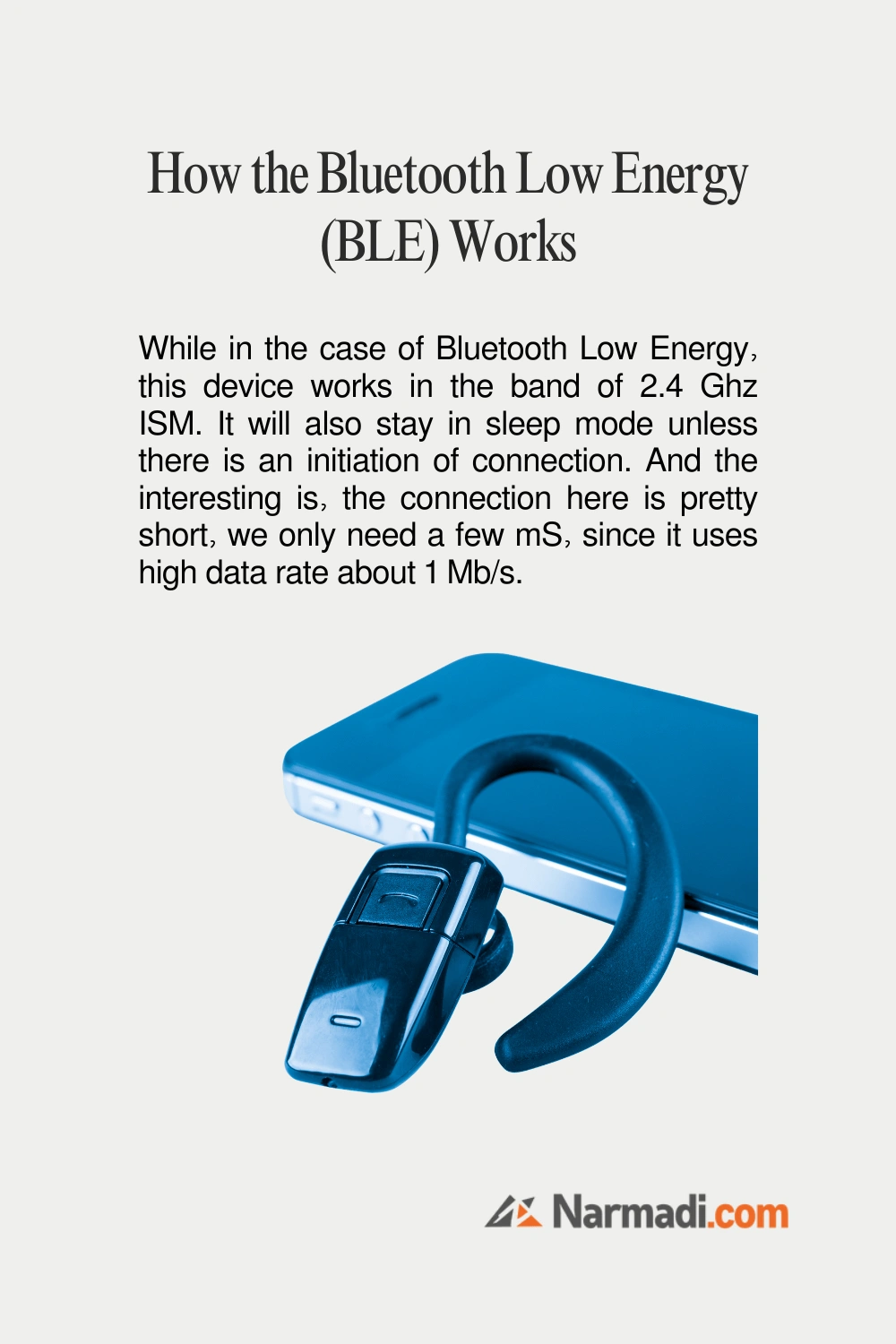
While in the case of Bluetooth Low Energy, this device works in the band of 2.4 Ghz ISM. It will also stay in sleep mode unless there is an initiation of connection. And the interesting is, the connection here is pretty short, we only need a few mS, since it uses high data rate about 1 Mb/s.
With great specification above, of course there are so many things that can be done with this device. Bluetooth Low Energy will be perfect to support a device with some functions such as monitoring the heart rate and blood pressure, apps for public transportations, monitoring sensors for industrial energy, etc.
Moreover, you can also do simple task such as unlocking the doors, controlling your home theatre, turning on and off the lights, setting your house temperature, and others. Everything can be done through your tablet or smartphone.
BLE vs Classic Bluetooth at a Glance
Still a bit confused? Here's a simple summary based on the explanation above.
- Frequency: both work in the 2.4 GHz ISM band.
- Channels: classic Bluetooth exchanges data through one of 79 channels, each with 1 MHz bandwidth.
- Connection: BLE stays in sleep mode until a connection starts, and the connection itself is very short.
- Power: BLE is designed for low power consumption, so it can run on small power sources such as coin batteries.
- Use: BLE fits devices that need to run for a long time without frequent charging.
Where You Can Find BLE in Daily Life
Here's the thing. You may already be using BLE without knowing it. Some common examples:
- Fitness and health trackers that monitor heart rate
- Smart home controls for lights, doors, and temperature
- Remote controls for home entertainment
- Sensors in industrial environments
- Apps that work with public transportation
Tips for Product Developers
If you plan to build a product with BLE, consider these points:
- Decide how often the device really needs to send data. Less frequent connections save more power.
- Choose a battery that fits the size and lifetime of your product.
- Test the connection with the smartphones and operating systems your customers use.
- Remember that devices using radio frequency often need certification before they are sold.
Frequently Asked Questions
What else is Bluetooth Low Energy called?
Bluetooth Smart.
When was BLE introduced?
As mentioned above, it was introduced to the market in 2011.
Why does BLE save energy?
Because it stays in sleep mode unless a connection is initiated, and the connection itself only takes a short time.
In closing, I can tell you that this device will be useful to be owned. In addition, you will not only get the ease, but it can also support your business. If you run a business in the field of wireless device, this kind of Bluetooth technology will help you to develop more innovative product to meet the need of the consumers.
Moreover, your customer loyalty toward the product you’ve been created will be increased through social connectivity and cloud computing. So, don’t waste your time, just go and grab the Bluetooth Low Energy.