What Is TeraHertz Radiation? Learn Its Advantages and Potential
It's about TeraHertz Radiation, a new wireless with higher transmission rate. With this higher rate, it can be used in medical, science, data transfer, etc.
Nowadays, wireless technology development has reached its culmination point. A lot of new inventions and breakthroughs around it have been found.
In the very recent times for example, we’ve been introduced to the WiGig. This is the new kind of wireless that could transfer gigabytes of files instantly.
Or, you may have just heard about WiFi Miracast, a kind of WiFi technology that allows you to display what’s on your personal device. So, something displayed on your smartphone and Tablet can be displayed on a bigger monitor such as a TV, wirelessly.
And now, even before these technologies are fully spread and understood by most of the society, here we go again with the new kind of wireless technology: TeraHertz Radiation.
What is TeraHertz Radiation?
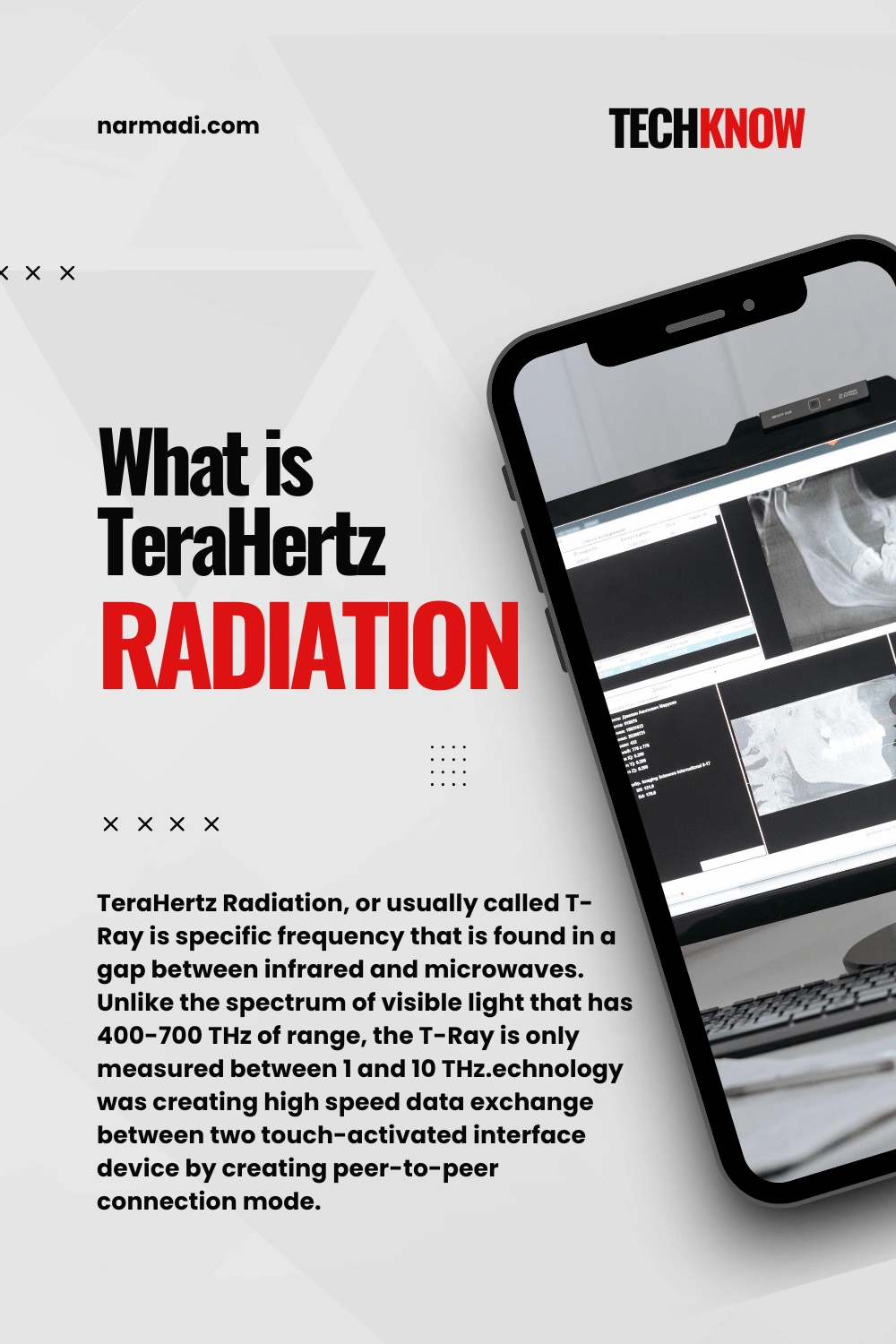
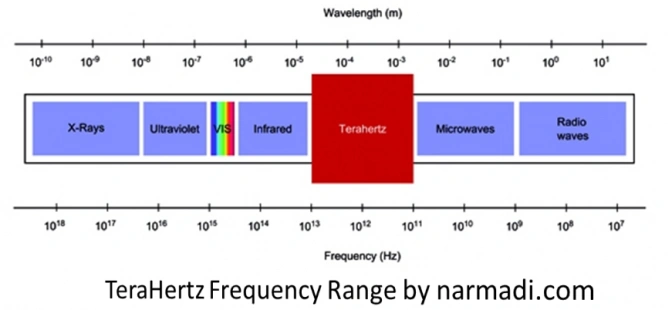
TeraHertz Radiation, or usually called T-Ray, is a specific frequency that is found in a gap between infrared and microwaves. Unlike the spectrum of visible light that has 400-700 THz of range, the T-Ray is only measured between 1 and 10 THz.
That’s why even if the frequency is quite high, the spectrum of it is still invisible. With these kinds of characteristics, sometimes people also call this Terahertz Radiation as tremendously high frequency, submillimeter radiation, T-Lux, T-waves, Terahertz, THz, or T-light.
Talking further about T-Ray’s characteristic, this network is classified as non-ionizing radiation which travels within a line of sight. Further, this radiation is also penetrative, but less penetrative than microwave.
However, it can penetrate to some materials such as clothing, cardboard, masonry, wood, paper, ceramics, or plastics.
But, this radiation can’t penetrate to some other materials such as liquid and metal, while on clouds and fog, the penetration is very limited. More than that, scientists also believe that T-Ray can be used to replace X-Ray due to its ability to penetrate in the body tissue. Well, that’s interesting.
Then, what is the interesting thing about this TeraHertz Radiation? In our context, the interesting thing about TeraHertz is surely on its transmission rate. Even though there are many other possible benefits of T-Ray, but transmission rate is the one that attracts so much attention.
Especially with the new emergence of 5G technology, high level of transmission rate will be really needed as a companion of the newest generation of cellular network.
If the 5G network will have 10 until 20 Gbps of speed, the T-Ray is expected to have 100 times higher transmission rate compared to the today’s network speed. According to scientist, it could be 100 Gbps.
The Emerging Issues
Uncharted territory is a big issue of using TeraHertz Radiation. Even though some scientists from Tokyo Institute of Technology claimed that they had already succeeded, there’s still other issue occurred. It is the far demultiplexing and multiplexing that hasn’t been succeeded to be addressed.
Addressing demultiplexing and multiplexing is really important though. Through demultiplexing and multiplexing, we can allow multiple stream of data transfer to be proceeded within one single pipe.
And the good news is, some researchers from Brown University have found the new technique to make demultiplexing and multiplexing possible by using leaky-wave antenna technique.
TeraHertz Radiation at a Glance
Here is a short summary of the characteristics of T-Ray that we have discussed so far:
- Position in the spectrum: Found in the gap between infrared and microwaves.
- Visibility: Invisible, even though its frequency is quite high.
- Type of radiation: Non-ionizing, and it travels within a line of sight.
- Can penetrate: Clothing, cardboard, masonry, wood, paper, ceramics, and plastics.
- Cannot penetrate: Liquid and metal, with very limited penetration through clouds and fog.
- Main attraction: A very high transmission rate.
Frequently Asked Questions
What are other names for TeraHertz Radiation?
It is also called T-Ray, submillimeter radiation, T-Lux, T-waves, Terahertz, THz, or T-light.
Why are multiplexing and demultiplexing important?
They allow multiple streams of data to travel within one single pipe.
What fields could benefit from T-Ray?
Besides wireless data transfer, it has potential in medicine, surveillance radar, and spectroscopy for biochemistry and chemistry.
With the emergence of TeraHertz Radiation, we know that it will bring many goods for life. As stated above, this technology can be used in medical to replace the potentially-harmful X-ray. Further, with its ability of penetrating some materials, there’s also possibility of T-Ray to be used as Surveillance Radar.
More than that, scientific world can also take benefits from TeraHertz radiation, especially for the Spectroscopy. Spectroscopy with Terahertz can provide more detail information on the biochemistry and chemistry.
Above all, T-Ray is really potential to be used as the new wireless technology. With higher transfer rate, surely it will be the perfect fit for the upcoming 5G network.
Finally, that’s all we need to share regarding the TeraHertz Radiation. Hopefully, this writing can give you further understanding about it. And, if you have any opinion, we welcome you to write them in the comment section below. Thank you.