
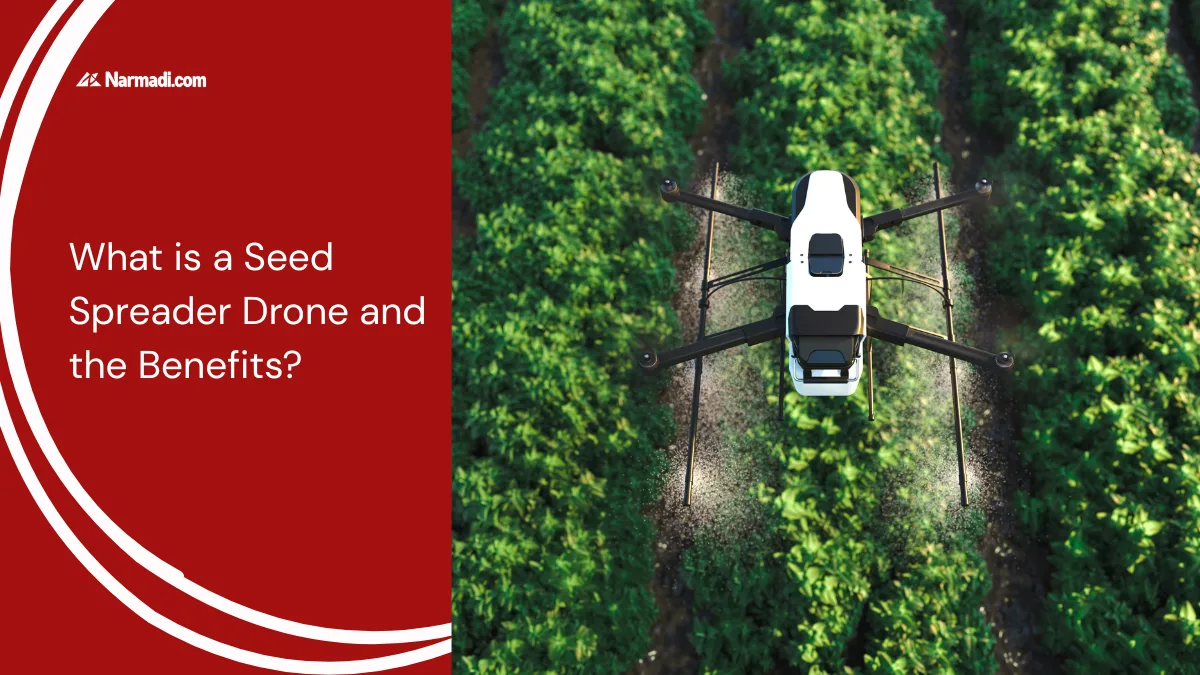

Drones have many benefits in various sectors, one of which is agriculture. Seed spreader drones are an innovative design, specifically engineered to spread seeds from the air.
Seed spreader drones offer numerous benefits to agriculture, including accurate and precise planting, as well as the ability to plant in challenging areas, thereby reducing the risk of chemical exposure.
This article will provide information about seed spreader drones, including their definition, how they work, their functions, examples of their application, their benefits, and regulations governing their use in Indonesia.
What is a Seed Spreader Drone?
A seed spreader drone is an agricultural drone designed to automatically spread seeds. This device allows farmers to quickly and accurately sow seeds over large areas, making seed distribution on farmland more efficient.
This capability is due to the drone being equipped with an integrated seed spreading system. Additionally, the device is fitted with a sensor system that enables land mapping and precise seed distribution.
How does it work?
Seed spreader drones work by scattering seeds over designated agricultural areas using an integrated seed spreading system. Here is how it works in detail:
- Flight planning: The drone operator plans the flight path to determine the seed spreading area and other parameters using special software.
- Seed loading: Seeds are loaded into the hopper or seed storage container on the drone.
- Flight: The drone takes off and flies along the predefined route, assisted by sensors to maintain the correct altitude and position.
- Seed spreading: Seeds are automatically released according to the predefined plan.
- Data collection: After seed dispersal is complete, the drone can collect data on land conditions that can be used for further monitoring and planning of other agricultural activities.
The functions
The seed spreader drone has several functions, from faster and more efficient speed dispersal to preventing land damage. Here are some of its functions:
- Faster and more efficient seed dispersal: Drones can disperse seeds at a much higher speed than manual methods.
- More even seed dispersal: Seeds are dispersed more evenly across the area, increasing the potential for optimal plant growth.
- Prevents land damage: There is minimal potential for land damage caused by human activity because seed dispersal is carried out in the air.
The feature
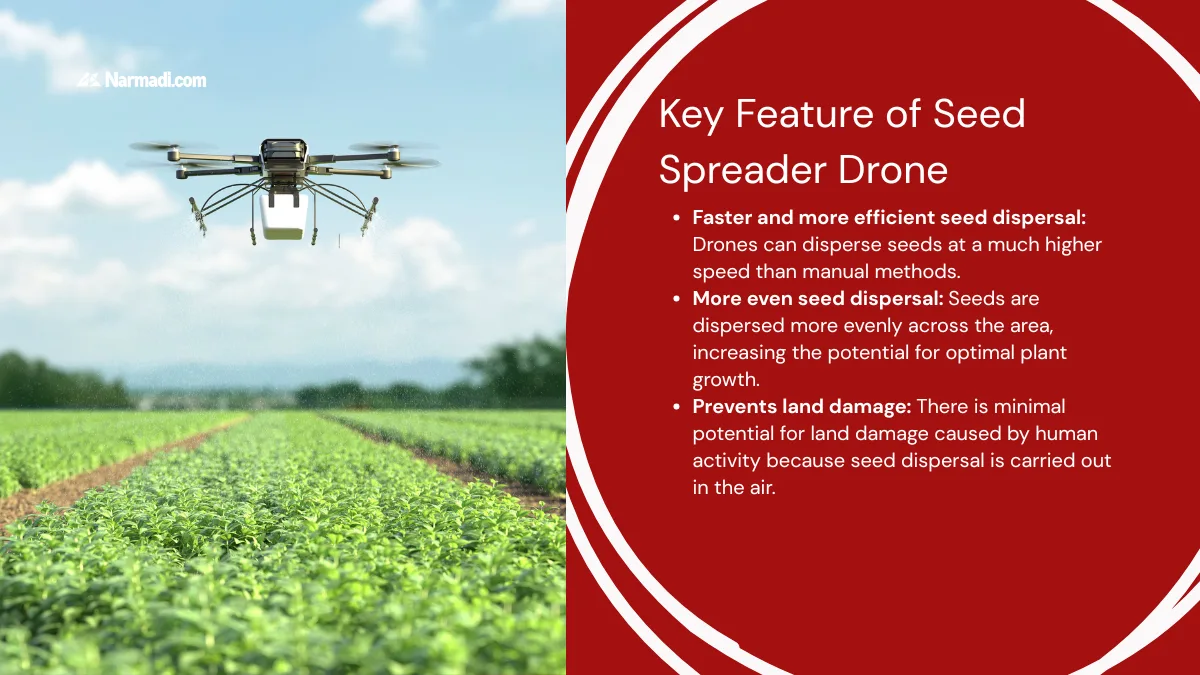
The key feature of a spreader drone is its specific design to support all agricultural needs, from automatically and evenly spreading seeds, fertilizers, and feed across the field. Here are some of the features:
- Precision spreading: Ensures even distribution of fertilizer and seeds with a hopper and automatic spreading system.
- Remote control and app: Control the distribution pattern and volume.
- Quality materials: Generally durable and designed for intensive use in the field.
The application
With many functions provided by seed spreader drones, this device is applied for some necessary purposes. The following are examples of the application:
- Agricultural land cultivation
- Land restoration
- Reforestation
- Fertilization
The Benefits
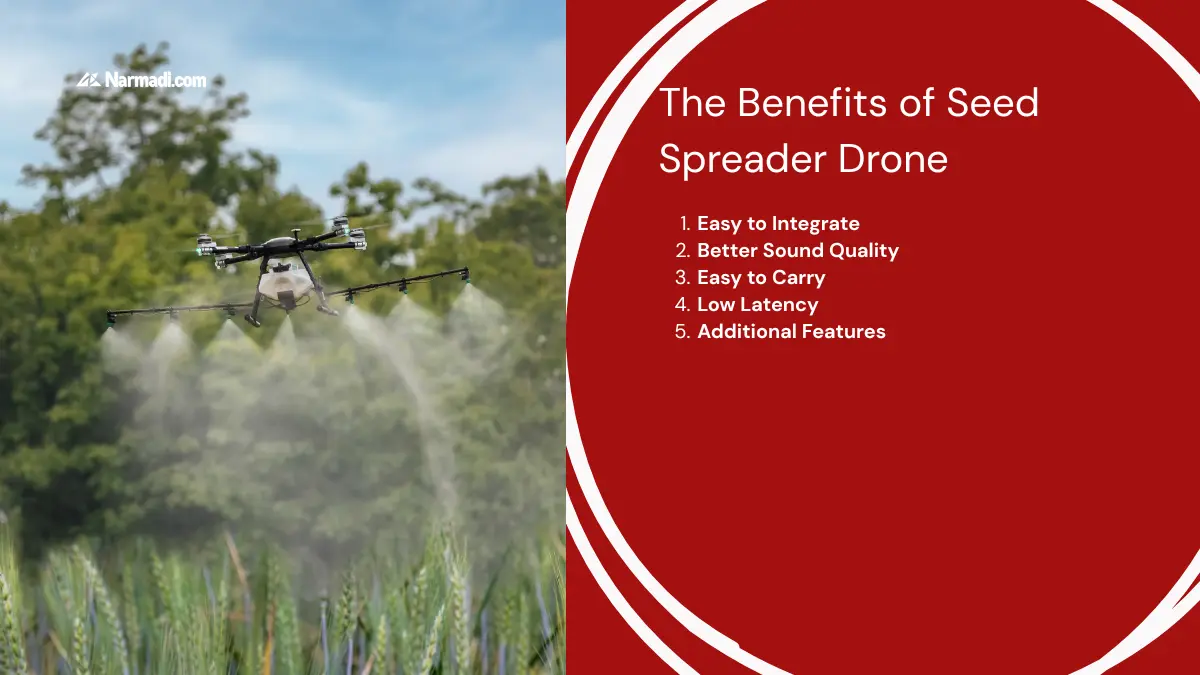
Using a seed spreader drone provides many benefits, especially for accurate and precise planting, and can plant in difficult areas, reducing the risk of chemical exposure. Here are some of the main benefits:
1. Accurate and precise planting
This is a benefit and feature offered by seed-spreading drones. These devices can be programmed to disperse seeds in precise patterns.
Their ability to plant accurately and precisely significantly helps farmers by maximizing distribution and reducing seed waste.
2. Increased productivity
As we know, drones are capable of planting seeds accurately and precisely. This can significantly increase farmer productivity.
This is because farmers can focus more on other activities rather than solely focusing on seeding. Increased productivity can also result in higher yields.
3. Can be planted in difficult areas
In the field, there are often areas that are difficult to plant seeds. This is due to the limitations of traditional methods. However, with drones, areas that are difficult for humans to reach can still be used for planting.
Steep, swampy, or remote areas can still be planted with the necessary seeds. Automatically, productivity is increased, and harvest yields are also increased.
4. Real-time land monitoring
Some seed-spreading drone models are equipped with cameras and sensors for real-time field monitoring. This makes planting seeds more practical, with monitoring via a screen on the remote control or app.
This can also help farmers make better decisions. This means that large farmland areas won’t be an obstacle to optimal control and seed planting.
5. Reducing the risk of chemical exposure
Drones are used not only for planting seeds but also for spraying pesticides and other chemicals from the air.
This long-distance spraying method makes farmers safer by reducing the risk of direct exposure to chemicals.
Usage Regulations
The seed spreader drone technology operates within a specific frequency spectrum. In each country, all radio frequency-based wireless devices must have a Type Approval Certificate.
Wireless regulations require all radio frequency-based devices to meet specific technical standards before they can be sold in that country. This certification ensures that the product meets safety standards and does not interfere with other communication devices.
The certification process involves technical testing, including frequency tuning, safety checks, and verification of environmental compatibility. Ultimately, this results in a Test Report confirming that the product meets technical standards and is safe for use.
For companies wishing to sell seed spreader drone products, Dimulti, as a Type Approval Service, can assist with this process. Our services include preparing technical and legal documents, conducting necessary testing, ensuring compliance with national regulations, and helping companies streamline the certification process. [UN]