In recent years, drone technology has developed quite rapidly and has influenced many sectors, from stunning aerial photography to industrial inspection needs.
Drones are divided into several types according to their needs and functions. By working similarly to helicopters and airplanes, drones can maximize their capabilities for aerial monitoring needs.
This article will explore the world of drones, from the definition, the mechanism of how they work, the various types available based on design and function, and the technical compliance and wireless safety standards required for unmanned aerial systems.
What is a Drone?
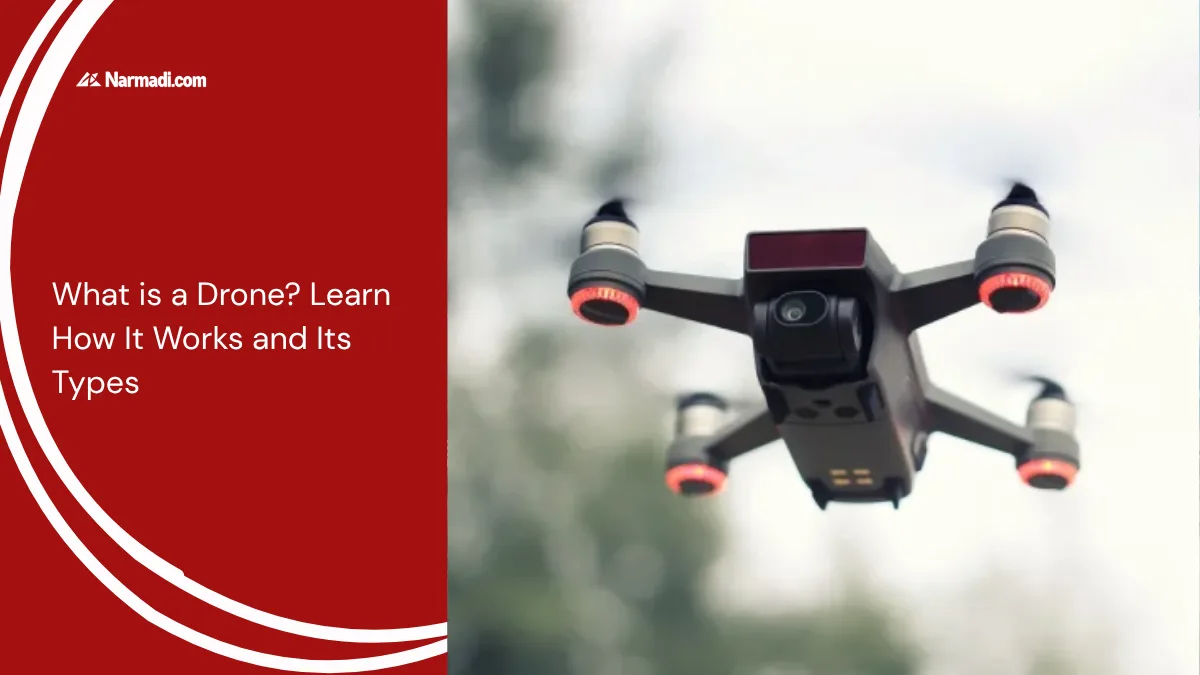
Drones, also called Unmanned Aerial Vehicles (UAVs), are unmanned aircraft that can be controlled by pilots via remote control from a distance. Just like a helicopter, drones are equipped with propellers to fly.
Unmanned Aerial Vehicles are equipped with cameras that can be used for various purposes. One of the virtues of UAVs is recording and monitoring from a height. However, currently, UAVs are widely used for various purposes such as photography, industry, agriculture, surveillance, and expeditions.
How does It Work?
Unmanned Aerial Vehicles have the same working principle as helicopters or airplanes. The integrated control system allows the pilot to control the device remotely.
Sensors, processors, and motors are the flight control system of the device. The system allows the device to detect position and speed, process motion, and adjust propeller speed.
UAVs also rely on Radio Frequency (RF) as a communication tool for remote control by the pilot or through a prepared program.
The Types
Unmanned Aerial Vehicles can be broadly categorized into two types, namely based on design and function. Knowing the types of UAVs will make it easier for you to choose one according to your usage needs and goals.
Types by design
Fixed-Wing
This type of UAV is just like an airplane, it has fixed wings on the right and left to fly. Fixed-wing drones are usually used for military purposes, such as surveillance, or for mapping. This device is suitable for those who need high speed and long-lasting flight endurance.
Rotary-Wing
This type of UAV is just like a helicopter that uses propellers to fly. Rotary-wing drones have the advantage of being easy to move and stable when operated. Examples of this type of drone are quadcopters, hexacopters, and octocopters.
Hybrid VTOL (Vertical Take-Off and Landing)
This type of Unmanned Aerial Vehicle is a combination of fixed-wing and rotary-wing. Hybrid VTOL drones can land without the need for a runway like a helicopter and can go fast like an airplane. For those who need speed and stability over long distances, this device is the perfect choice.
Types by function
- Commercial: This type of UAV is used for photography, videography, mapping, agriculture, and delivery services.
- Military: These Unmanned Aerial Vehicles are used for reconnaissance, surveillance, and combat operations.
- Industrial and research: These UAVs are used for infrastructure inspection, environmental monitoring, and geological exploration.
- Hobbies and recreation: These UAVs are used by individuals for personal purposes such as taking aerial pictures or drone racing.
Technical Compliance and Wireless Protocols
Unmanned aerial vehicles rely heavily on wireless communication across radio frequency bands, typically 2.4 GHz and 5.8 GHz. This is used for control and real-time video transmission.
Therefore, drone equipment must meet type approval certification requirements before being distributed commercially. Type-approval and technical compliance testing for drone systems focus on compliance with Radio Frequency (RF), Electromagnetic Compatibility (EMC) and Electrical Safety standards.
These tests and certifications serve to ensure that UAV systems have stable radio connectivity and operate safely in congested radio environments. It is through this process that devices suitable for commercial, industrial and recreational applications are identified.