Pull up the rollout dashboard for almost any company deploying an AI voice agent this year. Speed to launch. Cost per call. Deflection rate. Every metric on it is about efficiency.
Somewhere between the planning meeting and launch day, nobody added a line for what it should actually sound like.
That absence isn't a rounding error. It's the reason so many AI voice agents in 2026 sound like the exact same robot, just wearing a different company's name.
Nobody in the planning meeting decided this on purpose. That's what makes it worth examining closely. A missing line item doesn't announce itself the way a missed deadline does. It just quietly becomes the default, and the default becomes the brand's actual voice the moment the system goes live.
The Dashboard That Never Asks How It Sounds
Four out of five companies plan to use voice AI in customer service this year. A recent Gartner survey found ninety-one percent of customer service leaders are under direct pressure from executives to implement it now, not next year.
That kind of pressure reshapes what gets prioritized in the room. Every metric on the rollout dashboard measures efficiency. Almost none of them measure voice.
So when it's actually time to decide how the thing sounds, there's no decision left to make. The default is whatever the vendor ships out of the box, and nobody put it there on purpose. It was just the fastest box to check on a very long rollout list, and the list was already long before anyone thought to add sound to it.
The market numbers explain why that list stays long. Voice AI crossed twenty-two billion dollars in value this year. Enterprise adoption has tripled. Gartner projects contact centers will save eighty billion dollars from conversational AI in 2026 alone. That's an enormous amount of money moving through a decision that, for most companies, gets made in an afternoon, by whoever is closest to the software contract, not whoever owns the brand.
Compare that afternoon to how long a company will spend arguing over a logo shade or a tagline. The mismatch isn't about which decision matters more. It's about which one has a natural owner walking into the room. A brand team shows up ready to defend a color. Nobody shows up ready to defend a tone of voice for a system that didn't exist in anyone's job description eighteen months ago.
The Voice Nobody Actually Chose
Here's what that afternoon decision actually sounds like once it ships: a flat, over-formal register. Phrases like "I'd be happy to assist you with that today," recited the exact same way regardless of which brand is paying for it.
It's worth sitting with how literally identical this gets across completely unrelated companies. A logistics company and a skincare brand can end up shipping the same cadence, the same over-polished phrasing, the same slightly-too-formal tone, because both bought the same default configuration from the same handful of providers. Visually, nobody would ever let two competitors look identical. Sonically, it happens by default, constantly, and almost nobody in the room notices, because nobody in the room is listening for it.
Ask why nobody caught it before launch and the answer usually isn't neglect. It's that the review process for an AI voice rollout runs through engineering and procurement checkpoints, accuracy, latency, integration, cost per interaction, none of which have a step where anyone actually listens to how it sounds compared to the rest of the brand.
Customers Already Know the Pattern
Here's why that shortcut costs more than it saves. Fifty-five percent of consumers are already using voice AI regularly. They've heard enough of it by now to recognize the pattern instantly, the same cadence, the same over-polished phrasing, the same slightly-too-formal tone that says "bot" before the conversation even gets to the actual problem.
When that voice sounds like every other company's default, the brand doesn't just fail to stand out. It actively signals it didn't think this through, at the exact moment a customer needed to feel like they mattered.
That signal lands harder than most brands expect, because a customer calling support has usually already exhausted the easier options, the FAQ page, the chatbot, the app. By the time a voice picks up, patience is already thin. A voice that sounds like a template tells that customer, without saying it out loud, that they weren't worth a real decision either.
There's a data point worth sitting with here too. Most consumers say they're genuinely fine talking to AI. They still want a human waiting behind it, but they're not rejecting the format itself. What they're reacting to isn't the fact that it's AI. It's a voice that makes the whole interaction feel careless.
That distinction matters for anyone hesitating to deploy at all out of fear of backlash. The resistance isn't to the technology. It's to the specific, recognizable flatness of the default configuration, which means fixing the voice removes the actual objection instead of just working around a myth about customer preference.
Why This Isn't the Same as a Bland Notification Sound
It's tempting to file this under the same category as any other generic default sound a brand hasn't gotten around to fixing yet, a hold jingle, a notification chime. It isn't the same category, and the difference matters.
A voice agent is a full conversation. It's the closest thing to a brand actually speaking to a customer directly, often at a moment when that customer already has a problem and is paying close attention to how they're being treated. A notification blip fades into background noise. A voice agent doesn't get that luxury. Every word of it is heard, parsed, and judged in real time by someone who's already decided how much patience they have left.
That's a much higher-stakes moment to hand off to whatever came pre-loaded. A hold jingle that sounds a little generic mostly just fails to add anything. A voice agent that sounds generic is actively speaking, in full sentences, at length, during a moment the customer will remember. The downside isn't neutral. It's negative, and it accumulates across every single call the system handles.
Speed and Personality Were Never Actually Competing
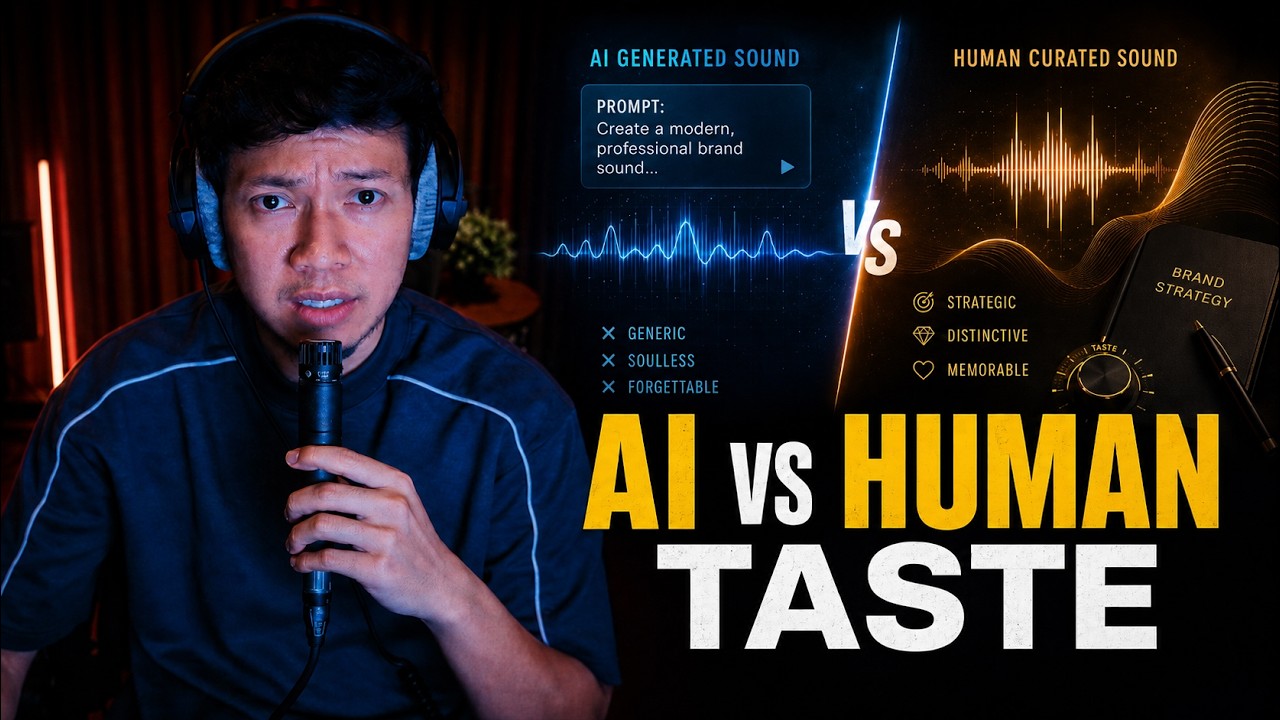
Getting this right isn't primarily a technology problem. Most modern text-to-speech is already technically capable of sounding natural. It's a decision problem: tone, pacing, vocabulary, how formal, how warm, how quick to get to the point. All of it is exactly the same kind of personality choice that should already exist in a brand's sonic identity. It just needs to get applied to a voice instead of a jingle.
At Dimulti Music, this is exactly why an AI customer service voice gets treated as part of the same sonic system as everything else a brand sounds like, a decision that belongs with brand strategy, not something quietly handed to whichever team happens to be closest to the software contract. At least one enterprise voice AI provider is already betting its entire market position on this same idea: as more customer conversations move to AI, the ones sounding distinctly like the brand behind them will be the ones customers actually trust. Our guides on brand voice and AI systems go through that shift in more detail.
A deliberate voice does not take longer to deploy than a generic one. It requires exactly the same rollout timeline, the only difference is someone has to actually decide on purpose instead of accepting whatever came pre-loaded. Speed and personality were never actually competing for the same afternoon. They just got treated that way because only one of them had a metric on the dashboard.
This is worth repeating because it's the part most rollout teams get backwards. Nobody is choosing speed over voice as a tradeoff. Nobody is choosing anything. The rollout ships with a voice by default whether or not a single minute gets spent deciding what it should be, so the only real cost of deciding on purpose is the few minutes it takes to have the conversation at all.
The Two-Minute Version of This Test
If a company already has an AI voice agent live, here's a fast way to check where it actually stands. Call it right now. Ask it something. Listen not to whether it answers correctly, but to whether it sounds like anyone in particular.
If it could be swapped into a competitor's phone line tomorrow and nobody would notice the difference, that efficient rollout quietly cost the one moment a brand actually got to speak for itself.
Run that test before the next planning meeting, not after the next complaint. It costs nothing, takes less time than the call itself, and answers a question the rollout dashboard was never built to ask. It's the same instinct behind running a brand sound audit, just aimed at a voice agent instead of a website tab.
The goal was never to slow down the rollout. It's to make sure that when the AI voice finally does go live, it's a voice worth recognizing, not just one that works.