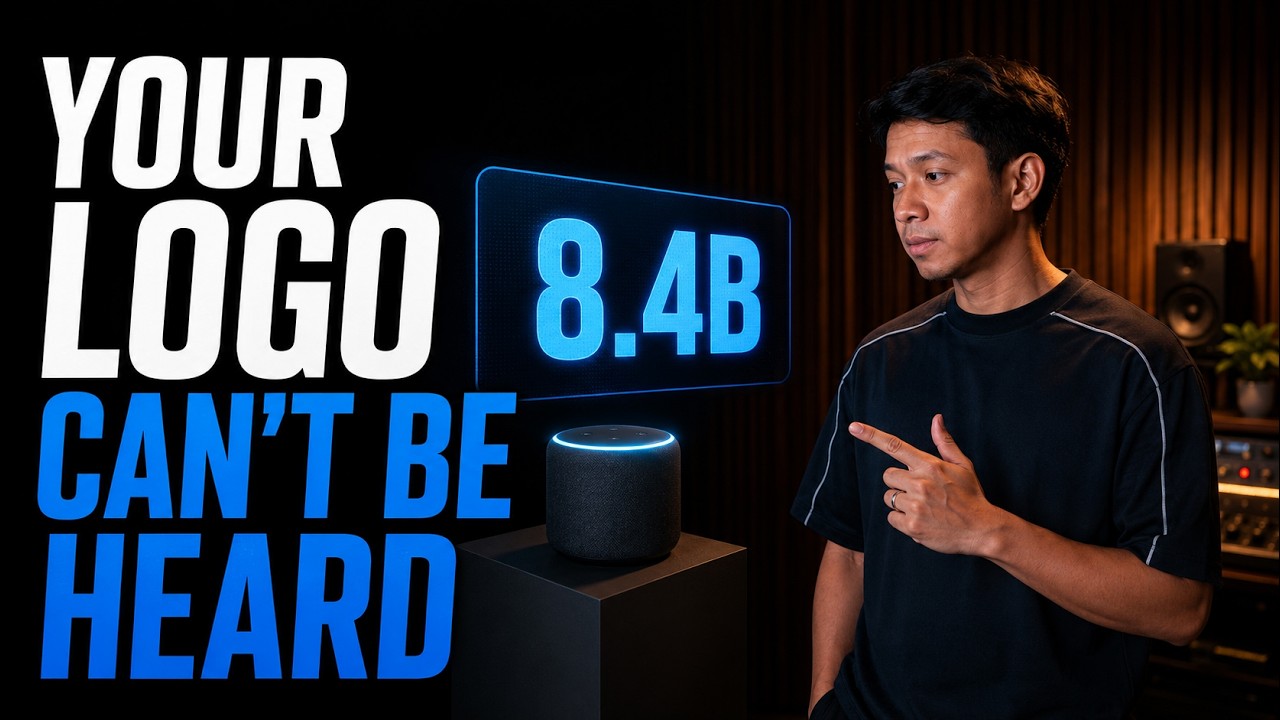
A longtime customer opens the app the morning after the big reveal. New colors. New logo. A slightly different tone in the copy. It feels, for a second, like a genuinely different company showing up.
Then a notification fires. It sounds exactly like it did a year ago.
Nobody in the room that approved this rebrand heard that moment. They were looking at mockups, not listening to anything. The mismatch only exists for the person holding the phone, and by the time anyone at the company notices, months of first impressions have already gone out slightly wrong.
Multiply that one customer by everyone who opens the app, answers a call, or gets a notification in the weeks after launch, and the gap stops being a rounding error. It becomes the actual first impression the rebrand makes on a huge share of the audience, delivered by a sound nobody in the building thought to check.
The Checklist Only Covers What You Can See
Pull up any rebrand plan and the pattern is the same. New logo. New color system. New typography. Updated website. Refreshed brand guidelines. Maybe a new tagline.
Every single item on that list is something you look at.
Sound never makes the cut, and it is worth asking why, because the omission is not really about priorities. It is about who is even in the room. Rebrand projects get run by brand and design teams. Visual identity has an obvious owner from day one. Sound does not, and something with no owner rarely makes it onto a checklist someone else is building.
So whatever audio the brand already had, if it had one at all, just rides along into the new identity untouched. Nobody decided that. It just happened, by omission, the same way a form field defaults to whatever was typed in last time nobody bothered to clear it.
This is not really a budget problem, either, which is what makes the omission stranger once you notice it. Nobody is skipping sound because a jingle refresh costs more than a logo refresh. Most sonic identity work costs a fraction of what the visual rebrand already costs. It gets skipped because nobody assigned it as a deliverable, which is a completely different problem than not being able to afford one.
It's worth being specific about who actually owns this gap, because "nobody" is doing a lot of work in that sentence. Brand and design teams own the visual system. Marketing owns messaging. IT or product usually owns whatever plays the notification sound, if anyone owns it at all, and they were never in the room where rebrand direction got set. Sound falls into the space between departments that all assume it's someone else's line item, which is a much more mundane explanation than any of them actually deciding it doesn't matter.
Two Quiet Ways This Goes Wrong
That default plays out one of two ways, and neither one is actually a choice.
The first is the old audio logo keeps running exactly as it was, now attached to a visual identity it was never designed to sit next to. The tone doesn't match the new palette. The pacing doesn't match the new tagline. It is the sonic equivalent of wearing last year's uniform under this year's jacket.
The second is quieter and easier to miss: the sound just gets dropped somewhere during the transition, and nobody replaces it. No decision gets made to remove it. It simply doesn't survive the handoff between whoever built the old system and whoever is launching the new one. The brand goes from having something recognizable to having nothing at all, and the silence reads as an accident because it is one.
Silence is the more deceptive failure of the two, because it looks like restraint from the inside. Nobody complained about it internally, so it must be fine. From the outside it reads differently. A brand that used to have a distinct sound and now has none feels like it lost something, even to an audience that couldn't have named what that sound was a week earlier. Recognition doesn't announce itself when it disappears. It just quietly stops happening.
Ask whoever is running a rebrand which of those two outcomes they're heading toward, and the honest answer is usually a pause, not a decision. That pause is the actual signal here. Nobody assigned sound to anyone, so by the time launch day arrives, nobody has actually chosen anything. The choice just happened to them.
Why This Particular Moment Is Expensive to Get Wrong
A rebrand earns something most marketing moments do not: genuine attention from an audience that already knows the brand well enough to notice what changed.
People clock the new logo. They clock the new colors. That attention is real, and it does not last. It is a short window where the audience is actively comparing the new version of you against the old one, deciding whether the change feels earned or cosmetic.
If the sound does not move alongside everything else in that window, it sends a mixed signal at the exact moment the brand most needs a clear one. The visuals are saying "we've evolved." An old, mismatched sound, or dead silence where a sound should be, is quietly saying "actually, maybe not." Audiences read that contradiction whether or not anyone at the company consciously produced it.
Outside of a rebrand, this same mismatch barely registers, because there's no fresh visual promise sitting right next to it for comparison. That is what makes the timing so specific. The sound problem existed the whole time. A rebrand is simply the one moment it gets held up against something new enough to expose it.
When Two Brands Become One, the Problem Doubles
Mergers take this same gap and complicate it in a way a simple rebrand never has to deal with. A single rebrand updates one sonic identity. A merger has to reconcile two, each with its own history and its own audience that half-recognizes it.
Picture two companies merging, each bringing years of customers who know their old notification sound or their old intro music without being able to name why it feels familiar. Neither legacy sound automatically deserves to survive the merger. That is a real decision, one about which associations are worth carrying forward, not something that should be settled by whichever system happens to still be technically running on launch day.
Handled on purpose, that decision becomes part of building trust in the newly combined brand. Left to inertia, one identity fades out at random while the other survives by accident, and nobody at either company actually chose that outcome. It is the audio version of two departments merging offices and just leaving whichever furniture happened to already be bolted to the floor.
Employees on both sides notice this too, not just outside customers. A support team that spent years learning what a particular notification tone means for triage, or a sales team that associates a certain intro sting with a certain kind of pitch, is quietly relearning all of that from scratch either way. Making the call on purpose at least gives them a clear, single new normal to learn. Letting it resolve by accident means half the team is still half-attached to a sound that's technically gone.
At Dimulti Music, when a brand comes to us mid-rebrand or mid-merger, our sonic branding work treats the sonic identity as part of the same launch as everything visual, not a separate project that quietly trails six months behind it. That timing detail matters more than it sounds. A sound designed after the visual system has already shipped is usually chasing a direction that got locked down months earlier, and it tends to feel bolted on for exactly that reason. Designed alongside the visual work instead, the two reinforce each other from day one, instead of one perpetually playing catch-up to the other.
None of this means every merger needs a brand-new sonic identity built from zero. Sometimes the right call is keeping one legacy sound mostly intact because it's carrying real, valuable recognition. Sometimes it's blending elements of both into something that reads as genuinely new rather than as one brand quietly absorbing the other. The point isn't which answer is correct in the abstract. It's that somebody with the full picture has to actually make that call, on purpose, instead of it resolving itself by whichever system engineering happened to finish migrating first.
"Let's Handle Sound Once Things Settle Down"
This is usually the instinct during a merger especially, and it feels responsible on the surface. There's already so much to reconcile, systems, teams, reporting lines, that adding sonic identity to the pile of day-one decisions can feel like one complication too many.
It's backwards for the same reason waiting on a rebrand's sound is backwards. "Once things settle down" is exactly when the audience has stopped paying close attention. The window where people are actively comparing the new combined brand against what came before closes fast, usually within the first few weeks. Fixing sound after that window closes doesn't recapture the moment, it just means quietly patching something after the one chance to introduce it properly on purpose has already passed.
The complexity argument doesn't hold up well either. Deciding on a sonic direction is a smaller, faster decision than most of what already has to get resolved in a merger, office locations, product overlap, executive structure. It's genuinely one of the easier day-one calls available, not a reason to postpone.
The Fix Is a Timing Change, Not a Bigger Budget
None of this requires treating sound as some enormous new workstream competing for budget against the logo redesign.
It requires one shift: sonic identity sits in the rebrand conversation from the strategy phase, in the same room as the logo and the color palette, not added on as a finishing touch after everything visual has already gone out the door. If the case for why sonic strategy deserves that kind of ongoing seat at the table in the first place still feels like a stretch, the case for keeping a sonic branding retainer lays out why brands keep paying for that partnership even when AI can generate a passable track for free.
A rebrand only comes around once every several years. That rarity is exactly what makes it the cheapest possible moment to fix sound alongside everything else, instead of circling back to it later as its own separate, more expensive project competing for attention nobody's paying anymore.
Pull up your current rebrand plan or your merger integration plan right now and look for the line item on sound. If it isn't there, that's not a small oversight. It means half of your brand's recognition, the half your audience hears instead of sees, is about to launch by accident instead of by design.
That gap check takes about two minutes, and it's the cheapest insurance available against the version of this story where a customer notices the mismatch before anyone on the team does.
Let's make sure it launches with everything else. Not months after everyone's already stopped paying attention.