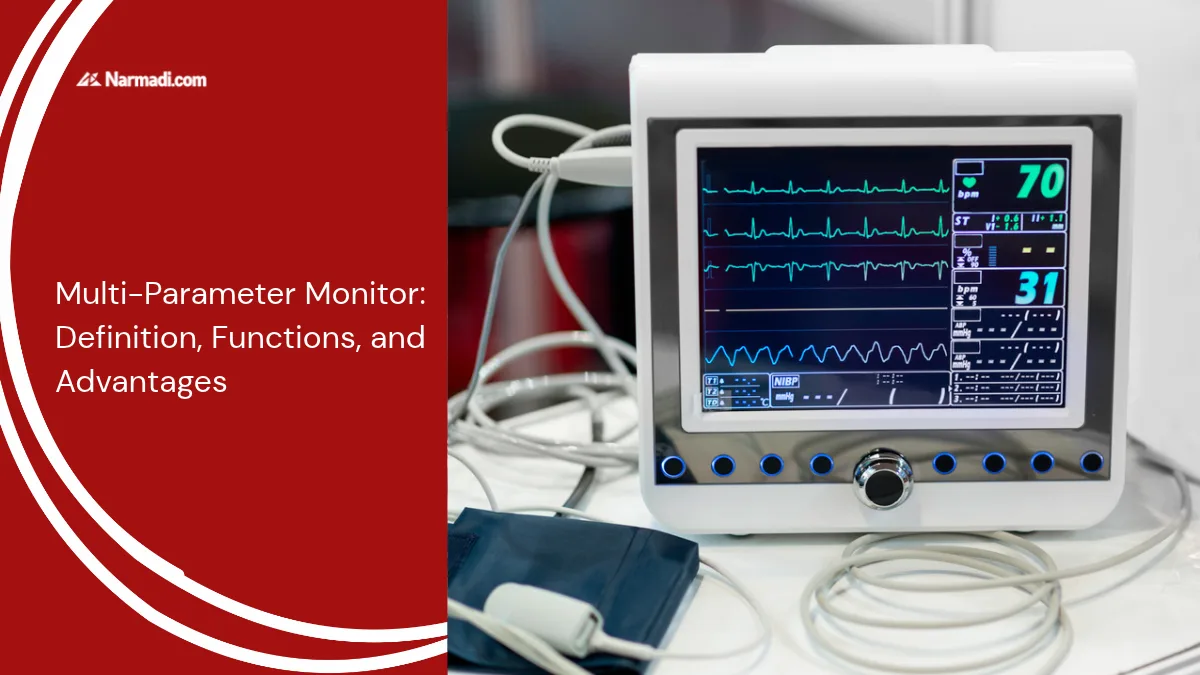
The presence of a patient monitor facilitates medical operations by continuously monitoring vital signs, including heart rate, blood pressure, oxygen saturation, and respiratory rate, in real time. One type of patient monitor is a multi-parameter monitor, which has some functions and advantages.
The functions of a multi-parameter monitor include monitoring vital signs, storing and analyzing data. Moreover, the advantages include accurate measurement, real-time monitoring, and flexible use.
This article will give you information on multi-parameter monitors including their definition, functions, and advantages they have.
What is a Multi-Parameter Monitor?
Multi-parameter monitors are patient monitors that are designed, as the name implies, to read various types of parameters at once. These parameters include ECG, oxygen saturation, blood pressure, body temperature, and respiratory rate.
With their complete capabilities, multi-parameter monitors are often equipped with connectivity features to hospital systems. Medical staff can easily monitor what is happening from the monitor installed in the ICU from the control desk in their room, as the data is sent centrally.
The Functions
The multi-parameter monitor has several functions, from monitoring vital signs to storing and analyzing data. Here are some of its functions:
- Monitoring vital signs: It displays several parameters such as heart rate (ECG), blood pressure (NIBP and IBP), oxygen saturation (SpO2), respiratory rate (RESP), and body temperature (TEMP).
- Visualizing data: capable of displaying the collected data on a monitor screen to give a visual representation of the patient’s overall condition.
- Storing and analyzing data: The monitor is capable of storing historical data, enabling analysis of the patient’s condition and changes over time.
The Advantages
The multi-parameter monitor has several advantages, from accurate measurement and real-time monitoring to flexible use. Here are some of its main advantages in detail:
1. Accurate measurement
Multi-parameter monitors are equipped with advanced technology that enables accurate measurement. With this device, various vital parameters can be measured accurately, so as to determine the interventions that must be made by the medical staff regarding the patient’s condition.
2. Real-time monitoring
One of the advantages of multi-parameter monitors is monitoring the patient’s condition in real-time. With this device, medical staff can find out the patient’s condition quickly, thus allowing the actions taken by officers to also be fast and precise.
3. Supporting clinical decisions
Another advantage of multi-parameter monitors is their ability to support critical decisions. The data collected by the patient monitor provides valuable information for medical professionals. Therefore, all clinical decisions will depend on the results shown on the monitor.
4. Flexible use
Flexible use is another advantage of this type of patient monitor. This device can be used in various types of treatment conditions, such as in operating rooms, ICUs, inpatient rooms, and emergency departments.
Streamlining Clinical Workflows
The integration of multi-parameter monitors goes beyond basic bedside monitoring. It also serves as the central nervous system within the architecture of modern critical care.
These devices are capable of consolidating various streams of physiological data into a single interface. These advanced units drastically reduce the cognitive load on healthcare professionals, enabling rapid synthesis of critical data during emergency interventions.
Multi-parameter technology is also highly versatile. It adapts seamlessly across various hospital departments, from intensive care units to specialized recovery wards.
In specialized environments such as the NICU, this comprehensive framework often works in close coordination with dedicated neonatal monitor systems. This ensures that highly sensitive parameters are reliably monitored across all patient demographics.