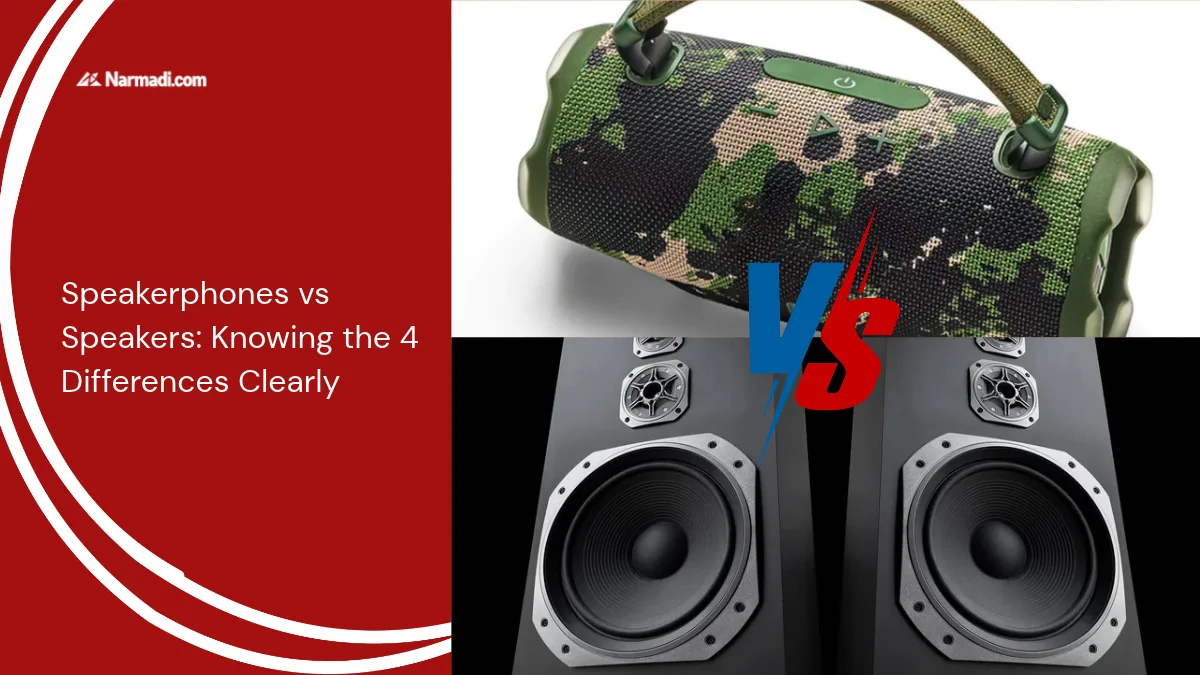
Speakerphones and speakers are essential devices for supporting high mobility in communication and audio entertainment. While both maximize audio output, understanding the core advantages and disadvantages of speakerphones reveals why these two technologies serve distinct purposes.
The differences between speakerphones and standard speakers cover several key aspects, including their primary functions, operational mechanisms, usage requirements, and built-in components.
This article will delve into these important distinctions to provide a clear understanding of when to utilize each technology.
What is a Speakerphone?
The speakerphone is different from ordinary speakers that only play sound; this device allows two-way conversations in hands-free mode by combining microphone and speaker functions.
By using a speakerphone, users can make and receive phone calls without having to hold a cell phone or main device. So users can communicate while doing other activities, such as driving, meetings, or when they want to talk collectively in one room.
What is a Speaker?
As explained earlier, speakers are not like speakerphones that can have two-way communication. They are completely one-way, which means they only emit sound. They work by converting electrical signals into sound.
Speakers come in different shapes, sizes, and usage needs. They can be used to listen to audio content from a variety of sources such as cell phones, computers, televisions, or other media players. Their uses are also wide, from personal use to professional needs.
The Differences Between Speakerphones vs Speakers
True speakerphones and speakers are audio technologies that allow the transmission of sound directly to the device. The main difference between both devices is their main function. Here are some of the key differences between speakerphones vs speakers:
1. Main function
- Speakerphone: It has two functions: the first is for listening to audio content, and the second is for two-way communication, such as making voice calls, conferences, or online meetings.
- Speaker: It has only one function: to listen to audio content from electronic devices such as cell phones, laptops, televisions, or other media players.
2. How they work
- Speakerphone: Able to receive and send sound at the same time. The interlocutor’s voice is generated by the speaker, while the user’s voice is captured by the microphone.
- Speaker: Takes an electrical signal from the device source and converts it into audio.
3. Usage requirements
- Speakerphone: Used for mobility-enabled communication such as making phone calls while doing sports or conferencing with teammates.
- Speaker: Used for general, entertainment, or professional audio needs.
4. Components
- Speakerphone: Consists of two components that are a speaker to emit sound and a microphone to capture sound.
- Speaker: Consists of only one component to emit sound.
Here are the differences in a nutshell:
| Aspect | Speakerphone | Speaker |
| Function | Having two functions: Listening to audio and making two ways of communication | Only for listening to audio |
| How they work | Receiving and sending audio at the same time | Convert signal into audio |
| Usage requirements | Mobility communication | Entertainment and professional audio |
| Components | Speaker and microphone | Only speaker |
Those are the main differences between a speakerphone and a standard speaker. A speakerphone is the ideal choice for those who prioritize seamless communication, hands-free calls, and collaborative conferences. However, for those who prioritize high-quality sound, a standard speaker remains the most suitable option.
By understanding these functional differences, you can ensure that you’re investing in the right audio technology. That way, you can tailor it to your communication or entertainment needs.