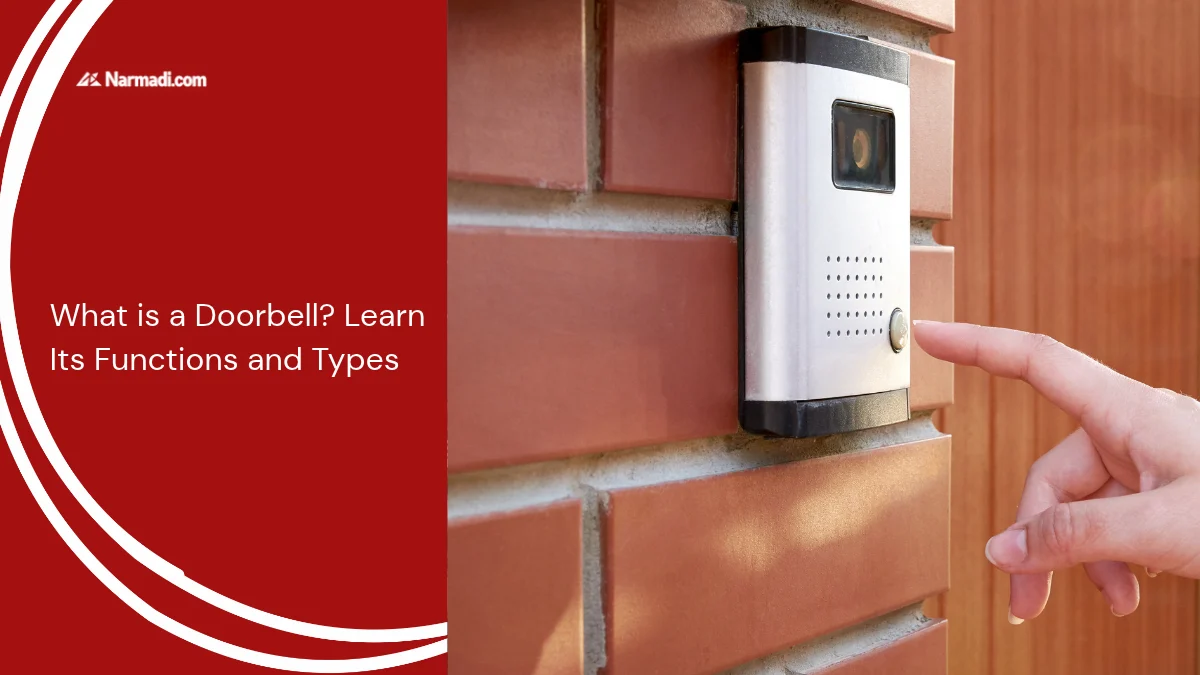
A doorbell is an electronic device that supports household needs by signalling guests or couriers in front of your house. Not only a sign, but the device is currently also developing into a home security and comfort system.
This article will provide in-depth information related to devices, starting from the definition, how doorbells work, functions, types that are divided into two categories, to compliance and certification standards for their use.
What is a Doorbell?
Doorbells are electronic devices that function to provide information indoors that someone is at the door. This device can be used on fences, doors, houses, or in bedrooms.
Two main components make up this device, namely the button placed near the entrance and the receiver unit (chime).
The initial concept of the device that has long been used is a simple mechanical or electrical wiring system. However, along with technological developments, the device now comes in a variety of more sophisticated versions using radio waves, internet connections, and some using cameras.
How Does it Work?
How a doorbell works is very simple, with a button component placed near the entrance and a receiving unit (chime) that sounds in the room when the button is pressed.
The electrical circuit closes when the device button is pressed, which causes an electric current to flow through the solenoid (a coil of wire with an iron core). The magnetic field generated by the solenoid attracts the iron rod, which then produces a “ding-dong” or other sound.
The Functions
Doorbells primarily function as a means of calling home residents. But this appliance also has various additional functions to support the comfort of your home. Here are some of the main functions of the device:
- Signaling: The main function of this appliance is, of course, to signal that there are guests outside the room.
- Facilitates communication: Signaling that there is a guest outside is a communication in itself, but in a smart doorbell, this device is equipped with a microphone and speaker to increase the ease of communication between people outside and inside the room.
- Supports security system: In modern types, your security system can be improved because the device is equipped with cameras and motion sensors.
The Types
Doorbell is divided into two types, namely conventional type and smart type. The following is an explanation of the two types:
Conventional
Although called conventional, this type of doorbell that is often encountered usually uses a wireless system. This device is connected via a radio signal from a button installed outside the room to a sound receiver unit inside the room.
Most conventional types use Short Range Devices (SRD) technology that works at a frequency of 433 MHz, which is classified as a low frequency.
The advantages of this type of device lie in its practical simplicity, energy savings without the need for an internet connection, easy installation without the need for complicated configurations, and a signal that is stable enough for household needs.
Smart
Smart doorbells work by using WiFi connectivity. They are also usually coupled with a mobile app to provide notifications directly to the device.
The devices are equipped with many features, including cameras, motion detection, two-way communication, cloud storage for video recordings, and integration with smart home systems.
Global Type Approval and Compliance Certification
Modern doorbells rely on wireless communication technologies, such as Short-Range Devices (SRD) for conventional systems or Wi-Fi and IoT protocols for smart variants. As we know, the use of devices operating within the radio frequency spectrum is regulated.
Therefore, devices must comply with the type approval certification framework before they can be marketed and used in the target country. This is necessary to ensure consumer safety, electromagnetic compatibility, and interference-free operation.
The process involves several tests, such as Radio Frequency (RF), Electromagnetic Compatibility (EMC), and Electrical Safety. Devices that have passed all these tests are deemed safe and will not interfere with other devices when in use.
For manufacturers and importers, achieving compliance is a critical milestone. It is not only a matter of meeting international legal requirements but also of building consumer trust regarding product quality and operational safety.