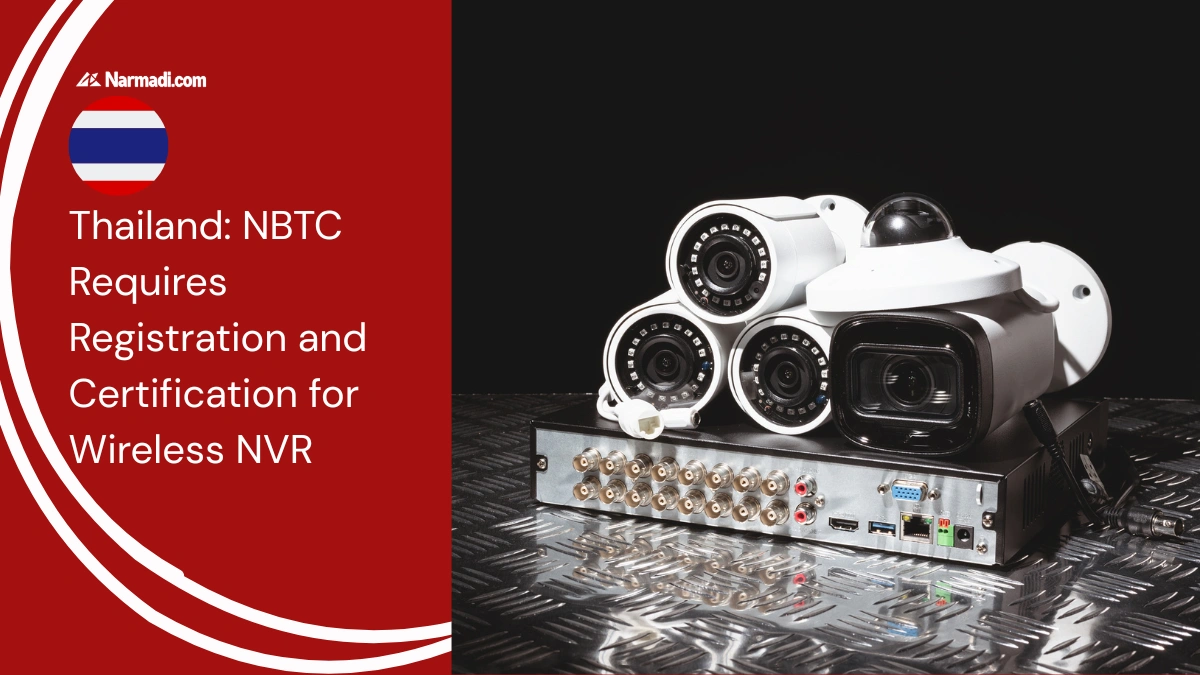

Wireless Network Video Recorder (wireless NVR) is a security device that continues to evolve. This has prompted the National Broadcasting and Telecommunications Commission (NBTC) to require registration and certification for wireless NVRs.
This step must be taken into consideration by manufacturers, importers, and operators to make registration and certification for wireless NVRs. This is especially true for devices that operate on Radio Local Area Networks (RLAN).
Registration and certification for wireless NVRs in Thailand serve a purpose. It is an effort by the government to increase supervision and prevent interference with the 2600 MHz cellular network frequency.
Why is Registration and Certification for Wireless NVR Required?

Registration and certification for wireless NVR, which is currently mandatory in Thailand, is not without reason. This step was taken after numerous cases failed in which importers identified and submitted certification to the NBTC through the SDoC (Supplier’s Declaration of Conformity) scheme as required.
This caused interference with cellular networks and became a serious concern for national telecommunications operators, as some wireless NVR devices were detected operating on unauthorized frequencies such as 2515 MHz. The permitted band for WiFi is 2400–2500 MHz.
Therefore, registration and certification for wireless NVRs are essential. This announcement does not introduce new NBTC regulations; rather, it reaffirms existing rules.
The rules are based on NBTC Notification MT 1035 – 2562 and NBTC Regulation B.E. 2565 concerning the inspection and certification of telecommunications devices. The main focus of the regulations is to prevent the unauthorized use of frequencies that could potentially interfere with public networks.
By complying with existing regulations, companies are meeting NBTC technical standards for wireless NVR devices sold in Thailand. Additionally, products that meet regulatory standards will provide consumers with protection when used.
What Should Manufacturers, Importers, and Operators Do?

The NBTC requires registration and certification for wireless NVRs. Here is a brief guide to the compliance process:
- Ensure that the WiFi module operates in the 2400–2500 MHz frequency range.
- Register the device through the SDoC scheme.
- Complete the technical documentation, including the application form, company registration certificate, and laboratory test results recognized by NBTC.
- Monitor the latest regulatory announcements to stay informed about any technical changes that may be implemented.
The NBTC certification application process can run smoothly by working with the right partner. This will certainly help importers and manufacturers avoid distribution delays and legal issues in the future.