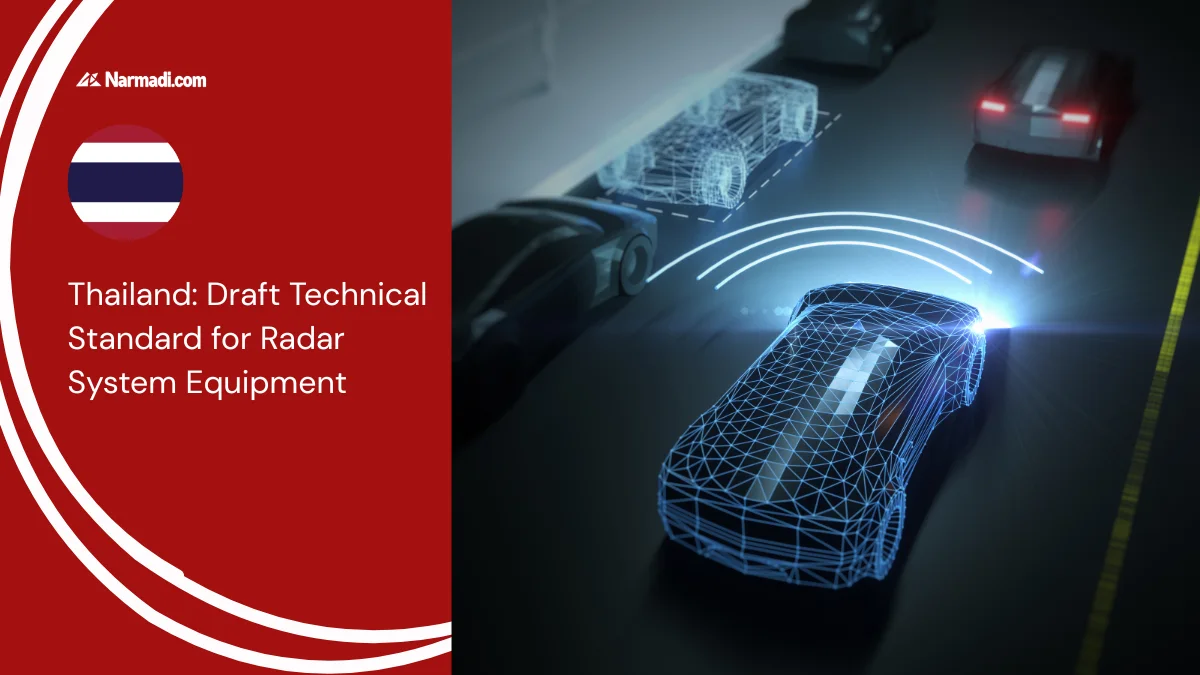
On May 4, 2026, Thailand’s National Broadcasting and Telecommunications Commission (NBTC) released a draft of a new technical standard for radar system equipment. This is part of the government’s effort to support the improvement and alignment of radar system applications with international standards.
The release of this draft technical standard for radar system equipment invites all stakeholders to participate by providing feedback. To provide feedback, you need to be aware of several key points contained in the draft.
5 Draft Technical Standard for Radar System Equipment
In practice, radar radio communication equipment is used for a variety of purposes. Some are used in aviation or national security, while others are used in industry, land transportation, or licensed electronics for general use.
Until now, these technical regulations have not been separate, but the NBTC has received significant feedback to review separate technical standards. This is what has driven the development of technical standards for radar radio communication equipment licensed for general use.
The following are five draft technical standards for radar system equipment:
- (Draft) NBTC Announcement on Criteria for the Use of Radar Radiocommunications Frequencies and Equipment Permitted for General Use.
- (Draft) NBTC Announcement on Technical Standards for Telecommunications Equipment and Devices for Radar Radiocommunications Equipment without Application Restrictions (Non-Specific Radar Applications).
- (Draft) NBTC Announcement on Technical Standards for Telecommunications Equipment and Devices for Radar Radiocommunications Equipment for Land Traffic and Transportation.
- (Draft) NBTC Announcement on Criteria for the Use of Radar Radiocommunications Frequencies and Equipment Permitted for General Use (Version 2).
- (Draft) NBTC Announcement on Technical Standards for Telecommunications Equipment and Devices for Radiocommunications Equipment Permitted for General Use, Frequency 57-64 GHz.
Drafts one through three pertain to radar radiocommunications. Meanwhile, drafts four and five pertain to radiocommunications equipment for general use.
Key Points from the NBTC Draft
Of the five draft technical standards for radar system equipment mentioned above, we will focus on the key points contained in drafts one through three. These points pertain to frequency usage and transmission power.
Draft 1
The NBTC Draft Announcement on Criteria for the Use of Radar Radio Communication Frequencies and Equipment Permitted for General Use divides frequencies into five bands and specifies maximum EIRP transmission power.
Frequencies and Maximum EIRP Transmission Power:
- 5.725 – 5.875 GHz (< 10 milliwatts);
- 10 – 10.6 GHz (< 10 milliwatts);
- 24.05 – 24.25 GHz (< 100 milliwatts);
- 76 – 81 GHz (< 10 milliwatts).
Radio communication and radar equipment of the types and applications using the frequencies listed above, with an EIRP not exceeding 10 milliwatts, is exempt from the requirement to obtain a license. However, such equipment must still demonstrate compliance with technical requirements based on the Supplier’s Declaration of Conformity (SDoC).
Draft 2
The NBTC Draft Announcement on Technical Standards for Telecommunications Equipment and Devices for Radar Radiocommunications Equipment without Application Restrictions (Non-Specific Radar Applications) specifies only one frequency.
These technical standards apply to equipment operating at frequencies between 24.05 and 24.25 GHz. Their use includes applications for land traffic and transportation infrastructure, whether fixed, mobile, handheld, or portable.
Regardless of the application type, radar radio communication systems covered by this draft must have an EIRP not exceeding 100 milliwatts (20 dBm).
Draft 3
The Draft NBTC Announcement on Technical Standards for Telecommunications Equipment and Devices for Radar Radiocommunications Equipment for Land Traffic and Transportation specifies three technical characteristics at different frequencies.
- 24.05 – 24.25 GHz (< 100 milliwatts or 20 dBm);
- 76 – 77 GHz (< 55 dBm);
- 77 – 81 GHz (< 55 dBm).
These technical standards apply to radar radio communication equipment for land traffic and transportation that uses fixed or steerable antennas. Each is used for different purposes.
24.05 – 24.25 GHz is used for installation on motor vehicles or rail vehicles specifically to support driving and navigation on land.
76 – 77 GHz is used for installation on motor vehicles or rail vehicles specifically to support driving and navigation on land, or for land traffic and transportation infrastructure.
77 – 81 GHz is used for installation on motor vehicles or rail vehicles specifically to support driving and navigation on land.
Public Consultation
Regarding the draft technical standards for radar system equipment, stakeholders are invited to submit their suggestions. Input and comments on the draft NBTC announcement are open until July 3, 2026.
Comments must be submitted in writing directly to the NBTC office or via email to spectrum@nbtc.go.th. For messages submitted via email, please include the subject line “Comments on the Draft Radar Announcement.”
Impact on Thailand Type Approval
The draft technical standards for radar system equipment will certainly have an impact on Thailand type approval process. Radar system frequencies will eventually align more closely with most international standards.
This will also likely alter certain technical requirements for radar system usage. The changes will pertain to both general applications and transportation-related uses.
The newly finalized technical standards will serve as the testing reference for radar system usage. Therefore, manufacturers and importers must begin reviewing their equipment to gradually align with the planned standards.
Source
https://www.nbtc.go.th/News/publichearing/75780.aspx?lang=th-TH&__cf_chl_tk=UySwIeA.q8aPoS.SZ5cSXN4dhMlGHGKSq9tAJvkR4QA-1779066276-1.0.1.1-L0chf0PMP9gI5L2sELH3aF.L12.oWdacESXmkyjZUnY