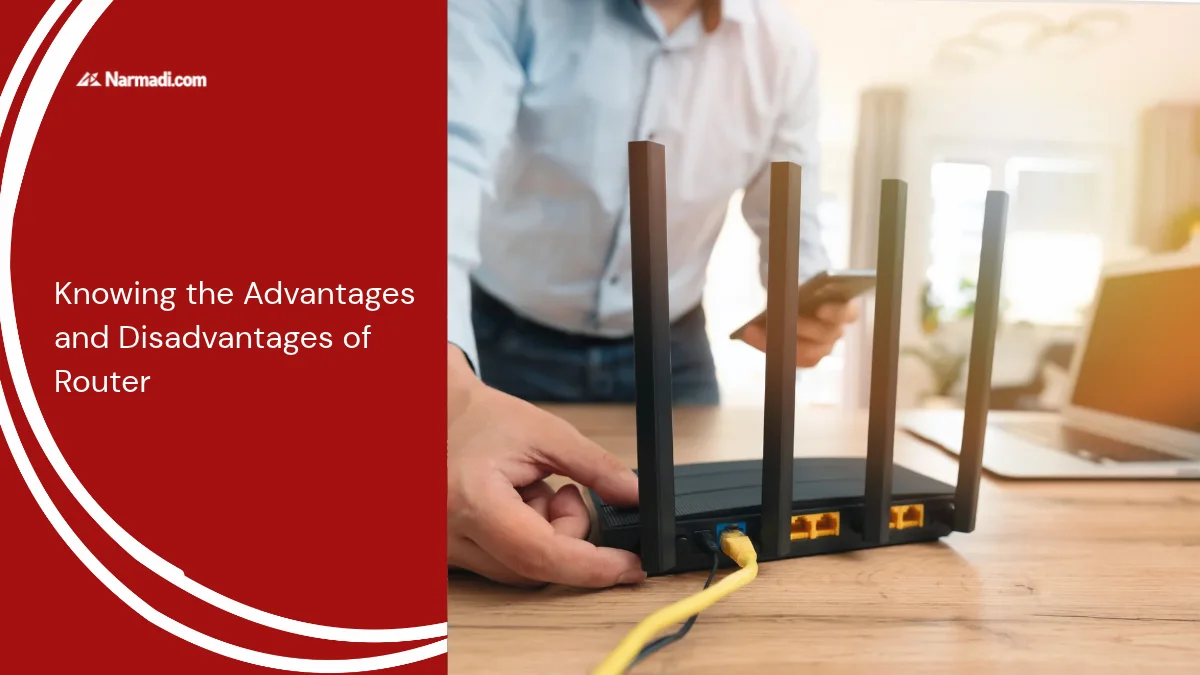
A router provides many benefits, especially the ability to manage data traffic between devices and the internet. However, the advantages and disadvantages of routers cannot be easily separated, even though the benefits are evident.
The advantages and disadvantages of routers include route efficiency, being able to save bandwidth, and network security. The disadvantages include signal interference, possible latency, and troubleshooting.
This article will inform you about some of the advantages and disadvantages of routers that you can consider.
The Advantages
Here are some advantages of a router:
1. Route efficiency
One of the advantages of a router is that it finds efficient routes to send data. This device is unquestionable in its ability to send data by choosing the best path, reducing congestion, and ensuring fast delivery.
2. Flexibility
Flexibility is another advantage of routers. This device can be placed anywhere as long as you place it in an open, elevated area and avoid obstacles that can affect network speed. Nowadays, wireless routers are also available, which further adds to the flexibility of placement.
3. Able to save bandwidth
The use of bandwidth on the internet greatly affects the internet speed we use. In this case, the router, which is the bridge between the device and the internet, can measure and save bandwidth usage so that there is no waste.
4. Limited use
By using a router, devices that use the internet can be unlimited. The router will help distribute bandwidth usage to each user. The only thing to note is that the more devices there are, the more likely it is to affect your internet speed.
5. Network security
Another advantage of a router is its network security. You don’t need to worry about the security system that this device has because it is equipped to protect the network from outside threats with firewalls, Network Address Translation (NAT), and security settings.
The Disadvantages
Here are some disadvantages of a router:
1. Signal interference
One of the disadvantages of a router is that it is prone to signal interference. Routers can be interrupted by other electronic devices that also use the same radio frequency. In addition, bad weather is also likely to disrupt your internet signal.
2. Limited range
Limited range is another drawback of routers. The further away the device is from the router, the more it will affect the internet speed. Usually, routers are able to reach an area of about 30-100 meters indoors.
3. Possible latency
Although it rarely happens, something to note as a shortcoming of routers is the possibility of latency. Signal interference is a possible factor in causing delays in data transmission.
4. Collision domain
Collision domain is also a possible router shortcoming. This is a situation where two devices sending data simultaneously collide and cause data loss.
5. Troubleshooting
Another drawback of routers is the possibility of troubleshooting. If this is the case, fixing complex problems with the router requires a skilled technician, so you need to prepare for the costs of repairs.
Optimizing Router Performance
Understanding the advantages and disadvantages of a router helps you grasp its role as the backbone of your digital connectivity. When using this device, you must balance routing efficiency and network security against potential signal range limitations and the need for troubleshooting.
The effectiveness of a router in terms of flexibility and data traffic control depends on its day-to-day management. To maintain network stability, you need to investigate the root cause of the problem.
Whether a router affects internet speed depends on the quality of the hardware, its placement, and environmental factors. These factors will impact your daily internet usage. Understanding these factors helps you maximize the router’s benefits so you can enjoy a fast and smooth internet connection for all your devices.