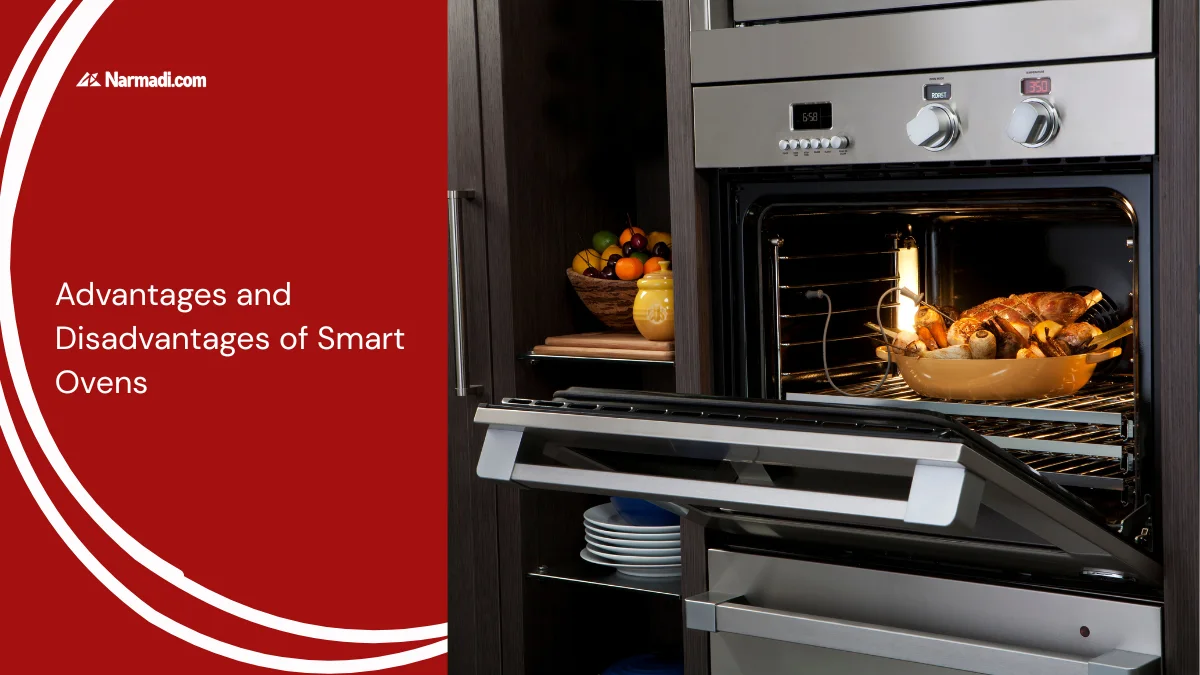
Smart ovens provide many benefits, especially with the various features that they have. However, the advantages and disadvantages of smart ovens cannot be separated, even though we can feel the benefits.
The advantages and disadvantages of smart ovens include ease of use, temperature settings, price, and potential technical issues.
This article will inform you about some of the advantages and disadvantages of smart ovens for your consideration before deciding to use them.
The Advantages
Integrating smart technology into a kitchen oven provides several lifestyle and cooking benefits:
1. Elevated Convenience and Remote Control
Convenience and ease of use are key to modern smart appliances. This is also one of the benefits of using a smart oven.
This appliance makes it easy to prepare food thanks to its remote control features. Users can preheat the oven or adjust the cooking settings from anywhere using the built-in timer, push notifications and temperature controls via the app.
2. Precision Temperature Settings
Smart ovens are fitted with advanced temperature sensors that allow for precise temperature control. This means you’ll avoid the risk of your food being undercooked or burnt.
The results you achieve with this appliance will be more consistent. This benefit certainly makes cooking easier.
3. Energy Savings and Efficiency
One of the key features of smart ovens is optimising energy consumption. This is something that many modern smart devices strive to achieve.
In this regard, smart ovens are equipped with features such as automatic shut-off once the cooking process is complete and an alert if the door is left open. In this way, unnecessary electricity consumption can be minimised.
4. Modern Kitchen Aesthetics
It’s not just about functionality. The smart oven’s appeal also lies in its sleek, modern design.
The appliance also features a touchscreen and high-quality finishes. This lends a contemporary feel to any kitchen.
The Disadvantages
Despite their benefits, smart ovens present a few practical and operational disadvantages:
1. Higher Initial Cost
The main thing to bear in mind when buying a smart oven is that it will cost more. You cannot compare it to a conventional electric or gas oven.
This is inevitable, as smart ovens are equipped with microcontrollers, wireless modules and digital sensors. Conventional appliances did not have these features.
2. Potential Compatibility Limits
There are, of course, limitations to smart devices, one of which is compatibility. Smart ovens are indeed designed to integrate with smart homes, but some models cannot connect seamlessly to every smart hub ecosystem, router frequency or third-party mobile app.
If this is the case, it will cause you problems. Whilst the intention is to have home devices that can be easily integrated, there are actually devices that cannot be integrated.
3. Susceptibility to Technical Issues
Technically speaking, smart devices rely on internal circuit boards, Wi-Fi modules and companion apps. This is something we frequently encounter as a certification service provider.
This is no different for smart ovens. These devices are also susceptible to software bugs, connection issues or apps freezing.
4. More Complex Maintenance and Repairs
The smarter the appliance, the more complex its maintenance and repair become. Repairing a smart oven that has malfunctioned often requires a specialist technician.
This is necessary to identify and resolve issues with both the electronic hardware and the software firmware. You won’t find this level of maintenance required for conventional appliances.
Key Factors to Consider Before Buying a Smart Oven
Are you thinking of switching to a smart oven? It’s certainly the right decision in today’s modern world. However, you’ll need to take into account your daily cooking habits, the size of your kitchen and any technical requirements.
Here are a few factors to consider when choosing the right appliance:
- Software Update Support: Choose a brand that provides regular app updates to ensure long-term connectivity.
- Physical Manual Controls: Look for a model that still features physical buttons so you can operate it manually should the Wi-Fi connection or app fail.
- Power Output and Domestic Electrical Capacity: Ensure that the electrical circuit in your home can handle the oven’s peak power consumption, which requires a high power supply.
- Size and Capacity: Choose a compact unit that suits your kitchen layout and your family’s average meal portions.