Radar security offers many benefits that enhance the security system. It is no wonder that many industry sectors use radar security applications.
Some of the sectors that utilize the applications of radar security include perimeter security, airborne security, and ship navigation.
This article will provide more in-depth information on the applications of radar security in some of the sectors that have utilized the technology.
The Applications of Radar Security
Radar security applied in various sectors presents vast potential. The following are five examples of common applications of radar security in several fields:
1. Perimeter security
Radar security is used in perimeter security to detect potential threats such as intruders or vehicles approaching the protected area. It is capable of detecting intrusions or boundary violations of the protected area.
These radar systems are capable of detecting motion over a wide area, even in poor weather conditions or low lighting, and provide early warning of potential breaches, which is useful for extending surveillance beyond the physical boundaries of the perimeter.
2. Airborne security
In the field of aviation safety, radar systems are used to detect, track, and identify objects in the air. Examples include commercial aircraft, military jets, and unmanned aerial vehicles (drones).
By integrating long-range radar sensors, air traffic control centers can efficiently monitor airspace activity. For example, they can track unauthorized drone activity and enable rapid defensive measures.
3. Marine security
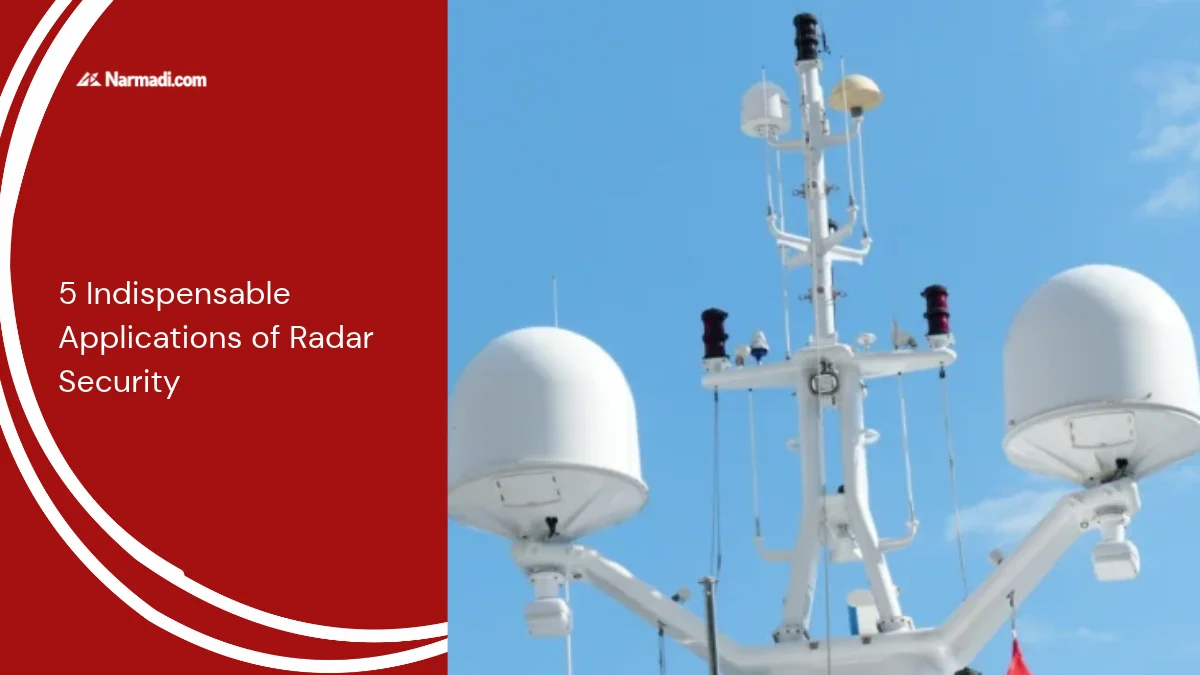
The application of radar in maritime security is essential for monitoring, early detection, and response to potential threats in the waters.
Marine radar allows authorities to track ship movements, identify suspicious vessels, and monitor illegal activities such as fishing theft or piracy. Radar systems are also used for safe navigation and collision avoidance.
4. Military security
In military security, radar plays an important role, whether for air, land, or sea defense. Radar is used for threat detection, tracking, and surveillance, as well as for weapons control and missile guidance.
Radar systems can be used for early warning, detecting and tracking enemy targets, detecting incoming threats such as missiles and aircraft, and enabling early response and interception.
5. Critical Infrastructure Protection
Modern radar sensors are increasingly being used to protect vital civilian infrastructure, such as power plants, oil refineries, solar power plants, and airports.
Their most critical benefit is their ability to distinguish between false alarms and actual security threats. Often, animals or debris carried by the wind will trigger an alarm. This capability allows you to take appropriate action.
Key Considerations Before Implementing the System
The implementation of radar security systems in many industries requires careful planning. This ensures that the system’s detection range and efficiency are maximized.
Therefore, it is important to consider several operational factors before installing radar equipment. Here are the main factors:
- Target Classification Capabilities: Consider basic motion detection capabilities or advanced AI classification features to minimize false alarms.
- Detection Range and Field of View: Choose a radar model that suits your needs, whether for short-range wide-angle coverage or long-range narrow-beam tracking.
- Environmental Operating Conditions: Ensure the radar system has an appropriate IP rating for extreme weather, resistance to high winds, and optimal performance.
- Integration with Existing Security Systems: Ensure the radar unit can be easily integrated into your current system for automatic visual tracking.