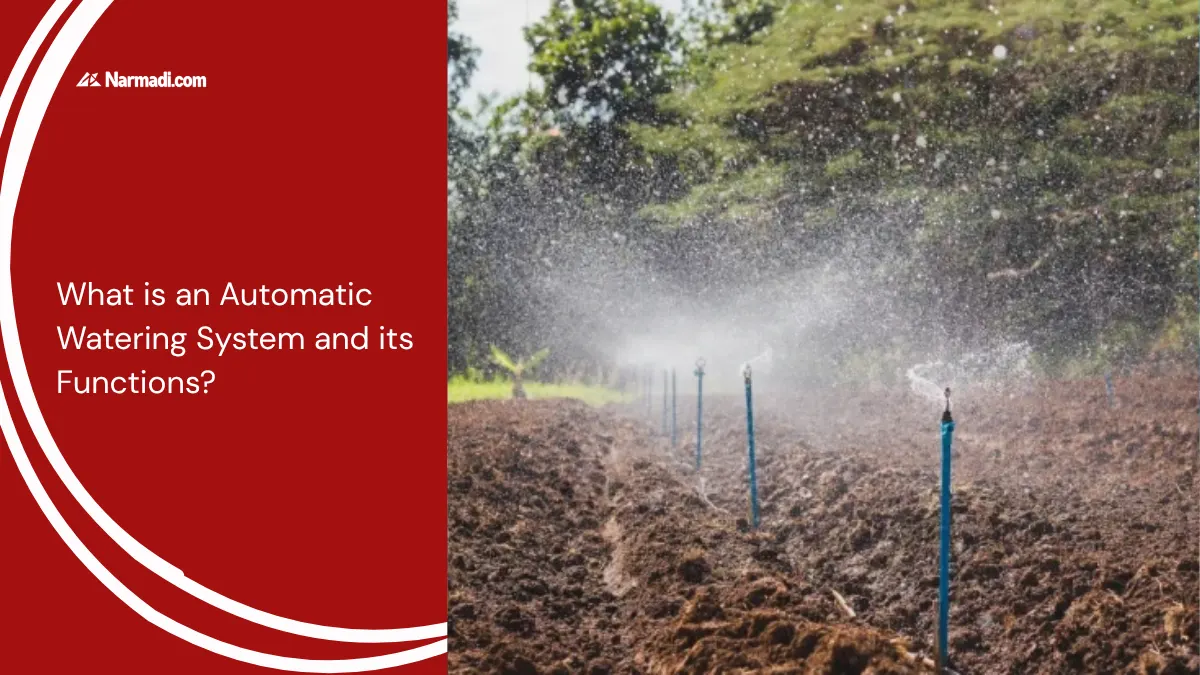
Automatic watering systems are the answer to the need for efficient water management for healthy plant growth and sustainable practices in agriculture and horticulture.
Automatic Watering Systems offer a precise and hands-free approach to irrigation, allowing you to remotely monitor crop conditions and plant watering.
This article will discuss the automatic watering system from its definition and its fundamental working principles, explore its various functions, and detail the technical compliance and wireless standards required for smart irrigation deployment.
What is an Automatic Watering System
Automatic watering systems are systems that automatically water plants or crops without human intervention. This system uses sensors, timers, and other electronic devices to control watering based on plant water needs or environmental conditions.
With this tool, all watering systems, both drip levels and watering locations, can be automated. The benefit that can be felt by using this tool is its automation, which can do watering without depending on labor. This, of course, also affects the reduction of labor costs to ensure worker safety.
How Does it Work?
An automatic sprinkler system works by monitoring the soil moisture and automatically watering the plants when needed. Here’s how it works in detail:
- Sensors measure moisture: Sensors installed in the soil of the plant area measure the soil moisture level and send the data to the controller.
- The controller detects the moisture level: A controller set with a specific humidity level will read the humidity if the soil is too low.
- The water pump performs watering: If the humidity is detected to be too low, the water pump is activated and will water the plants through the watering system pipes.
- The pump automatically stops: When the soil has reached the desired moisture point, the pump will automatically stop.
The system can be programmed to water the plants at specific times or automatically based on the humidity level.
The Main Components
Here are some of the main components of an automatic watering system:
- Sensors: Detect soil moisture, temperature, or other factors that affect plant water requirements.
- Timer/Controller: Regulates the watering schedule, watering duration, and the amount of water applied.
- Valve/Pump: Controls the flow of water to the plants.
- Pipe/Duct: Carries water from the source to the plants.
The Functions
An automatic watering system serves to water plants automatically, without the need for manual watering by humans. Here are some of the functions of this device:
1. Watering plants automatically
One of the main functions of an automatic watering system is to water plants automatically. With sensors and timers set on this system, watering plants can be done automatically based on soil moisture conditions or a predetermined schedule.
2. Water use efficiency
Saving water is another function of the automatic watering system. With settings that are adjusted to soil moisture conditions or a predetermined schedule, automatic water use can be more efficient according to the specified time. So that the possibility of wasting water can also be avoided.
3. Maintain soil and plant moisture
Another thing that cannot be avoided in the function of an automatic watering system is its ability to maintain soil and plant moisture. With automatic settings, the plants will be kept moist without missing the watering schedule.
4. Easy monitoring
Some automatic watering systems are equipped with an automatic monitoring feature. So you can monitor the condition of plants and watering systems even from a distance. Automatically, you can easily monitor your plants anytime and anywhere.
5. Increase the effectiveness of plant growth
Another function of the automatic watering system is to increase the effectiveness of plant growth. With proper watering, this system will automatically help increase the effectiveness of soil growth.
Technical Compliance and Wireless Standards
Modern automatic irrigation systems are equipped with IoT gateways and wireless sensor nodes that rely on the Short Range Device (SRD) communication protocol. In every country, devices featuring this type of wireless telecommunications technology must meet technical compliance requirements and obtain type approval certification.
This process includes Radio Frequency (RF), Electromagnetic Compatibility (EMC), and Electrical Safety testing. Wireless spectrum and RF compliance: Ensuring that short-range radio modules comply with the specified limits for frequency range, output power, bandwidth, and spurious emissions.
EMC testing ensures that there is no signal interference with other devices during use. Electrical safety, on the other hand, ensures that electronic components are protected from water ingress, exposure to the elements, and power surges in outdoor field conditions.
Generally, testing follows procedures accredited under ISO/IEC 17025. Holding this certification means the device is legally authorized for sale and use in a country. It also indicates that the device is technically sound, weather-resistant, and safe for large-scale integration in the fields of agriculture and horticulture.