Today, barcode scanners are becoming an essential tool in various sectors such as retail, manufacturing, logistics, and healthcare.
With barcode scanners, the process of transferring data is faster and reduces data entry errors that usually occur in manual entry.
Do you want to know more about barcode scanners that you may often encounter? This article will inform you more about barcode scanners, including the definition, how they work, types, functions, and compliance requirements for global markets.
What is a Barcode Scanner?
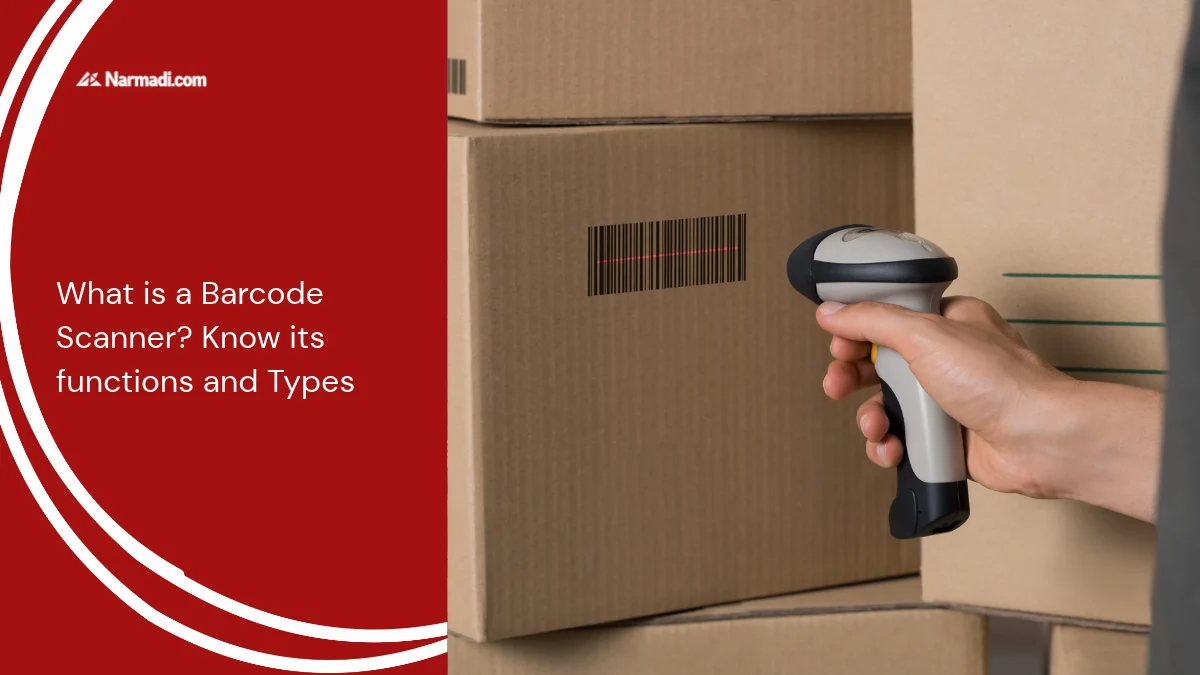
A Barcode scanner is a tool that functions to scan and reads the information contained in barcodes that are generally located on products, shipping labels, identity cards, or other documents.
The code contained in the barcode will be received by the barcode scanner in digital form, which is then sent to the computer system or application.
Modern barcode scanners are now supported by direct integration with Point-of-Sale (POS) systems and cloud-based applications.
With these scanners, operational processes in the retail, logistics, or industrial sectors have minimal data entry errors, do not require a long time, are efficient, and are real-time.
How Does it Work?
What barcode scanners do in general is scan barcodes and convert them into digital data that can be read by a computer. Here is how it works in detail:
- The beam of light from the scanner: The scanner sensor emits light with a laser beam towards the barcode.
- The light is reflected by the barcode: The black and white lines of the barcode reflect the light into the receiving sensor.
- The reflected light is converted into electricity: The optoelectronic components in the scanner convert the reflected light into an electrical signal.
- The signal is translated into digital data: The signal from the reflected light that becomes electricity is translated into digital data.
- The data is sent to the device: The resulting data is then sent to the destination device, such as a computer or application.
The Types
Barcode scanners are divided into several types that differ in shape and technology. Usually, these types are intended for operational needs and different types of barcodes. Here are some types of scanners that are commonly used:
1. Fixed-mount scanners
Fixed-mount scanners are scanners that are permanently installed in one location and intended for automation of production lines, goods conveyors, or logistics systems. These scanners allow for automatic scanning on the fly without human intervention.
2. Handheld barcode scanner
Handheld barcode scanners are scanners that you may often encounter, as they are often found at cashiers or in warehouses. This scanner is operated manually, usually held in the hand, and the button on the scanner is pressed to scan the barcode. This type of scanner can be customized according to mobility needs, as it is available in wired (USB) or wireless (Bluetooth) versions.
3. 2D image scanner
2D image scanners are not only able to read traditional 1D barcodes but can also read 2D barcodes such as QR Codes. This type of scanner is also widely used in various sectors such as health, transportation, and ticketing. This type of scanner has the ability in one scan to be able to read complex data.
4. Omnidirectional scanner
Omnidirectional scanners are designed to read barcodes from various angles without having to arrange them precisely. This type of barcode is typically used in busy environments, where transaction speed is a top priority.
The Functions
Barcode scanners have main functions ranging from speeding up the data transfer process to increasing work efficiency. Here are some of its main functions:
- Speeding up the data transfer process: With a scanner, the data scanning process becomes faster and more efficient because it can be directly input into the system without the manual data input process.
- Reduce human error: In manual data inputting, errors often occur; with a scanner, data transfer becomes more accurate.
- Increase work efficiency: With a scanner, employee work becomes more efficient because they can work faster and more accurately in performing various tasks.
Compliance and Type Approval
Manufacturers, importers, and distributors of wireless or Bluetooth-enabled barcode scanners need to consider several factors before marketing their products globally. One of these is compliance requirements and type approval certification.
These requirements are in place to ensure that devices meet international standards regarding radio frequency emissions, electrical safety, and electromagnetic compatibility. Obtaining official type approval certification means that the hardware operates within the specified frequency spectrum without causing interference.
Ultimately, partnering with an experienced compliance specialist will streamline the type approval process. That way, products can enter the global market in a measured and controlled manner.