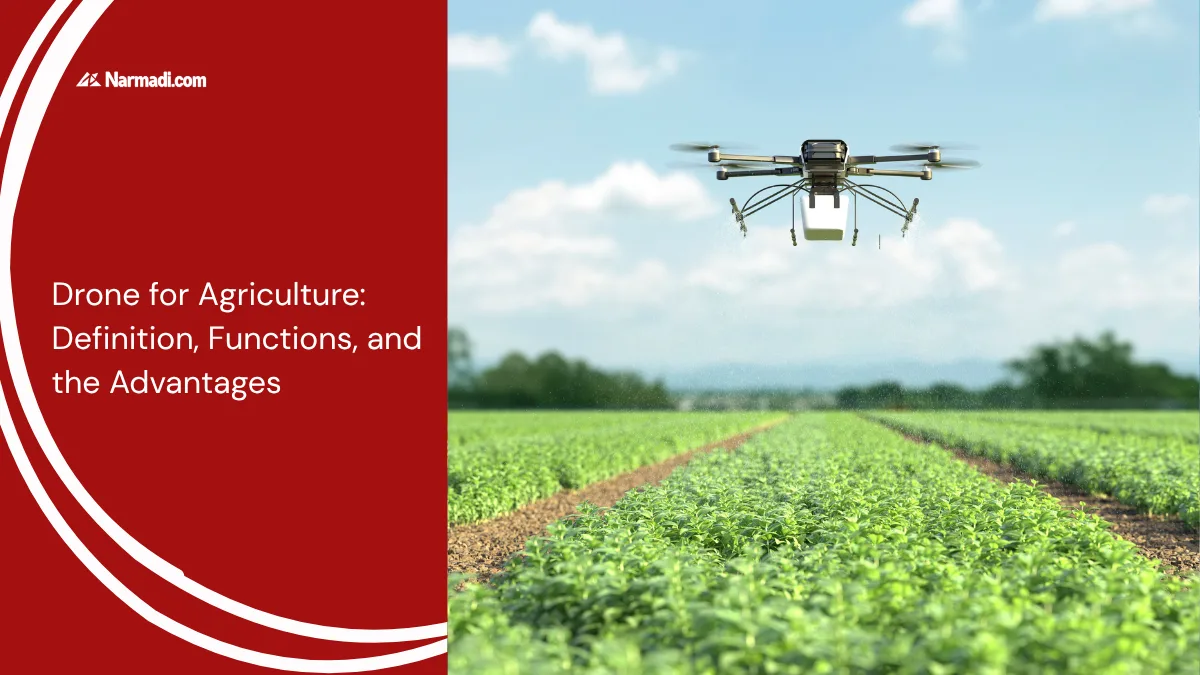
The presence of drones as a recording tool for more efficient aerial imaging needs has benefited various sectors, one of which is agriculture. Drones for agriculture have some functions and advantages.
The functions of drones for agriculture include mapping the land for pests and weed monitoring. The advantages include time and cost efficiency for more accurate irrigation.
This article will give you information on drones for agriculture from definition, functions, and advantages that they have.
What is a Drone for Agriculture?
In the agricultural industry, drones are used for land mapping, knowing soil moisture levels, providing information about crop conditions, to being able to find out the presence of pests and diseases.
With this ability, of course, drones are very helpful for farmers to make more informed decisions in managing agricultural land.
The Functions
Drones for agriculture have several functions, from mapping the land to pest and weed monitoring. Here are some of their functions:
- Mapping the land: Drones are capable of mapping land in high resolution, providing detailed information on land conditions, such as soil type, texture, and potential pests.
- Monitoring crops: With cameras and sensors that can be used to monitor crops in real time.
- Land condition monitoring: Serves to regularly monitor land conditions, including weather, temperature, and humidity.
- Pesticide/fertilizer spraying: Spraying pesticides or fertilisers over large, hard-to-reach areas with high precision.
- Pest and weed monitoring: Helps in identifying and mapping pest populations and weed infestations, so that farmers can take appropriate control measures.
The Advantages
Drones for agriculture have several advantages, from time and cost efficiency to more accurate irrigation. Here are some of their main advantages:
1. Time and cost efficiency
One of the advantages of drones is the time and cost efficiency of use. With drones, you can conduct faster and more accurate land surveys and monitoring, reducing the time and cost required for manual surveys.
2. Increased production
Increased production is another advantage of drones for agriculture. Drones can help farmers increase crop productivity and yield with better monitoring and management.
3. Farmer safety
Another advantage of drones is that they can keep farmers safe. By using drones, it will certainly reduce the direct exposure of farmers to pesticides and fertilizers. Moreover, the risk of accidents due to farming activities can also be minimized.
4. Resource management
The ability of drones to manage resources is another advantage of this tool. Water and fertilizer resources can be managed using drones. This management can be more precise and efficient, reducing waste and environmental impact.
5. More accurate irrigation
Another advantage of drones is their ability to irrigate more accurately. Crop irrigation needs, avoiding excess or lack of water, and optimizing water use, can be assisted by drone monitoring.
Multispectral Sensors and Liquid Payload Management
Agricultural drones rely heavily on specialized payload configurations, particularly multispectral cameras and precision spray tanks. Near-Infrared (NIR) sensors generate Normalized Difference Vegetation Index (NDVI) maps.
These maps reveal hidden signs of plant stress, nutrient deficiencies, and irrigation leaks. Detecting these with the naked eye across large areas would be extremely time-consuming.
On the other hand, agricultural drones face challenges when their payload of liquid pesticides or liquid fertilizer is sprayed or shifts during flight. The drone pilot must constantly adjust the motor thrust to compensate for changes in the center of gravity and maintain a stable hovering position at the height of the crops.
Although specialized aerial equipment is essential for precision agriculture, the use of drones in the creative industry is truly unique. You’ll be amazed at how the same core flight platform can be configured for cinematic production and media work.