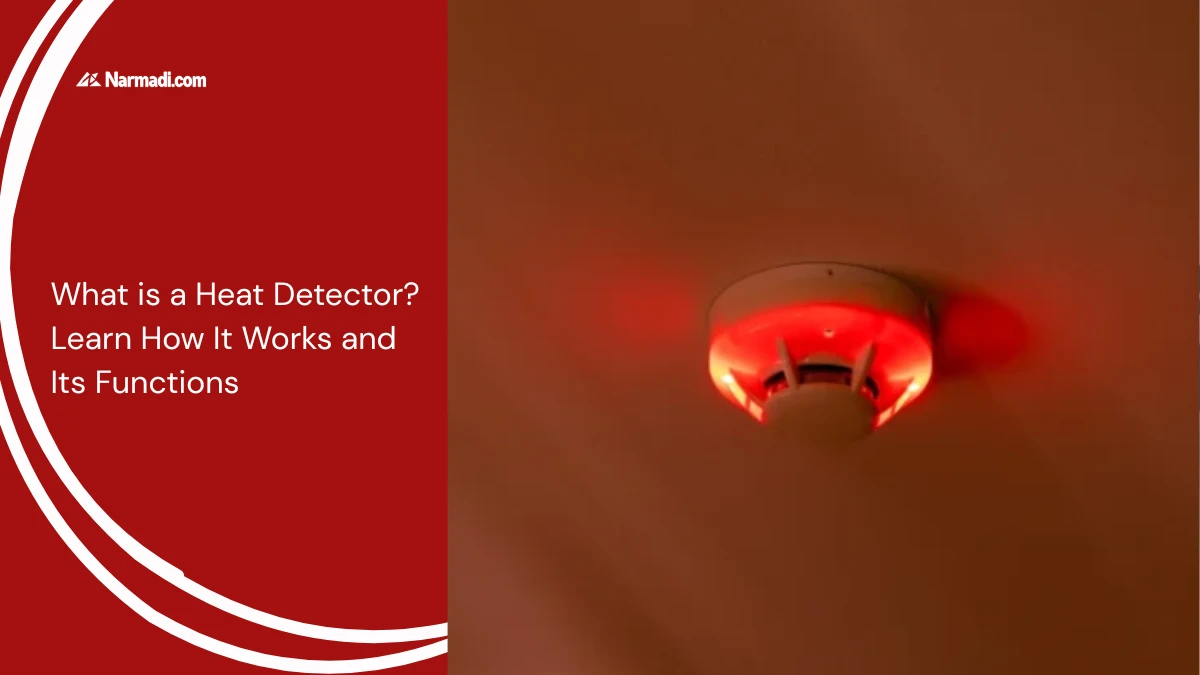
The use of heat detectors is needed for detecting fires so that quick action can be taken to extinguish the fire. Not only that, the importance of using heat detectors includes several other things, such as detecting rising temperatures and their flexible installation in strategic areas.
This article will inform you about the heat detector, including its definition, how it works, functions, and regulatory spectrum compliance requirements.
What is a Heat Detector
The main function of a heat detector is to detect a significant increase in temperature in an area, which is generally the first sign of a fire. It works by monitoring changes in ambient temperature and will activate an alarm to the fire control system if the programmed temperature limit is exceeded.
How it Works?
Heat detectors work by detecting changes in the surrounding temperature. Here are the details of how the device works:
- Sensors detect temperature changes: The device is equipped with sensors that are sensitive to temperature changes. These sensors constantly monitor the temperature of the surrounding environment.
- Alarm triggering: The alarm on the device will work when the sensor detects a rise in temperature that exceeds a predetermined threshold.
- Alarm signal transmitted: The alarm signal from the device will be sent to the fire alarm control panel, which will then trigger the warning alarm.
The Functions
The main function of a heat detector is to detect a significant rise in temperature in an area, which usually indicates a fire. Here are some of the functions of the device:
1. Detecting rising temperatures
One of the main functions of a heat detector is its ability to detect rising temperatures. The device operate by monitoring the surrounding temperature to trigger an alarm.
If the surrounding temperature exceeds a predetermined threshold or experiences a rapid temperature rise, the sensor will work to trigger an alarm indicating a possible initial cause of the fire.
2. Early warning
In addition, heat detectors are needed as an early warning. Providing a quick fire warning signal allows people to take precautions or evacuate before the fire develops into a more severe one.
3. More effective in certain situations
Of the several types of fire sensors, heat detectors are more effective in certain situations. They are more effective when placed in areas where there is a lot of dust, vapor, or smoke that does not originate from a fire.
4. Can be installed in strategic places
Another function of the device is its ability to be installed in strategic places. This tool is usually installed in areas with high fire potential, such as kitchens, engine rooms, or warehouses.
Regulatory Compliance and Spectrum Approvals
Modern commercial and industrial heat detectors are increasingly utilising wireless communication technologies, such as LoRaWAN or cellular IoT protocols. The aim is to transmit telemetry data in real time to a central alarm network.
Any device that emits radio frequency (RF) signals must comply with strict national telecommunications regulations, such as DJID Certification in Indonesia, SIRIM certification in Malaysia, and IMDA certification in Singapore. These regulations are known as type approval certification, and each country has its own technical standards.
Therefore, manufacturers, importers and distributors must undergo a testing and certification process before they can market and distribute their products. This process is carried out to ensure that the hardware complies with international technical standards relating to Radio Frequency (RF) performance, Electromagnetic Compatibility (EMC), and electrical safety.
Obtaining type approval certification demonstrates that the wireless heat detector operates safely and poses no risk to other electronic devices. Using professional compliance services helps to streamline the process, from preparing the technical documentation to obtaining the certificate.