Intelligent Transportation System (ITS) is another futuristic feature that represents technological innovation in transportation.
You may be surprised by the capabilities of the Intelligent Transportation System, which improve efficiency, safety, and comfort in the transportation system.
Are you familiar with the Intelligent Transportation System? This article will provide a deeper understanding of ITS, including its definition, functions, examples of applications, its benefits, and its regulations.
What is an Intelligent Transportation System?
An Intelligent Transportation System (ITS) is a smart technology system that uses various information and communication technologies to manage transportation.
ITS integrates real-time data in managing traffic, vehicles, and infrastructure to improve efficiency, safety, and comfort in the transportation system.
ITS operates by collecting, storing, analyzing, and distributing data from transportation systems. This information enables drivers to choose the best routes to avoid traffic congestion, make decisions during sudden braking, and provide comfort through automated payments.
The components
To carry out its work, the Intelligent Transportation System (ITS) relies on two main sensor components. These sensors play a crucial role in monitoring traffic patterns, vehicle behavior, and road conditions.
The two sensors that play this role are infrastructure-based sensors and integrated diagnostic sensors. Infrastructure-based sensors are embedded in roadways, traffic lights, and urban infrastructure. Integrated diagnostic sensors, on the other hand, are installed directly within vehicles.
Infrastructure-based sensors provide real-time visibility of traffic flow, reducing congestion and supporting smarter cities. Meanwhile, integrated diagnostic sensors collect data to monitor location, vehicle condition, and driver behavior.
In addition to these two main sensors, the ITS is also supported by IoT, AI, and big data. All of these components form the digital backbone of intelligent transportation.
These components of the technology ecosystem form an intelligent, responsive transportation network that supports the transportation of the future.
The functions
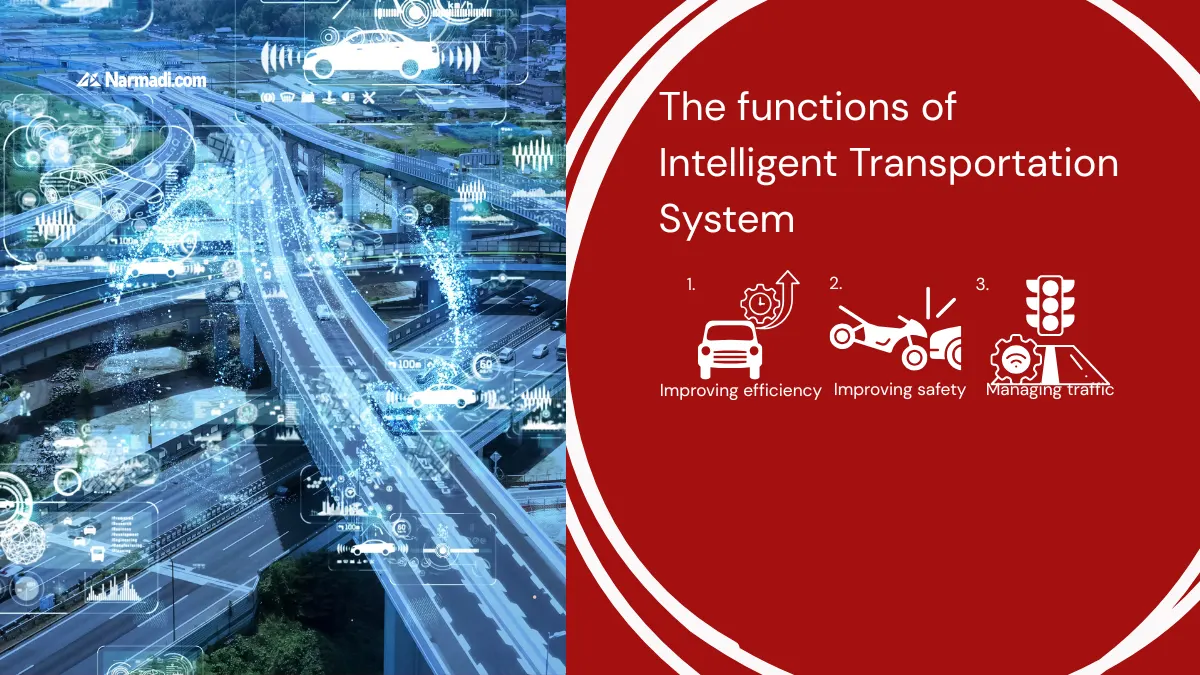
The main function of the Intelligent Transportation System (ITS) is to improve efficiency, safety, and comfort in the transportation system. The following are its functions:
- Improving efficiency: With real-time traffic information, ITS provides information related to optimal road usage, thereby reducing travel time.
- Improving safety: With early warnings of potential hazards, such as accidents, slippery roads, or bad weather, drivers can anticipate hazards that may occur.
- Managing traffic: With real-time information, ITS manages traffic by adjusting traffic lights as needed and providing alternative routes to avoid congestion.
How does it work?
An Intelligent Transportation System (ITS) works by collecting, transmitting, and analyzing data. Data on traffic flow, vehicle speed, and environmental conditions are collected in real time through sensors embedded in infrastructure and vehicles.
The collected data is then transmitted using 5G networks and edge computing. This data is then instantly accessible between vehicles, infrastructure, and travelers.
The transmitted data is then analyzed using AI-based algorithms. This results in congestion predictions, route optimization, and improved road safety.
The applications
With many functions provided by the Intelligent Transportation System (ITS), this device is applied in the automatic transportation system. The following are examples of the application:
- Area Traffic Control System (ATCS): Automatically manages traffic at intersections.
- Automatic Highway Law Enforcement System: Uses cameras to detect traffic violations and automatically issue tickets.
- Travel Information System: Provides information about road conditions and estimated travel times.
- Electronic Toll Collection (ETC) System: Facilitates toll payments without the need to stop.
- Vehicle-to-Everything (V2X) Communication: Enables vehicles to communicate with other vehicles, infrastructure, and pedestrians to improve safety.
The Benefits
The Intelligent Transportation System (ITS) provides many benefits, especially in managing traffic, vehicles, and infrastructure to improve efficiency, safety, and comfort in the transportation system. Here are some of the main benefits:
1. Reducing traffic congestion
ITS manages traffic flow more efficiently. The data collected generates real-time information and provides route optimization information.
This information will undoubtedly help reduce traffic congestion. Drivers can find smart routes and avoid bottlenecks.
2. Enhancing comfort
ITS provides greater driving comfort through all its features. Real-time information on the best routes undoubtedly improves driving comfort.
You no longer have to spend time stuck in traffic. Automatically, travel times are shorter, resulting in more efficient travel times.
3. Increases safety
The ITS system is able to detect accidents quickly and can immediately share this information with other drivers. This information is undoubtedly very useful for drivers.
This way, drivers can be more aware of their surroundings and anticipate incidents. This prevents unwanted incidents from occurring when they are unaware of this information.
4. Reducing environmental pollution
By maximizing the best routes, you spend less time on the road. This, of course, reduces fuel consumption.
This way, environmental pollution can be reduced. Improved fuel efficiency reduces emissions, and proper traffic management also helps reduce noise pollution.
Why Should ITS Be Promoted for the Future?
In an ever-changing world, plans will undoubtedly continue to evolve. One area that can be promoted in the future is the Intelligent Transportation System (ITS).
This system, with its various functions and benefits, will support a more modern city transportation infrastructure. Integrating sensors into modern infrastructure and vehicles, it will create a more comfortable driving experience, reduce congestion, and improve safety.
A responsive and modern smart city is not a pipe dream; it is already under development. Supporting ITS means supporting modern infrastructure that can be implemented more rapidly in the future.
ITS needs to grow consistently, safely, and on a large scale. This way, this infrastructure can be enjoyed more widely and more quickly. The implementation of ITS must also be encouraged with certified product standards to comply with the technical standards in a country. [UN]