Intercoms, being an efficient and secure communication tool within buildings and confined areas, are essential for convenience and security.
Today’s intercoms are capable of integrating with security features and utilizing advanced technology.
This article will provide a comprehensive overview of intercoms, covering the definition and its various types, detailing its various functions, and detailing the technical compliance and wireless standards required for modern intercom deployment.
What is an Intercom?
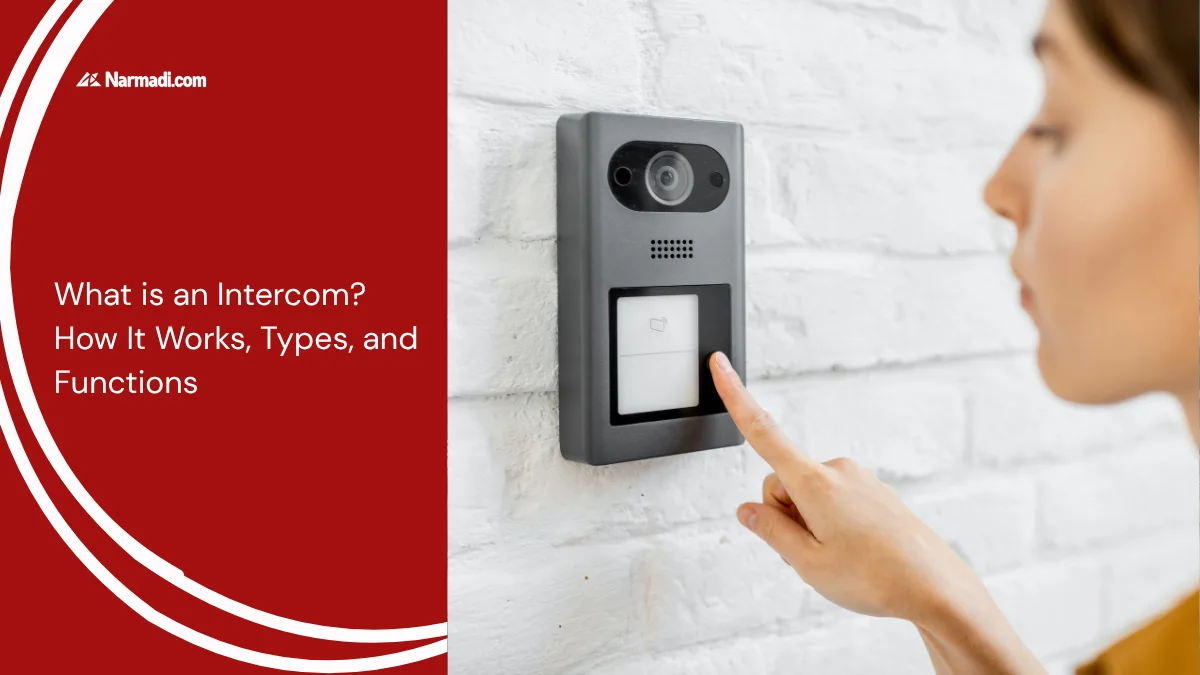
An intercom is a voice communication system used to communicate within a building, confined area, or between rooms. This device allows two-way communication between two or more people without the need to use the public telephone network. The term is also often called an intercommunication device, intercommunicator, or interphone.
Over time, intercoms not only function as a communication tool but can also function as a security system for access management. This is because these devices are now available in wireless and internet-based systems.
How it Works?
Intercoms generally work by capturing sound through a microphone, processing it, and sending it via cable, wireless, or the internet to a receiver in another location, where the sound is then played through loudspeakers:
- The Intercom unit picks up the sound: Through the microphone on this unit, the sound is captured and then transmitted over a wired or wireless network.
- Sound is transmitted to the base station: When a person presses a button on the device unit and speaks into the microphone, the sound is transmitted to the base station.
- The voice is sent to the Intercom unit: The base station then sends the voice to another connected intercom unit, or to another intended unit via the wireless network.
- Voice received: At the receiving unit, the transmitted voice will be played through the loudspeaker.
Nowadays, intercoms are equipped with several advanced features, including two-way communication (full-duplex), notifications through applications, integration with smart home security systems, and voice or video recording functions.
The Types
Here are some general types of intercoms:
- Wired intercom: Uses physical wires to connect the devices, offering a reliable connection but more complicated installation.
- Wireless intercoms: Use wireless technology such as Bluetooth or Wi-Fi, making installation easy and flexible in use.
- Audio Intercom: Provides voice communication only, suitable for older buildings or simpler systems.
- Video intercom: Equipped with a camera and screen, allowing users to see and talk to people in other locations. Suitable for gates or lobbies.
- IP (Internet Protocol) intercom: Uses the internet network for voice and video communication, offering advanced features such as remote access and integration with security systems.
The Functions
The general function of an intercom is to enable two-way communication between two or more points, especially in locations that are confined or require more private communication. Here are some of the main functions of the device:
1. Ease communication
Intercoms allow communication within a building between the guard at the door and visitors. In transportation, it allows drivers and passengers to communicate while driving.
2. Improves security
Modern intercom systems, especially video intercom types, allow you to verify the identity of guests before granting entry to certain areas. Access control on intercoms also helps enhance security by verifying people who want to enter.
3. Integrated access control
Many intercom systems can now be integrated with smart locks or automatic door-locking systems, making it very useful for both residential and commercial buildings. That way, parents can also communicate between rooms with their children.
Technical Compliance and Wireless Standards
Modern intercom systems in wireless video door phones and IP-based access terminals rely on short-range Radio Frequency (RF) protocols. The technologies typically used are Bluetooth Low Energy (BLE) and Wi-Fi.
These technologies are used to transmit audio and video signals in real time and to activate remote door locks. In every country, the use of wireless communication devices must comply with technical standards and obtain type approval certification.
The process includes RF testing, Electromagnetic Compatibility (EMC) testing, and Electrical Safety testing. Testing standards typically refer to ISO/IEC 17025 and the local regulations in effect in each country.
A certified device is safe and will not interfere with other devices when in use. Obtaining type approval certification verifies that the intercom system is technically sound, secure, and fully authorized for integration into commercial and residential building networks.