The sophistication of Near Field Communication (NFC) development began in 2013, when NFC began to be used for non-cash payments and authentication security.
By 2015, NFC technology began to be applied to wearables such as smartwatches. Over time, NFC applications continue to evolve with various innovations and applications in many sectors.
The following are some of the latest developments in NFC technology and its applications in various sectors of life.
1. Integration with IoT and Smart Home
NFC is now increasingly being integrated into Internet of Things (IoT) devices and smart home systems.
NFC makes it easy for users to control devices at home with just one touch, such as adjusting lighting, locking doors, or controlling room temperature.
2. Public transportation
NFC has also become the main choice in public transportation payment systems in big cities.
In Indonesia, several cities are starting to implement NFC payment systems for more efficient public transportation.
Users can make ticket payments with their mobile phone or NFC card, reducing the need for direct contact.
3. Wearable payment technology
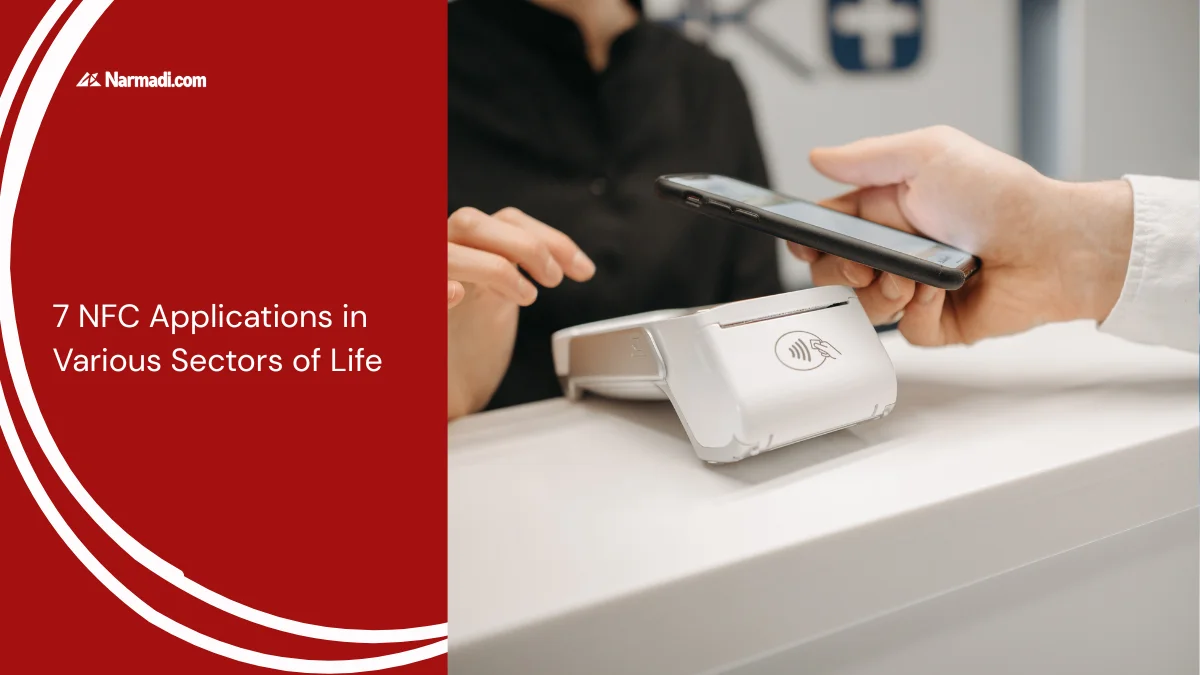
Wearable devices such as smartwatches are now equipped with the NFC feature, enabling more practical payments by simply holding the device close to the payment terminal.
Examples include the Apple Watch and Samsung Galaxy Watch, which offer convenience in non-cash transactions.
4. Increased security through tokenization
To address security concerns, NFC now employs tokenization technology that generates a temporary unique code for each transaction.
This system reduces the risk of data theft or account misuse because the transaction code is only valid once.
5. Authentication and access control in the office sector
NFC is also used in the office sector as a method of authentication and access control.
Companies use NFC to regulate access to certain spaces only for employees who have registered NFC devices, thereby minimizing the use of physical access cards.
6. Utilization for health tracking and medical data
Several health devices are now equipped with NFC to store patient medical data.
In emergencies, medical personnel can access this data with compatible NFC devices, aiding rapid treatment without the need for physical access to documents.
7. The latest collaboration in the digital payments industry
Fintech companies are increasingly collaborating with smart device manufacturers to expand NFC-based payments.
This collaboration makes it easier for users to access digital payments that are safe and easy to use, especially in Indonesia, which has a developing digital market.
Ensuring Compliance and Device Safety
Near Field Communication (NFC) technology continues to advance, driven by the growth of the Internet of Things (IoT) and wearable technology. Consequently, maintaining signal stability and data security is of the utmost importance.
For consumers and businesses in Indonesia, it is vital to ensure that every device supporting NFC technology has obtained type approval certification. This certification relates to radio frequency safety, operational quality and the absence of interference with other wireless systems.
In Indonesia, this certification is officially issued by the Directorate General of Digital Infrastructure (DJID). It is therefore known as DJID certification. This certification is mandatory for manufacturers, distributors and importers wishing to market their telecommunications products, including NFC.
As a type approval certification service provider with experience dating back to 2018, Narmadi Company is ready to support you at every stage of the DJID certification process. We will ensure that your products fully comply with the regulations and are ready for the market.