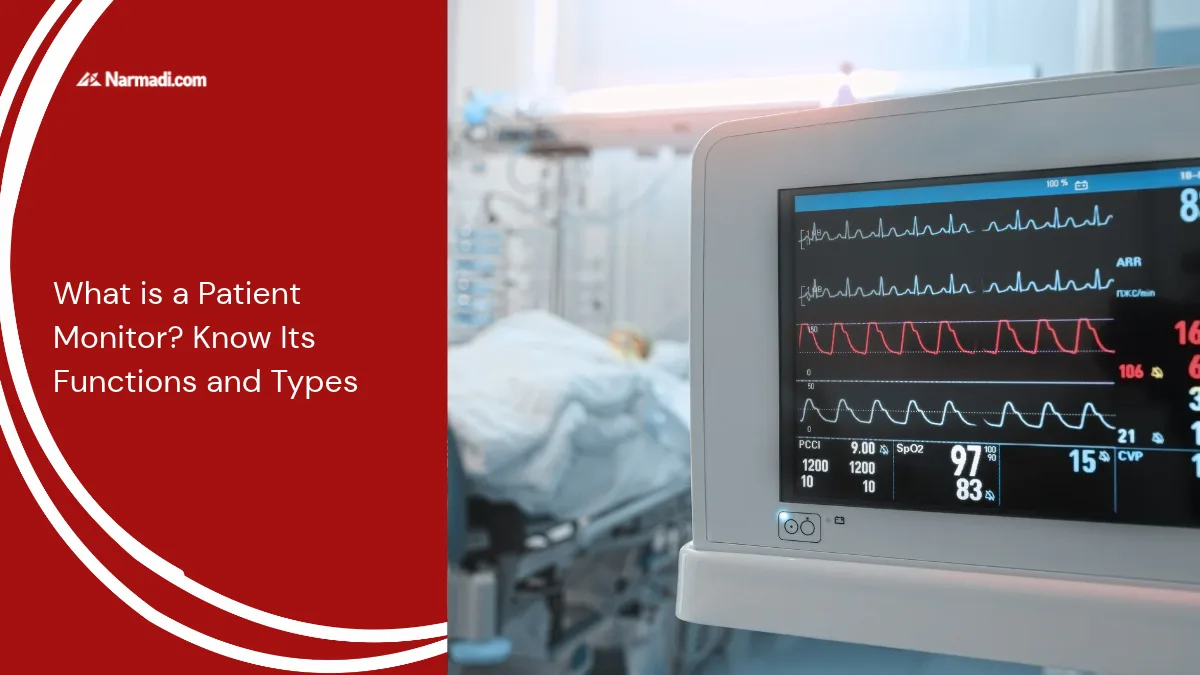
We know that in hospitals, there is a tool that is needed by medical staff in their task of monitoring the patient’s vital condition in real-time, namely the patient monitor.
Patient monitors are useful because they can measure many parameters, such as heart rate, blood pressure, oxygen saturation, and respiratory rate.
This article will explain patient monitors, including their definition, how they work, functions, types, and regulations in Indonesia.
What is a Patient Monitor?
Patient monitors are healthcare devices that work to monitor a patient’s condition in real-time. It helps monitor vital signs such as heart rate, blood pressure, oxygen saturation, and respiratory rate.
Patient monitors are usually found in emergency rooms, operating rooms, ICU rooms, patient rooms, and medical vehicles. With this tool, the slightest changes in vital activity can be monitored properly, so that medical staff can immediately take appropriate action based on the parameters displayed by the monitor.
How Does it Work?
The way the patient monitor works is that it takes measurements of body parameters, and the results are displayed in real-time on the monitor. Here’s how it works in detail:
- Sensor installation: Attach sensors to the patient’s body according to the parameters you want to monitor.
- Data reading and transmission: The device reads biological signals from the patient’s body, and then the signals are transmitted through the installed sensors.
- Processing and visualization: After the sensors transmit the data to the main unit, the data is processed through a microprocessor that displays the figures of the measurement parameters.
- Continuous monitoring: As long as the sensor is attached to the patient’s body, the data will continue to be read in real-time.
- Emergency alert: If any of the parameters exceed the specified safe limit, the alarm system will automatically activate as an emergency warning.
Some models are equipped with a wireless feature and can be integrated into the hospital’s local system or the cloud. So that medical staff can not only monitor the parameters recorded from the device installed near the patient but can also flexibly monitor it remotely.
The Functions
The patient monitor has many functions, especially for monitoring a patient’s condition in real time. Here are some functions of the patient monitor:
- Monitoring vital signs: Constantly measures vital parameters such as heart rate, blood pressure, oxygen saturation, and respiratory rate.
- Provides real-time information: Provides real-time information as long as the parameters are in place so that medics can make quick and informed decisions according to the results on the monitor.
- Early detection of changes in condition: Detect minor vital changes in the patient through real-time monitoring.
- Evaluation of medical intervention: After the intervention of changes in the patient’s condition, the medical staff can evaluate their actions and monitor subsequent changes in the parameters.
- Continuous monitoring: Able to monitor patients on an ongoing basis, especially for patients who require prolonged intensive care.
The Types of Patient Monitors
Patient monitors are divided into several types with different functions and uses according to specific needs based on the patient’s condition. Here are some types of patient monitors that are commonly used:
1. Cardiac monitor
A cardiac monitor is a type of patient monitor commonly used in hospitals. It is used to monitor the heart’s brain and heart rhythm, display an electrocardiogram (ECG) graph, and give an alarm if the heart rhythm is abnormal.
Cardiac monitors are essential in detecting heart rhythms, especially in life-threatening conditions. This device is commonly found in emergency rooms, ICUs, and operating rooms to monitor the patient’s condition in real time.
2. Blood pressure monitor
A blood pressure monitor is a type of patient monitor that is used to measure the patient’s blood pressure automatically at certain intervals.
This tool is able to observe routine patients in the room, monitor during mild to moderate surgery, and read blood pressure components. This monitor is especially needed for patients who have a history of hypertension, hypotension, or certain heart attack conditions.
3. Oxygen monitor (pulse oximeter)
A pulse oximeter is a clip-shaped device that is generally attached to the finger. It measures blood oxygen saturation and pulse rate. With this tool, information about oxygen levels in the blood may be obtained without the need for a blood draw procedure.
This tool is very commonly used in operating rooms, ICU rooms, and emergency rooms. With its convenience, this tool can also be used by patients independently at home for certain monitoring, such as after surgery.
4. Body temperature monitor
A body temperature monitor is a type of patient monitor specifically designed to monitor body temperature in real-time and continuously. This tool is commonly used in infants, children, patients with infections, high fever patients, and for postoperative monitoring. Body temperature monitors work using sensors that are usually installed in the mouth, throat, or attached to the patient’s skin.
5. Neonatal monitors
Neonatal monitors are patient monitors designed specifically for newborns. These devices function in monitoring heart rate, respiratory rate, oxygen saturation, and body temperature.
This monitor uses sensors that are more sensitive than monitors for adults. Neonatal monitors are commonly found in Neonatal Intensive Care Unit (NICU) rooms.
6. Multiparameter monitors
Multiparameter monitors are patient monitors that are designed, as the name implies, to read various types of parameters at once. These parameters include ECG, oxygen saturation, blood pressure, body temperature, and respiratory rate.
With their complete capabilities, multiparameter monitors are often equipped with connectivity features to hospital systems. Medical staff can easily monitor what is happening from the monitor installed in the ICU from the control desk in their room as the data is sent centrally.
7. Portable patient monitors
Portable patient monitors are monitors designed for high mobility. It is used in medical monitoring in ambulances during medical transportation or medical activities in the field during disasters.
Portable patient monitors are lightweight and power efficient, but their capabilities are limited, usually only able to monitor basic parameters such as ECG, SpO2, and blood pressure.
Global Type Approval and Enterprise Compliance
Manufacturers, importers, or distributors of medical equipment and healthcare facilities—particularly patient monitors—must comply with applicable international standards before launching their products. This is because modern devices are equipped with wireless communication technologies, such as Short-Range Devices (SRD) and Wi-Fi.
These technologies are used to transmit telemetry data in real time through hospital networks. Devices that use wireless communication technology must undergo comprehensive Type Approval testing.
Essentially, this process refers to the testing requirements for medical-grade devices to meet strict technical evaluations. The process includes Radio Frequency (RF), Electromagnetic Compatibility (EMC), and Electrical Safety testing.
Obtaining international Type Approval certification assures healthcare providers that the diagnostic hardware is safe, reliable, and compliant with standards. As a result, the devices can be marketed globally without any issues.