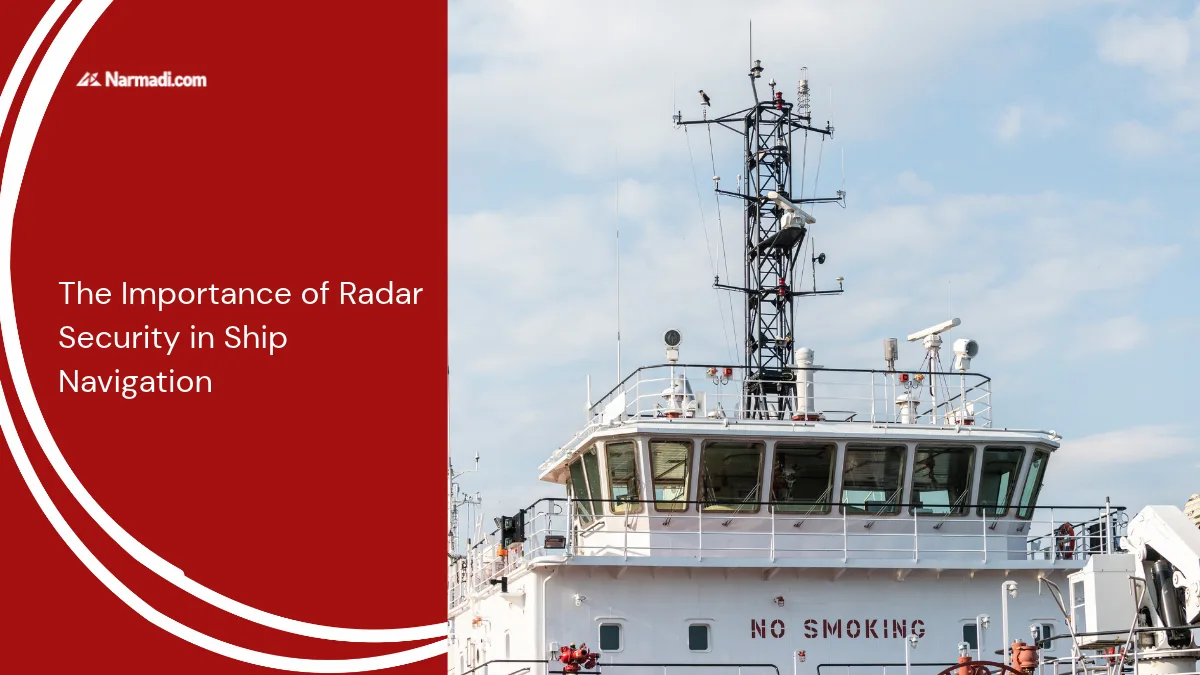
Radar security in ship navigation is needed, especially for detecting objects around the ship. The application of radar security in ship navigation will certainly minimize the occurrence of accidents or collisions. Furthermore, the proper application of radar security will increase shipping safety.
This article will inform you about the importance and the implementation of radar security and integrating radar with modern systems.
Radar Security in Ship Navigation
Radar on ships is used to improve the safety and efficiency of navigation, especially in bad weather conditions or at night.
Radar assists the captain in identifying obstacles such as other ships, objects at sea, or bad weather such as storms or fog, thus helping the ship avoid objects or hazards at sea.
The Importance of Radar Security in Ship Navigation
With the benefits that radar provides to ship navigation, it must be installed on ships. Here are some of the things that make radar security in ship navigation important:
1. Preventing collisions
Radar assists vessels in detecting objects in their vicinity, including other vessels, obstacles, or other hazards. Radar safety ensures this information is accurate and reliable, thus helping to prevent collisions.
2. Determining the ship’s position
Radar for ship navigation can be used to determine the ship’s position. With radar, the position of the ship can be known in good or limited visibility conditions.
3. Improving shipping safety
Radar for ship navigation must be ensured to function properly and safely, even if it must be significantly improved. This is of course related to shipping safety.
4. Meeting legal requirements
With the many benefits that radar provides, especially in improving shipping safety, many countries include it in legal requirements. Some international laws and regulations require ships to have radar and use radar safely.
The Implementation
Here are some examples of radar security implementation in ship navigation that usually used:
- Radar Transponder: Facilitates the detection of your vessel by other vessels, including its estimated course and speed.
- Radar Beacon (RACON): Serves to mark navigational aids such as buoys and lighthouses on the radar display.
- Crew Training and Certification: Shipboard radar operators are required to have training and certification for safe and effective operation.
- Radar Software Security: The radar software used must be secured from viruses and malware.
Integrating Radar with Modern Marine Navigation Systems
In today’s modern era, the integration of radar with ship navigation is inevitable. Modern ship navigation relies on a layered approach to safety, in which radar technology does not operate in isolation.
Maritime radar systems are typically integrated with electronic navigation software and tracking devices. There are two commonly used systems: the Automatic Identification System (AIS) and the Electronic Chart Display and Information System (ECDIS).
AIS is a system that transmits a vessel’s identity, heading, speed, and destination via VHF signals. This data can then be combined with radar target detection results on a single display. As a result, a complete identification of nearby vessels is obtained.
ECDIS is a system that displays real-time radar targets directly on a digital nautical chart. The integration of this system with radar provides the ship’s captain with a simultaneous view of the vessel’s position relative to shallow waters, coastal contours, and restricted maritime zones.
The integration of radar hardware with AIS and ECDIS networks yields several other benefits. It enables maritime operators to significantly reduce navigation errors, simplify route planning, and maintain optimal safety levels in busy shipping lanes.