One of the primary security threats facing a nation is an attack by air. In this way, radar security in the airborne environment is very important in maintaining military security and supporting military operations.
Radar security in the airborne environment includes air traffic control and surveillance, detection and tracking of airborne objects, and weather radar monitoring.
This article will inform you about the importance, implementation, and technical spectrum compliance standards of radar security in the airborne environment.
Radar Security in the Airborne
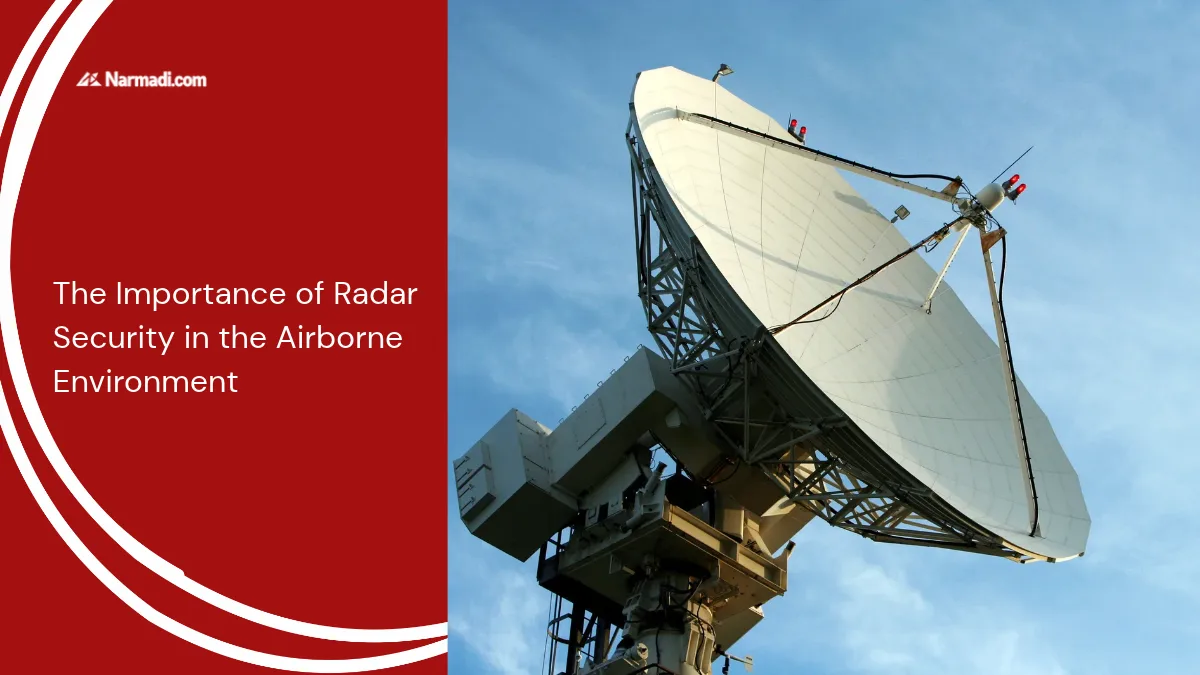
In maintaining airspace security, radar plays a vital role. Radar technology is utilized to detect the presence, track the movement, and identify various objects in the air, including aircraft, missiles, and unmanned aircraft (drones), which can pose a risk to aviation security. In addition, radar also plays a role in monitoring the airspace as a whole and providing early notification if a threat is detected.
The Importance
With the benefits that radar provides to airborne security, it is important to use radar security in the airborne. Here are some of the things that make radar security in airborne important:
1. Air traffic control and surveillance
One primary function of airborne radar security is that it plays a vital role in air traffic control, allowing air controllers to monitor the position and speed of aircraft in real-time, as well as to prevent mid-air collisions.
Radar is also used in tracking systems such as ADS-B, which allows controllers to identify each aircraft individually.
2. Detection and tracking of airborne objects
Radar uses radio waves to detect and track objects in the air, even in poor weather conditions. This allows the air defense system to know the presence of enemy aircraft or missiles, so that it can take appropriate preventive or defensive measures.
3. Air defense
Radar is an important part of the air defense system, enabling early detection of air threats such as enemy aircraft or missiles, as well as providing sufficient time to prepare defenses or countermeasures.
4. Weather radar
Weather radar helps in monitoring dangerous weather conditions such as thunderstorms and turbulence, which can disrupt flights and safety.
The Implementation
Here are some examples of radar implementation in airborne security that are usually used:
- Over-the-Horizon Radar (OTH Radar): These radars have a super wide range, enabling surveillance of extensive air and sea areas with just a few units.
- Surface Movement Radar (SMR): This radar monitors traffic on the airport surface area and improves situational awareness for air traffic controllers.
- Air Defense Radar: These radars are used to detect and track airborne targets, including aircraft, missiles, and satellites.
Spectrum Compliance and Technical Standards
Radar security in airborne systems operates by transmitting high-power radio frequency (RF) signals within a specific aeronautical spectrum band. In every country, RF spectrum regulations are strictly enforced.
The goal is to ensure that radar systems operate safely and do not cause harmful electromagnetic interference to other devices. Therefore, airborne radar equipment must obtain official type approval certification before it can be imported, distributed, or operated.
Obtaining type approval certification demonstrates that the airborne radar hardware meets strict international standards regarding frequency stability, spurious emissions, output power, and operational reliability. This is verified through RF, Electromagnetic Compatibility (EMC), and safety testing.