In the current era, fast communication is a necessity for everyone. Therefore, many technologies are trying to fulfil these needs, one of which is a radio rig.
When there is no cellular signal, and in an emergency, a radio rig is a solution to still be able to have two-way communication.
Are you familiar with this Handy Talkie-like device? This article will explore information related to radio rigs, from their definition, function in communication, how they work, and their usage regulations.
What is a Radio Rig?
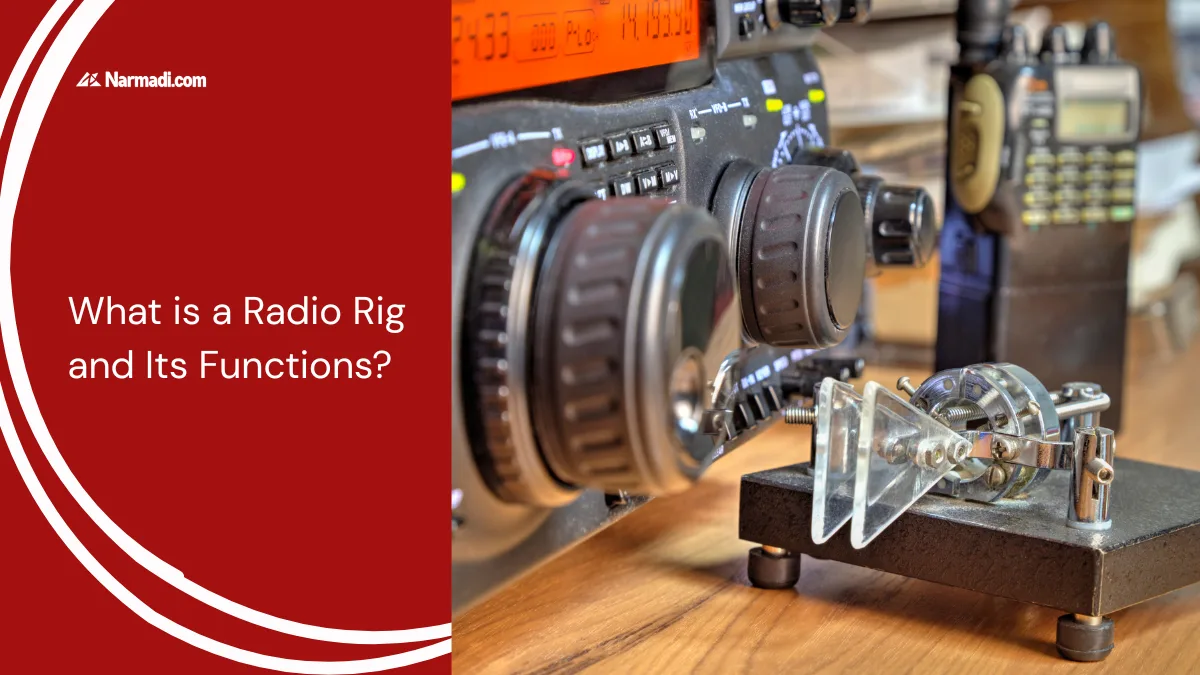
A radio rig is a two-way communication device that is often used for amateur communications, emergency operations, and military activities. As the name suggests, the device is used to send and receive radio signals using UHF or VHF frequencies.
The term “rig” itself comes from the English word for ‘device’ or “system”. A rig is usually a portable, mobile (vehicle-mounted), or base station (fixed location-mounted) device. Thus, all systems used to communicate via radio waves are radio rigs.
In order to maximize the sending and receiving of radio signals, this communication device consists of several main components, namely transmitters, receivers, antennas, and control systems. The device has a wide range of up to tens of kilometers.
The components
A radio rig can function perfectly with several components. The following components support its operation:
- Transmitter: Converts voice or data into radio signals to be sent through the antenna.
- Receiver: Captures radio signals from the antenna and converts them into voice or data.
- Antenna: The component that transmits and receives radio signals.
- Control system: The component that adjusts frequency, modulation, and other parameters as needed.
- Power supply: The component that provides electrical power.
How does it work?
Radio rigs work in two-way communication using radio frequencies. The device works by converting the sound of a person speaking while pressing a button into an electromagnetic signal.
Then, the signal is sent through the air and captured by the receiving radio rig. The receiver then converts the electromagnetic signal into sound again. The radio rig does work with a fast process, given its need for emergency communication.
But the work of this device is highly dependent on the accuracy of the frequency and the quality of the antenna. To amplify the signal in a particular location, it sometimes requires repeaters to keep the communication stable.
The Functions
1. Two-way communication
One of the functions of this device is two-way communication. This device is similar to a telephone, except that it uses radio waves.
So, to talk and listen, users must take turns. When one person speaks, the other person must listen, and vice versa.
2. Alternative communication
When in hard-to-reach areas or in an emergency, telephones may not function properly. This is where this device comes in as a communication solution.
The radio rig is a reliable communication tool because it doesn’t rely on cellular or internet signals.
3. Instant communication
Another advantage of this device is instant communication. In urgent situations, the device can communicate quickly and receive reliable responses.
This device serves as an immediate communication solution for seamless coordination between teams or group members.
4. Wide range
A wide range is another function of the radio rig. Compared to walkie-talkies, the radio rig has a higher transmission power.
This high transmission power gives it a wider range. This is what makes it more popular than walkie-talkies.
5. Wide range of uses
This device isn’t limited to cellular signals, making it widely used in various fields. These devices are commonly used in transportation, security, business, and amateur radio.
Global Compliance and Operating Standards
Radio rigs operate within a specific frequency spectrum, which requires users to comply with strict regulations. In many countries, wireless communication devices must meet type approval certification requirements.
If certification has not been obtained, the device cannot be legally distributed or operated. These regulations ensure that the radio equipment used meets safety standards, operates within designated frequency allocations, and does not cause electromagnetic interference that disrupts other communication devices.
In addition, operators are often required to hold a specific radio operating license or an amateur radio license. This depends on the transmission power and local jurisdiction. The goal is to ensure safe and orderly communication on the public airwaves.