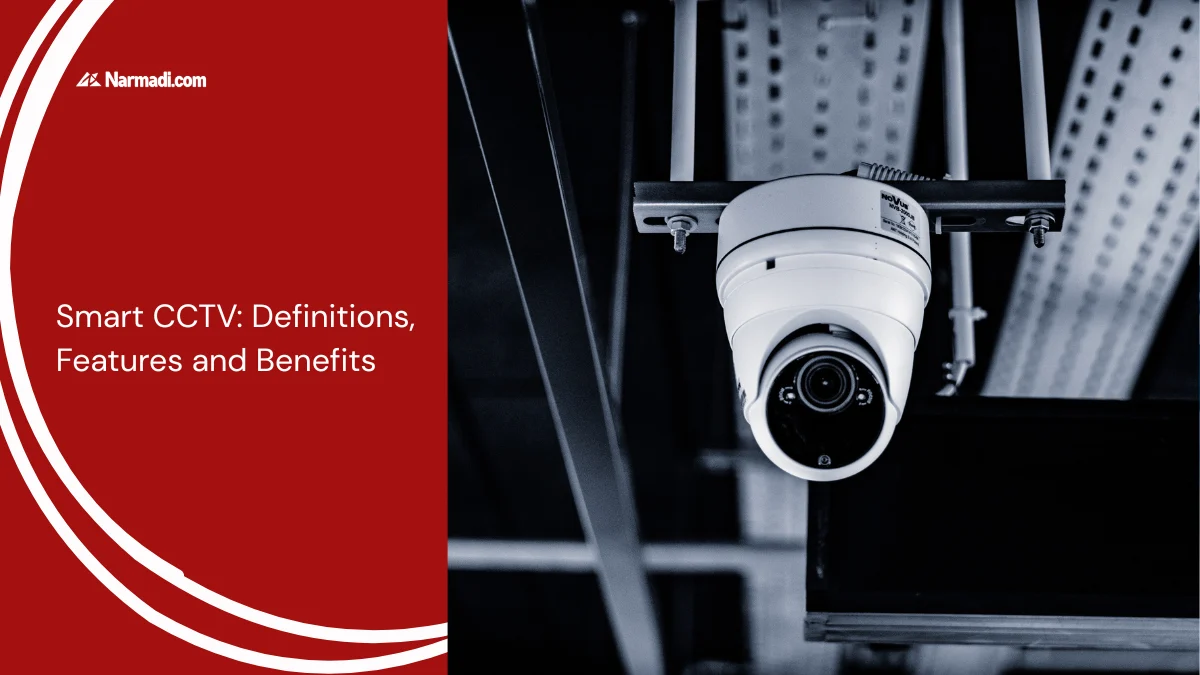
Many modern security systems are now equipped with CCTV (Closed-Circuit Television). What’s more sophisticated now is that the Internet of Things (IoT) innovation makes conventional CCTV into smart CCTV.
It has the same use in carrying out surveillance in the desired area; only smart CCTV is equipped with sophisticated features to add a higher level of security monitoring.
In this article, we will provide information about smart CCTV, including its definition, features, benefits, and the technical wireless compliance standards required for video streaming stability.
What is a Smart CCTV?
CCTV stands for Closed-Circuit Television. CCTV is a television system that monitors and records a specific area using a closed or private signal. CCTV cameras can record activity in the area being monitored.
With smart CCTV, the camera can connect to the network using Bluetooth or WiFi. It is very practical for installation in areas that are difficult to run cables and supports remote access through an app. However, network stability is an important factor in keeping the video smooth.
The device is equipped with smart features such as facial recognition, people counting, and smoke detection, making it more flexible for complex security needs.
The Features
In general, a smart CCTV has some main functions such as demographic analysis, two-way audio, and face recognition. Here are some features you can enjoy:
1. Demographic analysis
This feature can be used to recognize and analyze in more detail the people recorded in the camera. The demographic analysis feature on smart CCTV will provide information, such as gender, clothing color, accessories, and shoes worn, which can be identified easily.
2. Two-way audio
Next, you will find a two-way audio feature on smart CCTV. This feature allows you to communicate directly using a smartphone that is connected to the CCTV IP camera. So you can give orders to people at home or communicate directly if someone is trying to enter the house.
3. Face recognition
Supported by AI technology, smart CCTV can differentiate between strangers and familiar people. You can enter the faces of family, friends, or other people who frequently visit into the camera database.
This feature works by recognizing people you know and are used to going in and out of the house and then automatically sounding an alarm if it detects a stranger entering the system. The face recognition feature is one of the main and most attractive advantages of smart CCTV.
4. Notifications and alerts
Another supporting feature of smart CCTV is that it is able to send notifications or warnings directly to your smartphone or other device when it detects suspicious activity, so you can respond immediately.
5. Rotation and tilt
Some smart CCTVs are equipped with a Pan-Tilt-Zoom or PTZ feature. This feature allows the device to rotate and tilt, thereby enlarging objects. You can easily focus your observation on the face so that it can be seen clearly.
The Benefits
Using a smart CCTV provides quite a lot of benefits, from advanced features to integration with smart home systems. Here are some of the benefits:
- Advanced features: Has features such as face recognition, two-way audio, rotation, and tilt for better monitoring.
- Increased security: With the advanced features, it can increase the security of your home.
- Remote access: With IoT technology, it can be connected to a smartphone or other device, so you can monitor CCTV anytime and anywhere.
- Integration with smart home systems: You can control the device together with other smart home devices, such as lamps or doors.
Video Streaming Stability and Wireless Compliance
Smart CCTV cameras are specifically designed to produce continuous high-definition (HD or 4K) video. This is intrinsically linked to the balance between high-bandwidth video processing and continuous wireless communication (Wi-Fi or Bluetooth).
This balance will result in high data throughput and strong signal stability without causing network latency or viewing disruption. The challenge lies in the fact that optical sensors can generate electromagnetic interference.
Consequently, this device requires type approval certification before it can be marketed and used. Testing and certification will ensure that the device is safe and does not interfere with other electronic devices in its vicinity. This is achieved through Radio Frequency (RF), Electromagnetic Compatibility (EMC) and safety testing.
Since 2008, Narmadi Company has been a trusted global partner for telecommunications and IoT product compliance. We assist manufacturers, brand owners, and importers throughout the entire process. Our goal is to ensure that your smart CCTV systems can enter the commercial market smoothly.