The utilization of technology extends to technology in the home, one of which is the smart door lock. This tool provides the benefits of a sophisticated security system to support smart home appliances.
Are you familiar with the smart door lock? This technology is enough to provide convenience and good control to its users.
This article will provide further information regarding smart door locks, from the definition and how it works, their benefits, to their regulations in Indonesia.
What is a Smart Door Lock?
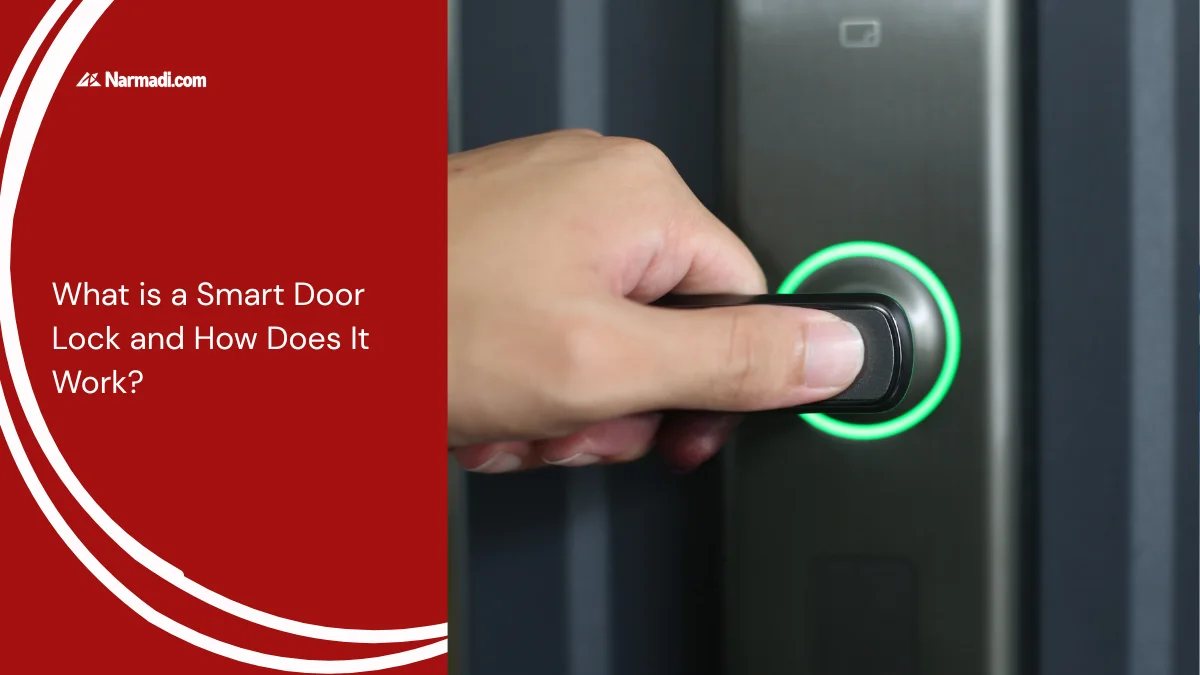
Smart door locks are modern security devices equipped with an automatic locking feature. This feature allows homeowners to manage access in and out of the door whenever needed.
As part of the smart home concept, this technology makes it easier for users to maintain residential security. With this technology, doors can be opened without the need to use physical keys or traditional keyless entry systems.
Typically, this technology is used in locations that require a high level of security and limited access, such as hotels, offices, retail stores, and studios. But now, they are also gaining popularity in homes and apartments as they provide extra protection.
How it Works?
In simple terms, smart door locks work using sensors that detect resistance when the door closes or by detecting signals from magnets attached to the door. Here’s how the technology works in detail:
- Authentication Method: The user will use one of the registered authentication methods, such as PIN, fingerprint, RFID card, or face, to open the door.
- Verification Process: The system will verify the data entered with the data registered in the system.
- Key Activation: If the verification process is successful, the system will send a command to the lock mechanism (which can be a magnet, solenoid, or motor) to open the door.
The Benefits
Here are the three main benefits of using a smart door lock:
1. Ease of Use
The main benefit of smart doors is that they offer maximum convenience in everyday life. Using them means users no longer need to carry or manage conventional physical keys.
The doors can be operated using a PIN, a fingerprint or a command via a mobile phone. This means there is no need to worry about physical keys being
2. Precise Access Control
Smart door locks allow full control over access permissions. Users can easily restrict who can access their door.
In addition, users can also issue temporary digital keys and check access history. These features make them ideal for smart home environments.
3. Advanced Security System
There is no doubt about the security of smart locks. Their security architecture is far more sophisticated than that of traditional mechanical locks, which use physical keys.
Their security features include encrypted digital credentials, biometrics and secure RFID signals. As a result, attempts at physical tampering or unauthorised key duplication become extremely difficult.
Multi-Protocol Connectivity and Smart Lock Compliance
Modern smart door locks often incorporate a range of short-range and long-range wireless technologies, including RFID/NFC, Bluetooth Low Energy (BLE), Wi-Fi or Zigbee. As they integrate these active wireless modules, the devices must undergo type approval certification as multi-protocol radio frequency (RF) telecommunications equipment.
This certification is required to ensure safe and reliable operation in residential and commercial environments. The process involves testing for Radio Frequency (RF) emissions, Electromagnetic Compatibility (EMC) and electrical safety standards. This ensures that the key wireless signal remains stable, complies with the specified frequency allocation, and does not interfere with other electronic devices.
Narmadi Company, as a partner specialising in type approval since 2008, has been assisting manufacturers, distributors and importers in navigating this certification process. We handle all telecommunications devices, including smart home security devices. As a result, smart door lock products meet all mandatory technical standards and are fully ready for the market.