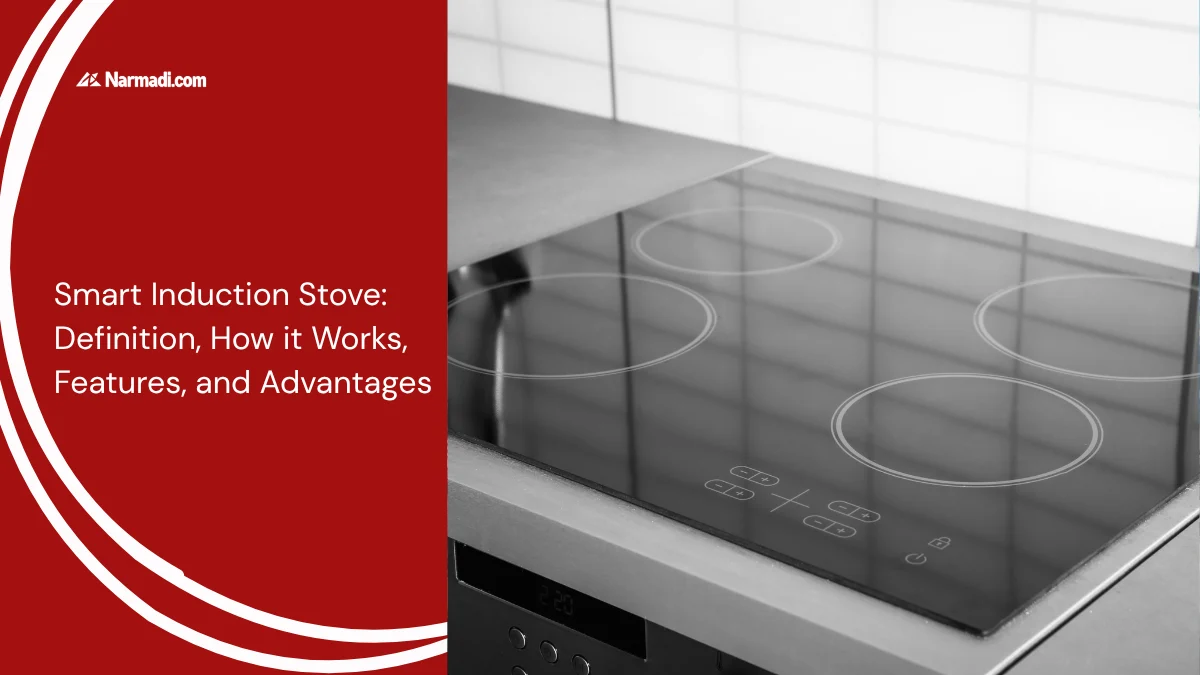
In today’s digital era, many household needs have been integrated into the smart home, one of which is the smart induction stove.
Providing convenience and comfort, the smart induction stove has many features that help efficiency to increase the safety of use.
This article will discuss smart induction stoves, including the definition, how they work, features, advantages, and the technical compliance standards required for smart kitchen appliances.
What is a Smart Induction Stove?
A smart induction stove is a stove designed for today’s times. This stove can be connected to your smartphone, allowing all controls on the stove to be set remotely.
The ease of use of a smart induction stove is coupled with its features, including temperature control, cooking time, and automatic cooking. With these features, you don’t need to worry about your food burning even though you are doing other activities away from the stove.
How Does it Work?
In principle, the smart induction stove works using an electromagnetic field to deliver heat to the cooking device. Here is how it works in detail:
- Conducting electricity: Through the electromagnetic field, an alternating electric current is conducted through the copper wire of the stove.
- Induced electricity: Through the magnetic field, the induced electric current then conducts heat to the cooking plate.
- The cookware heats up: The electric current combines with the iron electrical resistance of the cooking appliance, allowing your pan or skillet to heat up.
- Wireless device operation: All forms of operation of this stove, such as turning on, turning off, and adjusting the heat level, can be set through your connected smartphone.
The Features
Here are some excellent features of the smart induction stove:
- Pan Detector: This feature will detect the presence of cooking utensils on the stove, thus avoiding wasteful use.
- Child Lock: With this feature, you can set it to lock the buttons of the stove so that it cannot be operated by children.
- Automatic Timer: With this feature, you can set the cooking time, thus avoiding burnt or forgotten dishes.
- Notification: When the food is cooked, you will receive a notification so you can immediately know that the food is ready to be served.
The Advantages
Using a smart induction stove will provide several advantages, from ease of use, energy efficiency, and safety to comfort. Here are some of the advantages of a smart induction stove:
1. Ease of use
The main advantage of this smart stove is its ease of use. With a variety of features that are featured, of course, it makes cooking easier. Connection with a smartphone also provides convenience with remote control capabilities. With this smart stove, you don’t need to worry about burning food, because there is an automatic shutdown feature when the food is cooked.
2. Energy efficiency
Energy efficiency is another advantage of this smart stove. With an automatic feature that will turn off when the food is cooked, of course, it will reduce waste. The temperature control feature is also a factor that reduces the waste of energy generated by this stove.
3. Increased safety
An important advantage of this stove is safety. With automatic features, of course, your kitchen is safe from the possibility of fire. The child lock feature also increases security to avoid the stove being played by children.
4. Comfort
With all the features of this smart stove, of course, you will feel comfortable using it. You can calmly leave the kitchen to do other activities without having to worry about burning your food or the possibility of fire.
Technical Compliance and Safety Standards
The deployment of modern smart induction cooktops requires strict adherence to technical compliance and safety standards. This is because these devices operate by combining high-power electromagnetic heating coils with short-range wireless modules, such as Wi-Fi and Bluetooth Low Energy (BLE).
This technology allows users to monitor the temperature remotely and automatically control power consumption via a smartphone app. Strict compliance and safety standards govern high-power equipment that operates directly on the household electrical grid while emitting these high-frequency electromagnetic fields.
Type approval certification testing for smart induction cooktops focuses on three main technical areas: Radio Frequency (RF), Electromagnetic Compatibility (EMC), and electrical safety.
RF compliance refers to specified parameters for frequency range, output power, bandwidth, and spurious emissions. EMC testing ensures that the device does not interfere with nearby smart home electronic devices. Electrical safety testing evaluates electrical insulation, protection against high-voltage surges, and surface heat dissipation during use.
All test reports will need to be compiled with other documents for submission to the relevant authorities. Devices that pass the testing will be granted legal authorization for marketing and use in the target country.