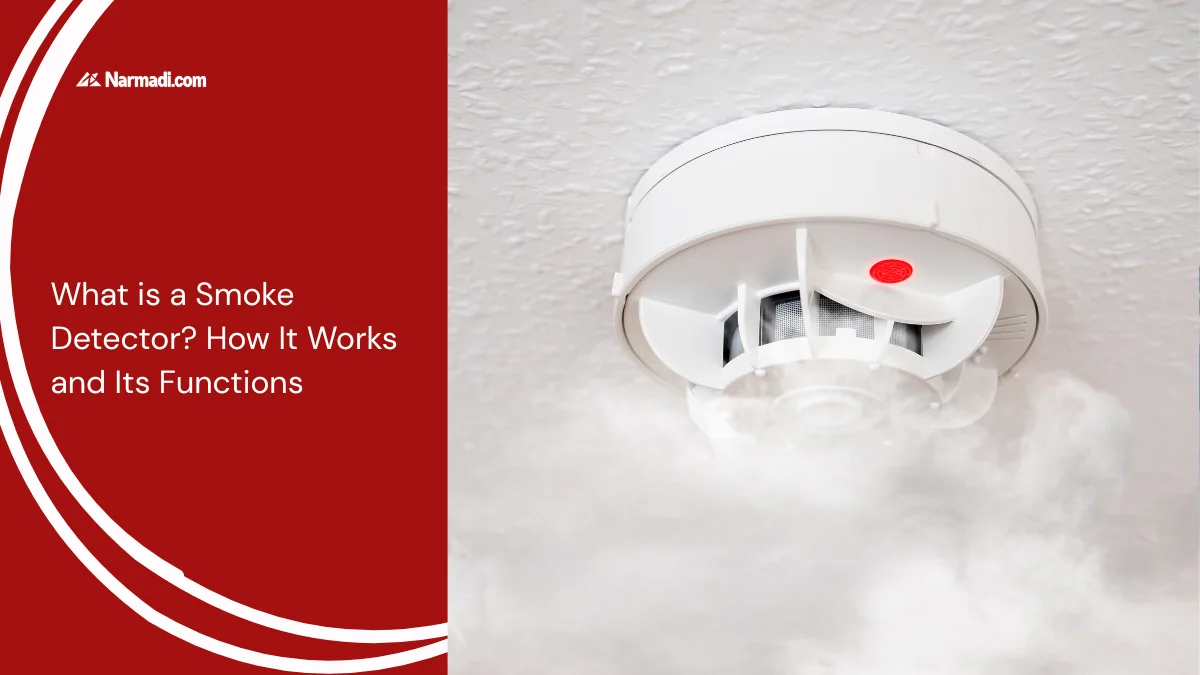
The use of smoke detectors is needed for detecting fires so that quick action can be taken to extinguish the fire. Not only that, the importance of using smoke detectors includes several other things, such as early fire detection to reduce risk.
This article will inform you about smoke detectors, from their definition to how they work, their functions, and regulatory compliance.
What is a Smoke Detector?
A smoke detector is a security device that detects the presence of smoke as an early warning of a fire. It involves detecting airborne smoke particles in the surrounding atmosphere through specialized optical or ionization sensors.
Unlike heat detectors, smoke detectors are designed to identify combustion hazards at the smoldering stage, long before high temperatures or open flames develop.
How it Works?
Smoke detectors work by detecting smoke particles in the air and triggering an alarm if the smoke exceeds a certain limit. Here’s how they work in detail:
- Detects changes in light: Using an optical sensor, it emits light and detects changes in light when smoke gets in the way.
- Ionization sensor detects changes in the air: It uses radioactive substances to ionize the air and detects changes when smoke interferes with the ionization.
The Function
The main function of a smoke detector is to serve as a fire early warning system, detecting smoke and triggering an alarm to notify building occupants of the danger of fire. Here are some of the main functions of a smoke detector:
1. Early fire detection
One of the functions of a smoke detector is its ability to detect fires early. It continuously monitors the presence of smoke in the protected area and triggers an alarm when it detects smoke, which is often the first sign of a fire.
2. Reducing risk
By detecting fires early, of course, the devices can reduce the risk of fire. With proper handling, after the device detects a fire trigger, the risk of injury to humans and property damage can be reduced.
3. Regulatory compliance
In addition, the installation of the devices is often required by fire safety standards and building regulations, thus helping building owners or managers comply with legal requirements and improve safety levels.
4. Special handling
Another function of the devices is special handling. In some cases, such as in data centers, smoke detectors are essential because they can provide early warning of anomalies that could cause a fire.
Regulatory Compliance and Spectrum Approvals
Modern smart smoke detectors are typically equipped with wireless protocols, such as LoRaWAN or cellular IoT modules. These protocols are used to transmit telemetry data in real time to a central fire control panel or a cloud-based dashboard.
Just like other telecommunications devices that emit radio frequency (RF) signals, wireless smoke detectors must have type approval certification. Manufacturers, importers, and distributors must have their products tested before they can be marketed.
The testing covers radio frequency (RF), electromagnetic compatibility (EMC), and electrical safety. This is to ensure compliance with the technical standards in effect in the target market.
In practice, we frequently handle these products for certification. Certified products indicate their safety and their ability to avoid causing interference with other electronic devices.