Wildfire sensors are a technological innovation emerging as a solution to forest fires, which frequently occur because their initial cause is undetected. This device detects signs of fire.
With a wildfire sensor, fires can be detected early, before they grow and engulf large areas of forest. This way, fires can be prevented from spreading and causing significant losses.
Are you familiar with wildfire sensors? This article will review these devices, including their definition, how they work, types, benefits, applications, and regulations for their use.
What is a Wildfire Sensor?
A wildfire sensor functions as a device for early detection of forest or land fires. With this device, signs of fire, such as heat, smoke, and flames, can be detected early.
These signs will generate an early warning. From this, we can anticipate fires by preventing their spread. This way, the potential for greater losses can be reduced.
How does it work?
Wildfire fire sensors work by detecting signs of forest fires, such as smoke, heat, and flames, which are then sent to an alarm system to trigger extinguishing actions. Here are the details of how these devices work:
- Fire sign detection: Infrared, ultraviolet, and smoke detectors continuously monitor the environment for signs of fire. Signs such as heat, smoke, or light are quickly detected using these sensors.
- Notification: Detected fire signs read by the sensors will generate a signal that is sent to the alarm system. From there, the data is then relayed via cable or radio signal to a control center.
- Alarm triggering: The alarm system will trigger various actions, such as alerts, notifying emergency services, and activating the fire suppression system.
- Data analysis: The system can also analyze data collected by sensors to determine the location and type of fire, thus optimizing assistance to firefighters.
The types of wildfire sensors
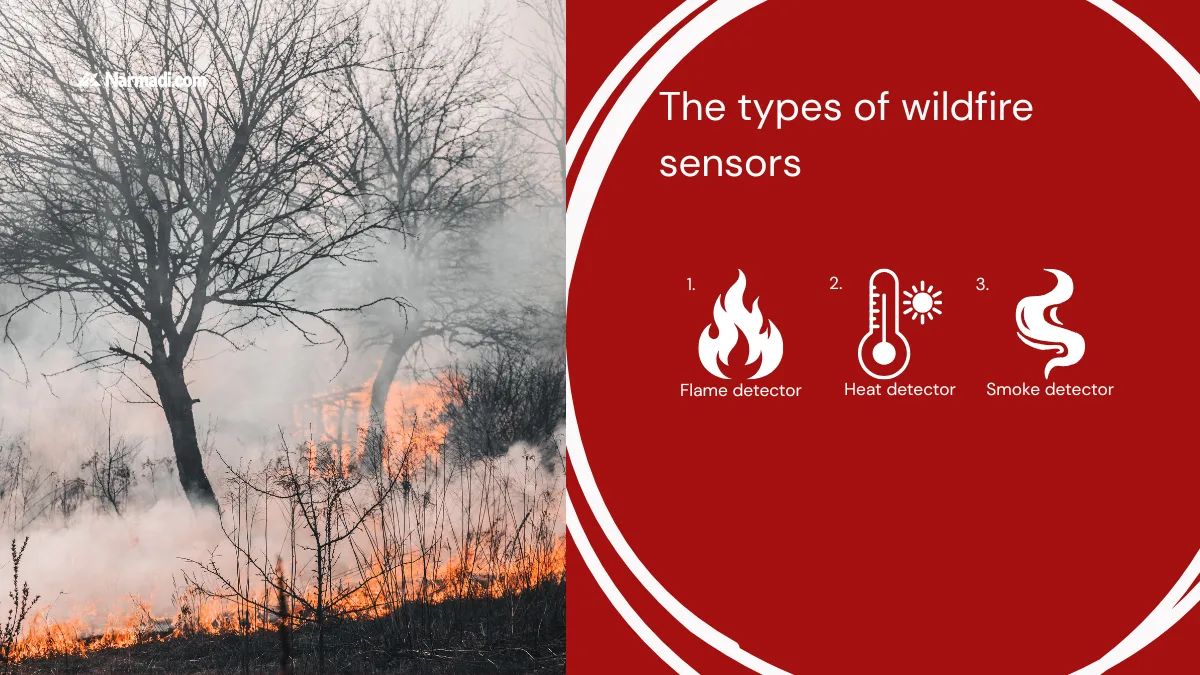
There are different types of sensors used in wildfire sensors, such as:
- Flame Detector: This sensor is specifically designed to detect flames.
- Heat Detector: This sensor detects a sudden temperature rise, which can indicate the presence of a fire.
- Smoke Detector: This sensor detects smoke produced by a fire.
The application examples
Wildfire sensors are widely used in locations with high fire risk, such as:
- Forests and Open Areas: To detect forest and land fires.
- Factories and Warehouses: To detect fires in industrial environments.
- Power Plants: To detect fires in power facilities.
- Tunnels: For detecting fires in underground tunnels.
The Benefits
Because they help detect forest fires, wildfire sensors certainly provide extraordinary benefits in disaster preparedness. Here are four benefits of this device:
1. Fire prevention
The primary benefit of this device is, of course, fire prevention. The sensor will detect fires early, allowing firefighters to take immediate action.
Quick preventative or extinguishing measures will prevent the fire from spreading further. A preventable fire will minimize damage and losses caused by the fire.
2. Fire control
Beyond providing a signal, this device can also transmit real-time data regarding the fire’s development. This data will help firefighters control and monitor the fire’s progress.
From here, they can take appropriate and effective action. After all, a dangerous fire cannot be controlled.
3. Early warning
Early warning is another key action after a fire alarm sounds. This warning signal serves as a warning to people near the fire site.
This early warning will certainly enable people at the fire site to act quickly. They can evacuate or take other safety measures.
4. Other benefits
Besides the three benefits mentioned above, wildfire sensors also have a significant impact. These include preventing economic losses, reducing insurance risks and costs, and saving human and wildlife lives.
Furthermore, fires that are contained and prevented from spreading increase the effectiveness of forest planning and optimize tree growth.
Things to Consider
While wildfire sensors offer many functions and benefits in preventing forest fires, there are some important considerations. These include cost, installation, and the risks of use.
These devices are generally not expensive. However, the cost is the extensive and dense network of sensors required to install them. Furthermore, installation challenges can arise in densely packed environments and high locations.
The risks of using wildlife sensors include the risk of false alarms and devices that do not meet standards. These devices still carry a high risk of generating false alarms. However, over time, this has been reduced by the advent of artificial intelligence.
These devices should not be underestimated in terms of standards compliance. Because they use radio frequency (RF), they can interfere with other devices. Therefore, they must undergo compliance testing. [UN]