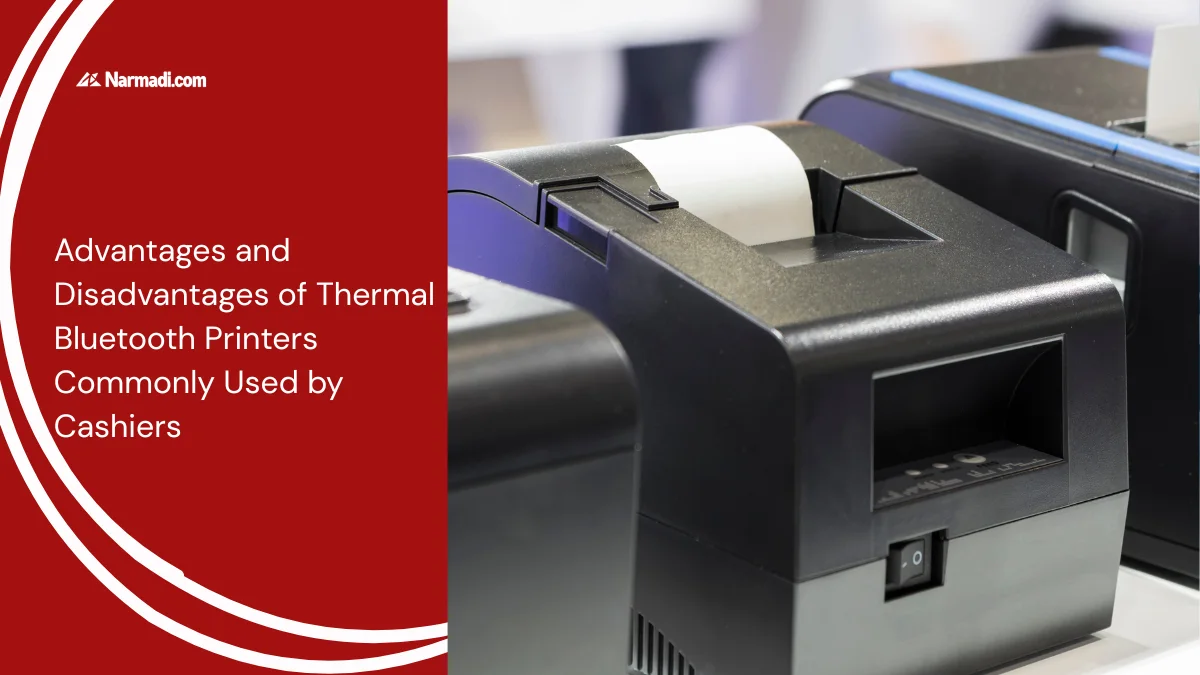

Are you familiar with the Bluetooth thermal printers commonly found at checkout counters in convenience stores or coffee shops?
Bluetooth thermal printers are an integral part of modern business transactions today. Understanding how they work, along with their advantages and disadvantages, can help business owners make the right purchasing decisions.
In this article, we’ll cover all of that so you can see how the simplicity and speed of Bluetooth thermal printers have made them so widely used.
What is a Thermal Bluetooth Printer
A thermal Bluetooth printer is a type of printer that uses thermal technology to print and connect with other devices via Bluetooth connectivity.
This technology uses heat to produce images or text on thermal paper, so it does not require ink or toner.
This thermal and Bluetooth technology printer is often used in various applications such as printing receipts, labels, and tickets, making it very popular among small and medium businesses.
Advantages
1. Wireless Connectivity
This printer with Bluetooth and thermal technology can connect to devices such as smartphones, tablets, and computers without requiring cables.
This makes it easier for you to print documents remotely and reduces cable clutter around your workplace.
2. Cost-Effective
One of the main advantages of a thermal Bluetooth printer is that it does not require ink or toner.
You only need to replace the thermal paper when it runs out, which, of course, is more economical in the long run.
3. High Print Speed
Thermal printers are capable of printing quickly, so they are very efficient for business needs that require printing receipts or tickets quickly and continuously.
4. Compact Design
Thermal printers are usually small and light, making them easy to carry everywhere. This is very suitable for businesses that have high mobility or use them in limited space.
Disadvantages
1. Connection Limitations
Thermal Bluetooth printers can only connect to devices that have a Bluetooth connection.
This becomes an obstacle if the device used does not have a Bluetooth connection or does not support Bluetooth.
2. Print Capacity is Limited
Due to their smaller size, the printing capacity of thermal Bluetooth printers is usually more limited compared to larger desktop receipt printers. This can be a problem in situations with high printing volumes.
3. Battery Dependency
Although mobile receipt printer batteries usually last a long time, there is a risk that the battery could run out while in use. This can disrupt business operations if there are no backup resources available.
Bluetooth vs USB Thermal Printers
In addition to Bluetooth thermal printers, there are also USB devices. However, in reality, Bluetooth devices are more commonly used. What makes them more popular?
Two things make Bluetooth thermal printers superior: their flexibility and portability.
Bluetooth-enabled thermal printers allow for printing from smartphones and tablets anywhere within wireless range. Transactions can even be processed at a counter, during mobile sales, or at outdoor pop-up kiosks.
Meanwhile, USB thermal printers must be connected to a PC or a fixed POS terminal. The main advantage of USB models is their greater connection stability, without the risk of wireless signal interruptions.
By understanding these advantages, disadvantages, and features, you can determine the best use for a Bluetooth thermal printer. Especially as an investment to streamline payment processes in your business.