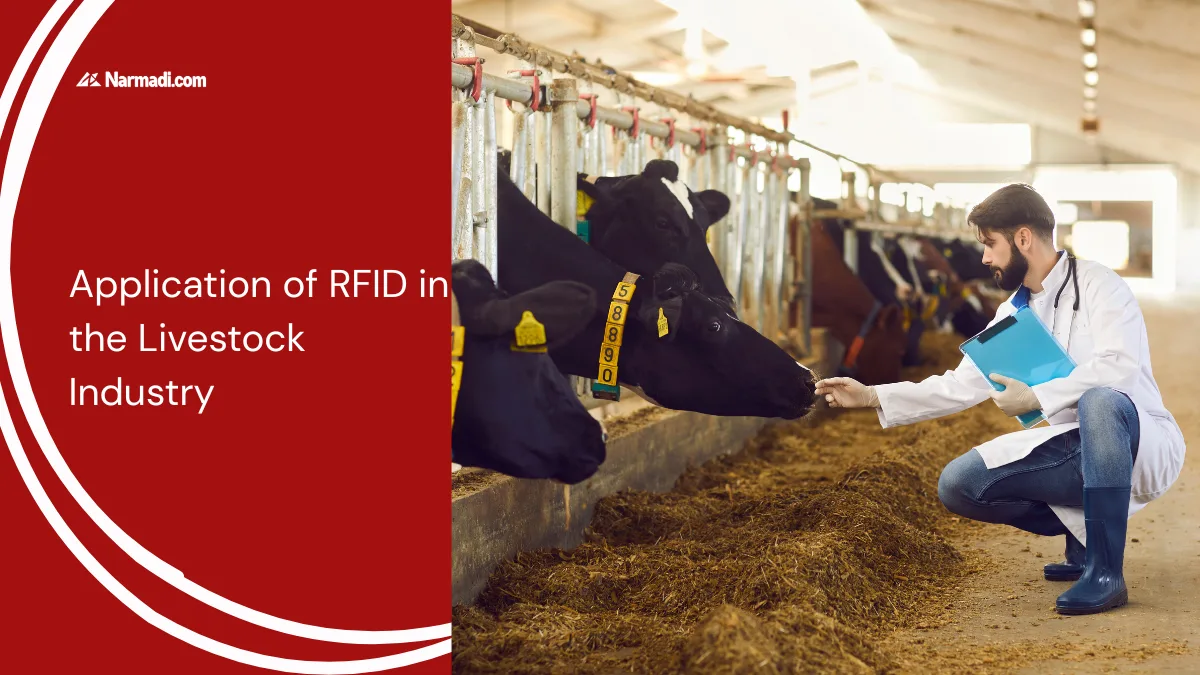

Radio Frequency Identification (RFID) in the livestock industry is very useful, especially because disease outbreaks often affect domestic animals.
RFID in the livestock industry helps farmers get real-time updates on the progress of their livestock.
Let’s find out more about the application of RFID in the livestock industry, especially in production, distribution, and consumption management.
RFID in the Livestock Industry
RFID technology in the animal husbandry industry is most widely used for automatic identification, such as livestock data collection and material tracking.
It supports a range of safety management processes from production through to final consumption, covering areas like information input, information transmission, logistics tracking, and information queries.
Production management
The first step in applying RFID technology to livestock production and breeding is to install RFID tags on animals, which then serve as a permanent digital record and unique identifier for each animal.
The RFID tag stores basic information about the livestock in its chip, such as the owner’s name, physical characteristics, immunity status, vaccine type, manufacturer, production batch number, vaccination method, vaccination dose, and immunity level.
With this system, the animal’s owner only needs a handheld data collector to retrieve all farm-related information.
Implement RFID Ear Tags for Livestock Tracking
When you hear about RFID technology, it might sound complicated. But implementing the system doesn’t have to be complicated.
First, you can start by choosing the right type of tag. You can use low-frequency (LF) tags for close-range, one-by-one reading of individual animals. However, for faster bulk reading of large herds, you can use ultra-high-frequency (UHF) tags.
Second, you need to register each animal to create a digital record for each one, including livestock type, date of birth, owner, and health history. This data will be linked to the tag’s unique ID.
Third, the tags need to be properly installed. You can attach them to the middle third of the ear using the appropriate application tool. This way, you can avoid blood vessels and cartilage.
Fourth, you can begin scanning the tags to ensure they are linked to the correct animal records. Then, integrate the system with farm management software to access data such as vaccinations, weight, and movements, which are automatically updated with each scan.
Fifth, maintain the system by regularly inspecting the tags to ensure there is no damage or loss. If a tag is damaged, you can replace it immediately to keep the tracking data complete.
Distribution management
RFID system can be applied across the entire production process of farm-based food products to establish a food supply chain traceability system from farm to table.
During the slaughtering process for livestock and poultry, RFID technology is used to verify the health status of the animals, integrate with the slaughterhouse’s back-end management system, and feed relevant information into the meat supervision platform.
In addition, RFID-based animal tracking can monitor the entire transportation process, locate and track products in real time, and record activities such as disinfection, inspection, quarantine, and transport conditions to confirm whether the animals meet the required standards.
RFID Helps Prevent and Control Disease Outbreaks in Livestock
Disease outbreaks are one of the biggest challenges in livestock farming. Therefore, it’s important to detect them early on.
Like RFID in the healthcare industry, in livestock farming the technology can also help to knowing the condition of animal health. This can be achieved using RFID.
- Preventing the spread of disease: With early detection via sensors that track feeding patterns and temperature changes, you can identify signs of disease before it spreads.
- Quickly tracking contacts: With RFID, movements and contacts are recorded quickly, allowing farmers to identify animals that may have been exposed.
- Targeted quarantine: With accurate tracking, farmers can isolate only infected animals without having to cull the entire herd.
- Vaccination verification: With vaccination records stored on RFID tags, the immunization status of animals can be easily verified during outbreak management.
Using RFID shifts your approach to disease control from reactive to proactive. You become more proactive by detecting problems early and responding with the appropriate measures.
Consumption management
At the stage of livestock product consumption, RFID technology helps improve logistics efficiency.
By scanning the tag attached to a product, consumers can also access information such as the product’s origin, producer details, production date, shelf life, and whether the product has safety certification from the relevant authorities.
In addition to ensuring food safety and protecting consumer interests, this also promotes accountability among producers and processors of livestock products.
These are some of the ways RFID is currently being applied in the livestock industry. Looking ahead, RFID technology in the livestock industry is expected to continue evolving—supporting disease surveillance, animal welfare monitoring, and greater supply chain transparency across the entire sector.