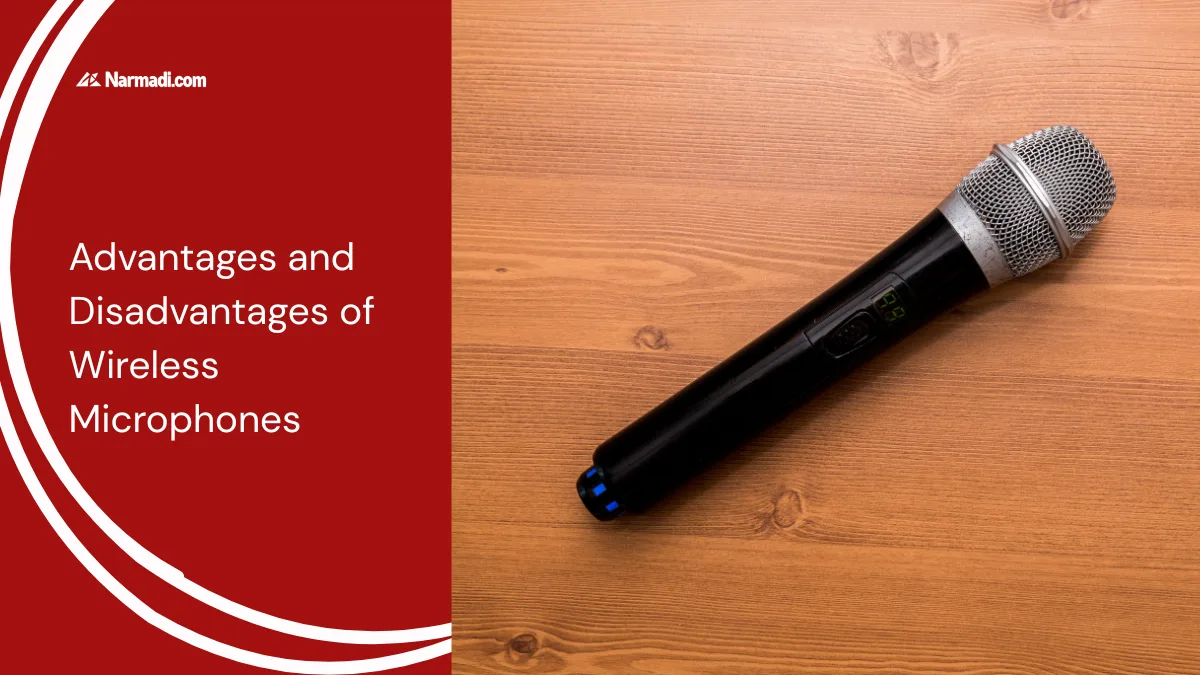

Choosing the right microphone is very important. It depends on your needs, such as live performances, broadcasting, or content creation.
As is commonly known, there are two types of microphones to choose from: wireless and wired. Both, of course, have their own advantages and disadvantages.
In today’s modern world, wireless microphones are often preferred because they eliminate the hassle of tangled cables. However, that doesn’t mean these devices are without drawbacks.
To decide whether to choose a wireless microphone, you need to thoroughly weigh all its pros and cons. We’ll help you with that in this article.
In this article, we’ll explore the main pros and cons of wireless microphones, how they compare to conventional wired systems, and the technical factors you should check before making a purchase.
Advantages of Wireless Microphones
1. No Need to Worry About Tangled Cables
This is the main advantage of wireless microphones. You don’t have to deal with cables that are often a nuisance, both technically and aesthetically.
Technically, tangled cables can cause audio interference or connection dropouts. Aesthetically, if not managed properly, cables can look messy and even pose a safety hazard.
Wireless microphones eliminate all of that. You no longer need to worry about technical issues related to tangled cables. In fact, your appearance will be more pleasing to the eye without the distraction of messy cables.
2. Greater Freedom of Movement
Beyond technical and aesthetic considerations, wireless microphones support performers, presenters, or speakers in terms of performance. The absence of cables allows for greater freedom of movement.
There are no more physical limitations caused by dangling cables. Moreover, potential risks—such as tripping over cables and falling—are eliminated.
3. Highly Practical Designs
In terms of design, wireless microphones come in a variety of formats. You can choose the one that best suits your needs.
Handheld microphones are ideal for vocalists and public speakers. Lavalier microphones are ideal for interviews and recordings without having to hold the microphone. Meanwhile, headset microphones are the best choice for fitness instructors, active performers, or stage performers.
4. Greater Range
Wired systems have range limitations based on the available cable length. This is no longer an issue with wireless microphones.
There are no cable-length restrictions, allowing them to transmit audio over long distances. Based on our experience handling type approval certifications, we know that high-end wireless systems are capable of operating at distances of up to 100 meters without requiring additional cables.
Disadvantages of Wireless Microphones
1. Potential Signal Interference and RF Interference
While wireless microphones do not experience signal interference caused by tangled cables, the potential for signal interference still exists. This is because wireless microphones rely on the air and the radio frequency (RF) spectrum to transmit audio.
Interference may occur due to physical obstacles, inclement weather, or a crowded wireless environment. In some outdoor scenarios, the use of a signal booster or a directional antenna may be necessary.
2. Higher Investment Costs
This is an undeniable fact. Modern technology is generally more expensive than conventional technology.
In the case of wireless microphones, the complexity of the transmitter, receiver, and RF technology makes them more expensive than conventional wired microphones. They can be even more expensive for devices that offer lower latency, clearer transmission, and longer battery life.
3. Battery Management Requirements
Batteries are key to wireless microphones. This is because they do not receive a continuous power supply from the audio interface.
Wireless microphones rely on batteries for power. Therefore, active power monitoring is necessary during use.
This is, of course, to ensure the event runs smoothly. You certainly don’t want the event to be disrupted because a microphone shuts off in the middle of the event due to a dead battery.
Quick Comparison: Wireless vs Wired Microphones
| Feature | Wireless Microphones | Wired Microphones |
| Mobility | High (No cable restrictions) | Limited by cable length |
| Setup & Aesthetics | Clean stage, highly portable | Requires cable management |
| Signal Reliability | Subject to RF interference/weather | 100% stable wired signal |
| Power Source | Requires batteries/rechargeables | Powered directly via XLR/Jack |
| Price Point | Higher initial cost | More budget-friendly |
Regulatory Compliance: DJID Certification
Beyond the pros and cons of wireless microphones, another important factor to consider is device certification. Wireless microphones operate on shared radio frequency bands (such as UHF or 2.4 GHz).
Every device that operates on a radio frequency band must undergo standard technical testing and hold official certification. In Indonesia, Type Approval certification is issued by the Directorate General of Digital Infrastructure (DJID).
This certification ensures that telecommunications devices operate safely and do not cause interference with other devices when in use. Non-certified devices may experience issues during use, such as suboptimal signal strength or frequent disruptions.